 Today there are about 83 organs in Ukraine. Some of them are in fighting condition, some of them are in need of repair. Even remnants and imitations of organs, which are created in some churches, are included in the general list of these keyboard and wind instruments. The largest number of these musical instruments is concentrated in the city of Kiev and scattered across the territory of Lviv region. Residents of Sambor and Stryi, Yavoriv and Zhovkva can enjoy the «music of angels», as it was said about the sounds produced by the organ in Mozart’s time.
Naturally, the residents of Lviv, the capital of Western Ukraine, where eleven organs have been preserved, are the luckiest of all. Unfortunately, only four of them are in active condition, not requiring repair, not being a decoration and not being in the state of a half-destroyed artifact. These are the musical instruments of the Church of St. Anthony, Cathedral Latin, Dominican Church, and the organ that is located on the grounds of the Monastery of St. Mary Magdalene.
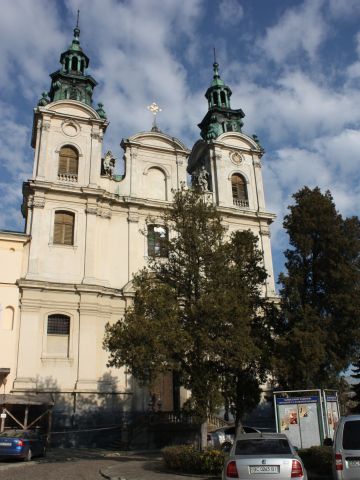
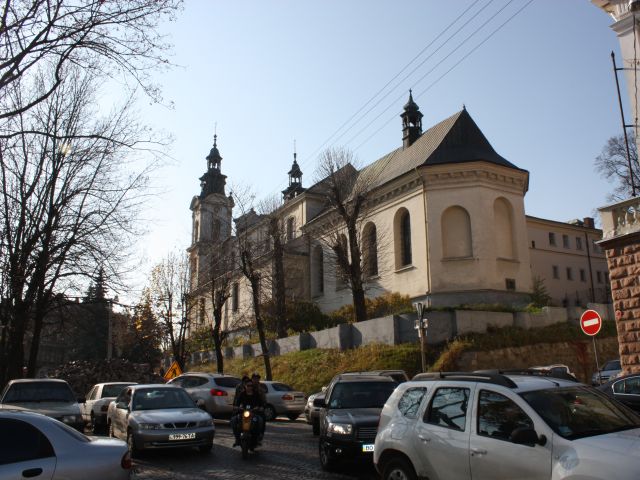 It is the «king of instruments» of the Monastery of St. Mary Magdalene that is famous for a sound whose power and richness can outshine a full symphony orchestra. Like all organs, this keyboard and wind instrument is confined to Catholic and Protestant sacred complexes. «King» appeared in Lviv thanks to the Dominican monks and Pani A. Pstrokonska. The matter is that the rich landowner in 1600 gave a small plot of land outside the city walls of Lviv to the order sympathetic to her personally. The magistrate allowed the monks to build a seminary, but the Dominicans violated the decision of the city government and started building a wooden church.
The Pstrokonska plot was located on a hill, so in case of its seizure by enemies, the church could become a threat to the townspeople. In addition, the church land was not taxed, so the city budget would not receive its gold coins. It came to the point that in 1612 Lviv burghers armed with stakes dispersed the builders. But the organization and persistence of the Dominican friars won over the impulsiveness and expression of the townspeople — in 1615 the construction was resumed.
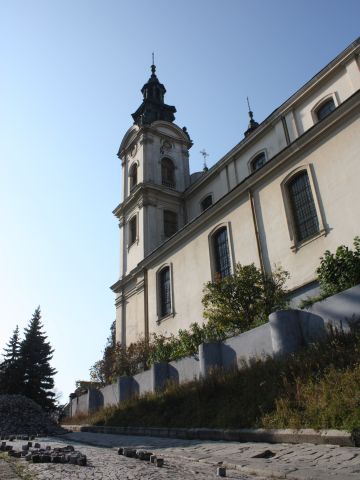 And in 1635 near the city, on the present-day Stepan Bandera Street, a stone church dedicated to Mary Magdalene, cells for Dominican friars, and a wooden seminary building were built. The names of the authors of the project — architects A. Kelar and J. Godny — have been preserved. Thanks to them, the church was something between a fortified medieval fortress and a larger scale brother of Noah’s Ark. At that historical moment, the church was a huge rectangular two-storey structure with stone walls one meter thick, covered with a double-pitched roof.
In 1754 the architect M. Urbanik took over the design of the church. He added a stylish Baroque facade to the temple and decorated it with two towers with openwork signatures. The mighty temple suffered the greatest humiliation under the Austro-Hungarian Empire. By the personal decision of Joseph the Second, the Dominican church was turned into a parish church, and the adjacent monastery was equipped with a prison for ladies of easy virtue.
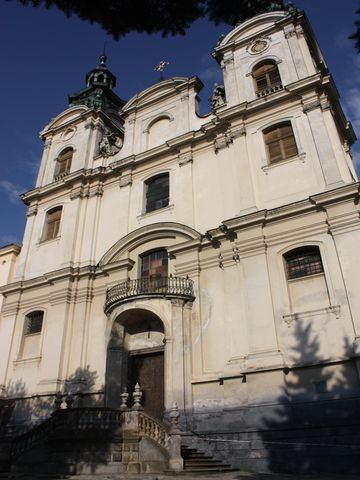 The 20th century was a personal renaissance for the Mary Magdalene church complex. In 1922 the prison was closed, and in 1932 a musical instrument from one of the world’s best producers of this type of organs, the Rieger-Kloss company, solemnly entered the church, i.e. it was brought and built in. With its 60 registers and 3 manuals, it is still the largest keyboard-spiritual musical instrument in Ukraine.
If we omit the fact that under the Soviets the church housed a gymnasium and the monastery was one of the buildings of Lvovsk Polytechnic, then even in the Soviet Union appreciated the sound of the organ and in 1960 organized in the church «House of Organ and Chamber Music». Since 1998, the Catholic community was allowed to enter the church, but this attraction of Ukraine was not completely given into its hands. Despite the uncertain status of the temple, everyone can visit this landmark of Lviv and hear the divine sound of the «music of angels» by Mozart, Brahms, Bach, Max Reger, Chürlenis and Franz Liszt.