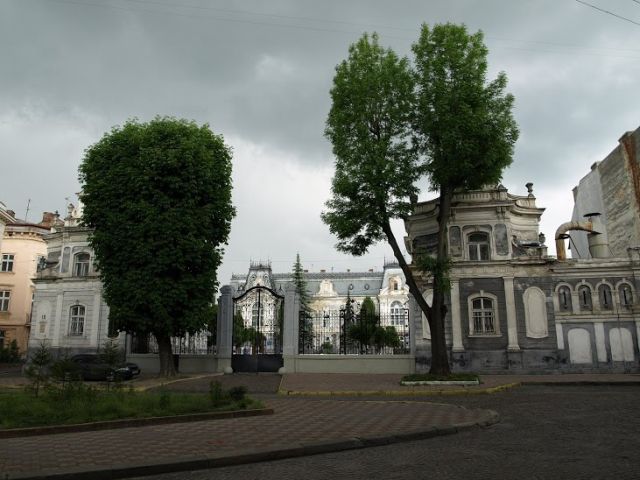
 Lviv, which has always been the main cultural and commercial center, the capital of Galicia and Western Ukraine, remembers many famous people, including representatives of famous European families. Among the aristocratic families who had their own estates in Lviv were Potocki, Lubomirski, Bandinelli, Semenski, etc. The palaces where these influential dynasties lived are one of the most interesting pages in the architecture of the city today. Exquisite, luxurious they remind of the city’s past. One of the finest examples of such buildings is the Semensky Palace — one of the most beautiful sights of the city.
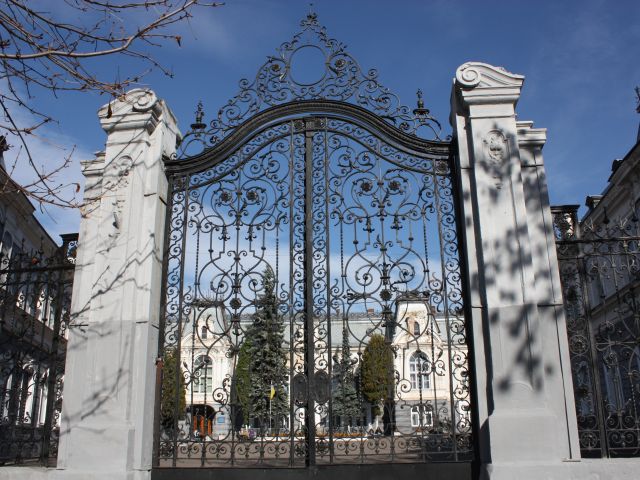
On Pekarskaya Street you can see many interesting buildings, so many guests of the city, wishing to get acquainted with its architecture and historical monuments, go for a walk here. Semensky Palace is one of the beauties of this street, it makes an immediate impression: lush forms, rich decor, powerful wrought iron gates and fence — you want to admire it, to look at one of the testimonies of the past more closely, to learn about its history and about those for whom such a magnificent house was built.
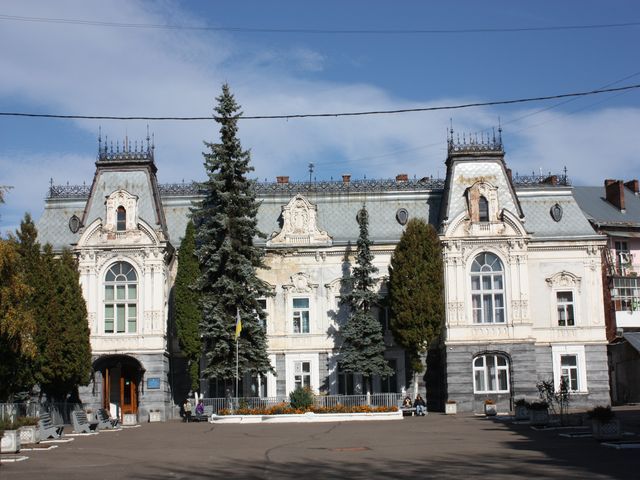 In the XVIII century, on the place where the palace stands today, there was a large estate, and the present building was built in 1849 for Count Konstantin Semensky — the ambassador of the Galician Sejm. The author of the palace project was the Prussian architect Frederick Baumann. The two-storey building with a mansard is facing the main facade to the street, symmetrically to the right and left of it the architect placed an outbuilding and the former stables with a manege, which face the street. The layout of the architectural ensemble is the only thing that has survived from its original appearance. Already in 1873-1877 the son of K. Semensky — Wilhelm Semensky. K. Semensky’s son Wilhelm Semensky rebuilt the palace, hiring the architect A. Wagner, who gave the palace a neobaroque appearance. Two decorative horse heads appeared above the entrance to the stables from the street, which can still be seen here today. Wilhelm was a great connoisseur of horses and was president of the Galicia Commission, which was in charge of breeding thoroughbreds.
  Another evidence of the rebuilding of the palace of those times is the monogram SL, which can be seen on the facade above one of the windows (two letters denote a double surname — Wilhelm Semensky decided to add to his maternal surname — Levitsky). Interestingly, Wilhelm was a Knight of the Order of Malta and eventually rose to the rank of Privy Counselor of the Royal Court.
Another reconstruction of the palace took place in 1891-1894 — then I. Levinsky and J. Kudelsky worked on the reconstruction. Kudelsky. During these years, a rich decoration of the facade and interiors of the palace was created, which was carried out by sculptor P.V. Gerasimovich. It was then that the Semensky Palace acquired a modern look in the style of French Baroque or «III Empire» (Napoleon III’s Empire), and spectacular entrance gates with wrought iron lattices appeared.
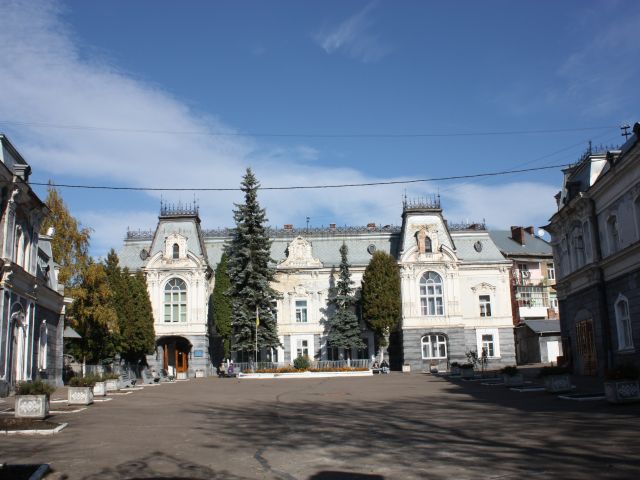 After the last reconstruction more than a century has passed, and today the building, unfortunately, is gradually falling into disrepair — the plaster and rich stucco falls off, it seems that the house, longing for the lost luxury, is crumbling and wants to fall into oblivion as well. Even so, looking at the Semensky palace today, one cannot help but feel the atmosphere of opulence and luxury that reigned in this house a hundred years ago, but has faded into the past.
The descendants of the Semensky-Levitsky dynasty live in Canada today. In 1939 the palace was nationalized, and since then it served first as an Academic Gymnasium, then as a school, and today it houses a specialized boarding school No. 102. Like many other palaces of Lviv, this luxurious house attracts attention and impresses with its beauty, despite the lack of proper maintenance. Such architecture remains beautiful always, even dilapidated, it fascinates and beckons, causing the desire to admire it and admire the skill of architects of past centuries.