 Christianity, as such, appeared in what is now Ukraine in the 1st century. Apostle Andrew was seen on a voyage through the Northern Black Sea region, as well as on a climb up along the course of the Dnieper River, during which he preached to the Scythians. But the new religion did not become widespread until in 954 Prince Igor’s widow Olga was christened. The legendary princess called bishops and presbyters to Russia, appealing to her «colleagues» — the emperors of the Holy Roman Empire. Thus the first Latin diocese appeared in Kiev. It functioned until Vladimir baptized Rus with the help of Tsargrad priests, fascinated by the splendor of Byzantine rites.
Because of the preferential treatment received by Orthodoxy, Catholicism in Ukraine has always been less popular with the masses. But in the harsh Middle Ages, it became the primary instrument and stronghold of the process of polonization in the Right-Bank Ukraine, as well as a kind of locomotive of Western European culture, refined, «not matryoshka» architecture, gallantry and style.
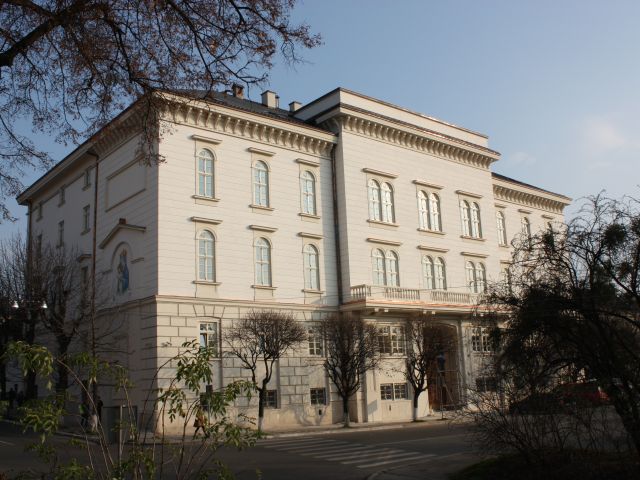
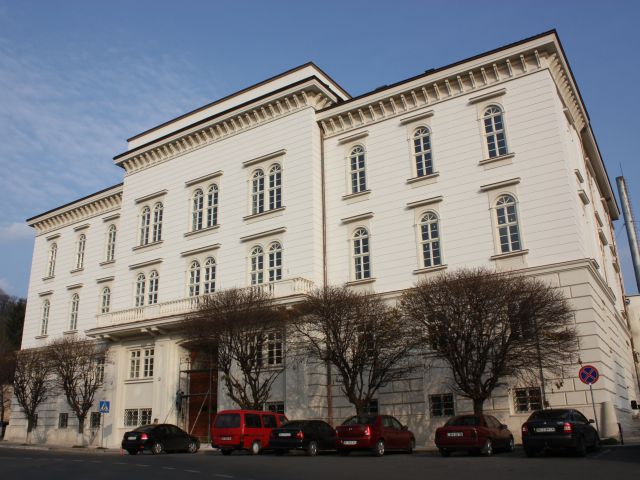 One of the positive results of the spread of Catholicism in the lands of Western Ukraine historians call a huge number of left material values: temples, monasteries and, of course, palaces. In Lviv alone there are 16 palaces — architectural monuments, the predominant majority of which, in one way or another, are connected with the Polish nobility or Catholic clergy. One of them is the famous «Palace of the Latin Archbishops». Although the townspeople themselves often refer to it as Palace of the Roman Catholic Bishops.
Like its fellow palaces, it is a recognized architectural monument. The palace became a link that united into a single spiritual and architectural complex a pair of Catholic churches built in the XVII century. To the left of the building is the Baroque church of St. Casimir. To the right of the residence is one of Lviv’s most notable churches — the Church of the Carmelite Barefoot, which is an adapted copy of the Roman church of St. Susanna.
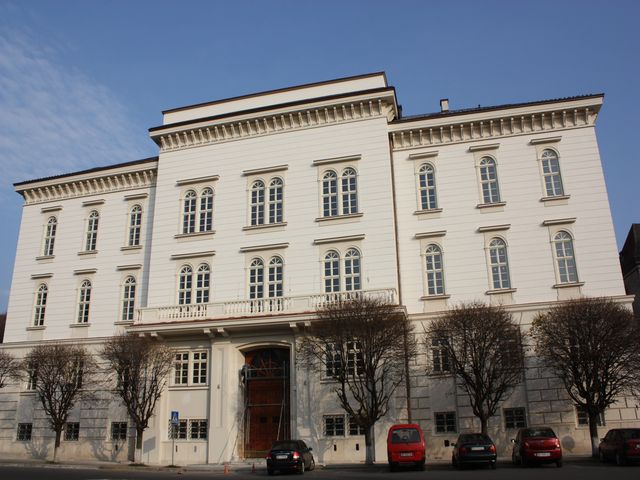 The former residence of Lviv archbishops was built in 1842. It is a luxurious three-storied building, erected according to the project of I. Salzman. The author was an adherent of the functional branch of Empire — Biedermeier style, so the appearance of the «Latin palace» is very different from the traditional associations associated with this word. The building is devoid of any decorative elements, signatures, towers, figured teeth or stone guards-bare reliefs in the form of lions or famous knights. Everything is restrained and functional — the advantageous shape of the structure in the form of the letter «P», massive walls that can withstand any blow, and an accentuated facade. From above, the palace is protected by a double-pitched roof.
In 1886, the Palace of the Latin Archbishops underwent a reconstruction. The building was adjusted with an eye to the late classicism that was gaining popularity in Europe. However, there were no global reconstructions, as classicism in this case only improved the Salzmannian Biedermeier.
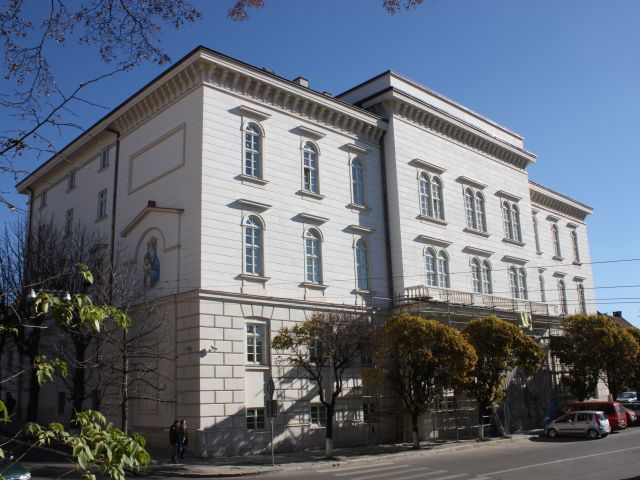 After World War I, in addition to the episcopate, the palace housed the Dlugosz sacral museum. During World War II, after the liberation of Lviv by Soviet troops, the excellent building was given to the military hospital. In 1970, the former palace was handed over to a closed structure, the so-called «mailbox», known as the scientific institute «Sistema».
The palace experienced its second birth thanks to a certain Karol Wojtyla, the only Slavic pontiff to date. After the future saint inspected the building during his visit to Ukraine in 2001, the city authorities had no choice but to hand it over to the Lviv Archdiocese of the Roman Catholic Church.
The walls of many palaces in Lviv boast famous owners or guests — magnates Lubomirski and Potocki, counts Golukhovski and princes Sapieha. But the fate of none of them, except the Palace of the Latin Archbishops, was decided by the world’s most respected Pope, John Paul the Second.