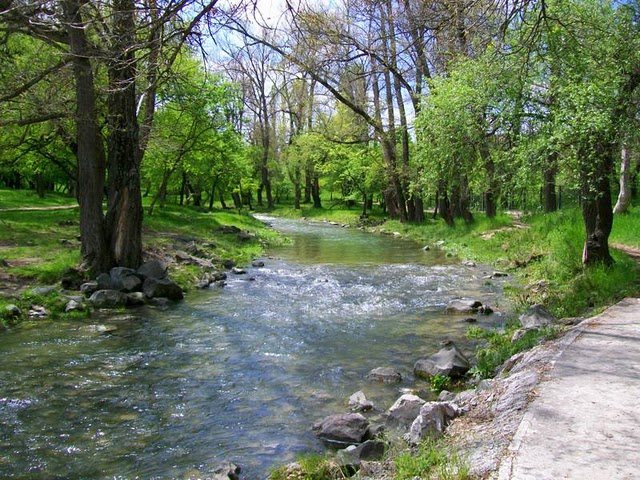
Of all the parks located on the territory of the city, Salgirka is the oldest. In this park there are many attractions of Simferopol: the estate of academician P.S. Pallas, Vorontsov Palace, the graves of famous scientists H.H. Steven and G.F. Morozov and a modern attraction — a beautiful botanical garden.
Salgirka is called the miracle of the Crimean capital. Visitors to the park find themselves as if in a fairyland: a sea of different flowers, including rare ones, amazing plants and century-old trees create a unique atmosphere, taking you to the world of dreams and enveloping you with wonderful aromas. In Salgirka you can stroll along numerous alleys, admire flower meadows and a cascade of ponds, feel the romance of local places, plunging into this magical world of natural beauty.
None of the city’s parks can compare with it due to its beauty, interesting history and rich heritage left by famous statesmen and scientists.
Like all modern parklands, Salgirka was originally a forest. In the distant 1786 on the plans of the city along the Salgir River everywhere you could see the inscriptions «forest». To judge about the former greatness of the forests of this territory can be judged by the giant oaks preserved in the park. And the trunk of a giant century-old plane tree, which is located near the Academy of Sciences, can only be grasped by a few people!
The history of the Salgirka territory as a park began in 1793, when the famous academician P.S. Pallas bought a house from the collegiate assessor Martynovsky, built before 1788 and previously belonged to the Tatars who moved abroad. Nearby he laid out a garden, to which he began to bring exotic plants.
The house was built in the style of the architecture of the cities of Asia Minor, with a four-pitched brightly colored tiled roof, giving the building a picturesque appearance, and a huge terrace. But from 1824 the estate was rebuilt by N.F. Naryshkina, its next owner. It became characteristic features of classical manor architecture of that time.
Pallas’s estate is considered a historical monument, originally it occupied more than 2 versts, but in the early XIX century it was divided into two parts, one of which was transferred to the possession of D.V. Naryshkin and H.H. Steven — a famous botanist.
Naryshkin — former Tauride governor, in 1823-1826 built a house on his territory, 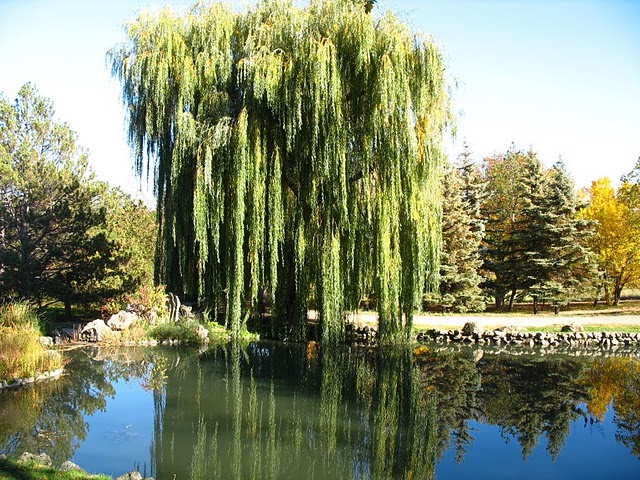 which later became known as the Vorontsov Palace, as it was built at the expense of Count Vorontsov. Vorontsov Palace is the second historical monument in the park Salgirka, its architecture is eclectic, there and classical motifs characteristic of Russian classicism, and oriental «notes». In general, the building looks very imposing, its beauty delighted contemporaries. And the kitchen building in the style of Bakhchisarai Palace is one of the main decorations of the park. Now its buildings house the Academy of Sciences of Krym.
Academy of Sciences.
Till the end of XIX century Salgirka Park was the territory of private estates, until it was bought by the Ministry of Agriculture. In 1907, a horticulture school was established here, whose pupils left a beautiful avenue of horse chestnut in memory of themselves. And in 1912 Salgirka became a pomological station. During the Civil War years here lived and was buried after his death G.F. Morozov — the founder of domestic forestry.
Now Salgirka Park is a protected park-monument of garden and park art of local importance. It is also called the Botanical Garden of the Vernadsky Tauride National University. On its territory grow plants listed in the Red Book, endangered and rare, and in 2004 here was created a rose garden, which grows more than 7 thousand rose bushes of 150 varieties.
If you are planning a holiday in Simferopol, visit one of the wonders of the city — Salgirka Park. Do not miss the opportunity to admire the age-old giant trees, enveloping them with giant vines, beautiful estates of famous historical figures and taste walnuts of enormous size — the fruit of the trees of the walnut alley, which were planted by the very first owners of the park.