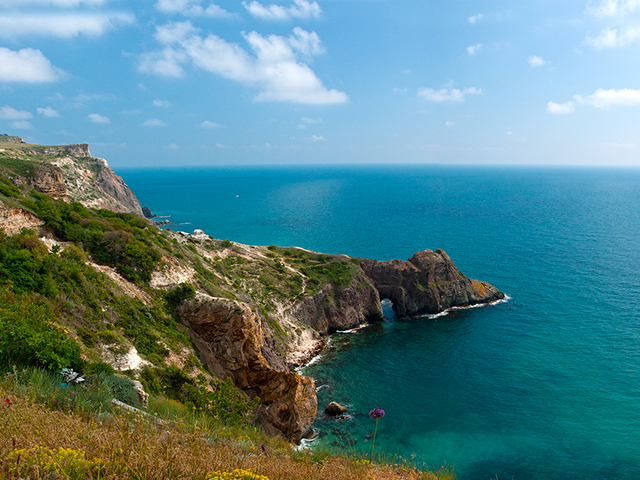
Probably, in the entire Atlantic Ocean basin there is no more fertile land for recreation than the Crimean Peninsula. The territory with an area of 26.8 thousand km² is almost completely surrounded by the waters of the Black Sea. The only exception is the Perekop Isthmus. But its maximum width does not exceed 8 km. This allows using the isthmus as a bridgehead for roads and railroads.
It is thanks to a powerful transportation artery to the peninsula annually come and get health improvement several million people. Therefore, the entire 2500 kilometer coastline of the Crimea is conditionally divided into 5 recreational regions.
The first is the famous South Coast, which is located on the territory of Yalta and Alushta district. The second is a logical continuation of the above-mentioned, only deprived of the protection of the Crimean Mountains section of the Black Sea coast. It means the territory of Sudak, Feodosia and Kerch districts. The third region: the famous children’s and balneological resorts — Evpatoria and Saki. The fourth region is the not fully utilized potential of the Arabatska arrow. Fifth — a special place in this list is occupied by Sevastopol with its current dubious status and inexhaustible supply of historical, natural and cultural attractions.
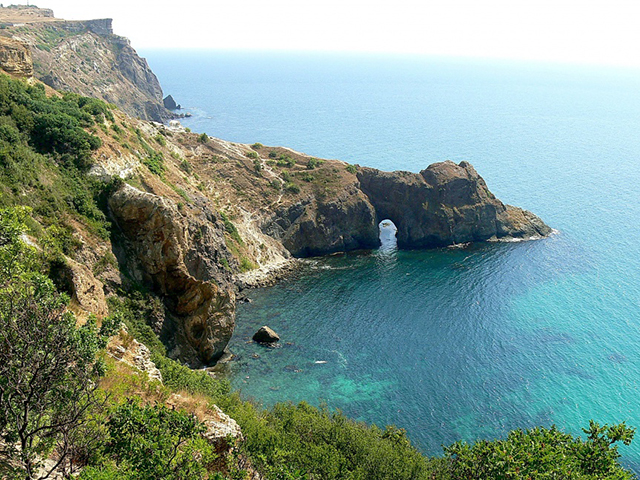
In the collection of historical and natural riches of the territory, subordinated to the Sevastopol City Council, there is the most amazing Lermontov Cape, the base of which is «pierced» by Diana’s Grotto. It is located between Fiolent cape and Lermontova Dacha, located in the neighborhood of Cape Vinogradniy.
The cape itself is small and low. On its surface there is a stone foundation of the ancient period. At the base of the rock the waters of the Black Sea washed out a through grotto, which has the shape of an arch. The sea in the grotto is about 2 meters deep, and the scouring itself is high enough to let a small boat through. Divers and adventurous bathers know that the water in the grotto is extremely cold. It’s dark, slimy and uncomfortable. In addition, there may be strong episodic currents, provoked by the ebb and flow of the Black Sea water masses.
The history of the origin of the name «Diana’s Grotto» deserves special attention. According to the version, which is retranslated by numerous printed and virtual sources, the name of the grotto was born from the sanctuary built on the relatively flat top of Cape Lermontov. There are even quotes from Herodotus’ work, testifying about a huge building with columns and a white marble altar. Allegedly, innocent girls — sacrifices to the goddess Diana — were thrown into the sea from it.
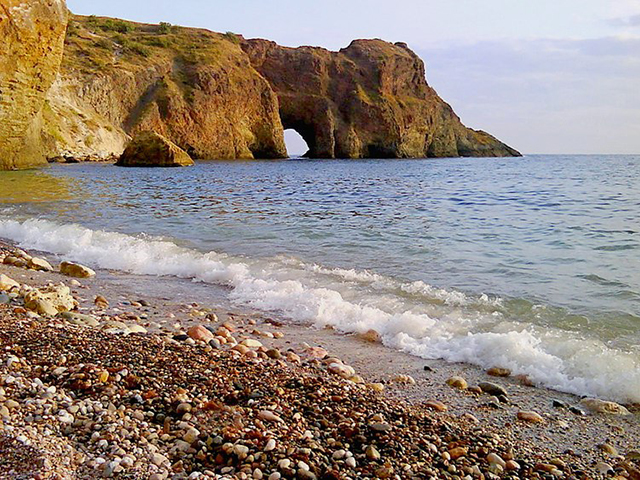
This is where the chain of personal mysteries of Cape Lermontov and Diana’s Grotto begins. The goddess Diana patronized forests, hunting, and was considered the personification of the moon. But it was exclusively a Roman deity, and who-who, but the citizens of ancient Rome on the coast of the Crimean peninsula were not seen. In the ancient Greeks goddess with a similar sphere of influence was named Artemis and possibly Selene. But none of the 3 divine feminine did not require blood sacrifices. These are not the gods of the ancient Aztecs, drinking human blood and eating hearts. And the Greeks, who colonized this coast, were not in the habit of feeding the inhabitants of Olympus with human sacrifices.
With the name of Cape Lermontov is associated with an even more mysterious story. To this day, researchers of the poet’s life argue about whether he met in the Crimea with the wife of a French geologist, Adele Omer de Guelle or not. There was or was not a romantic rendezvous followed by adultery. For then the motives of the poet’s duel with Mr. Martynov, offended by Lermontov’s refusal to marry his own sister, change radically.
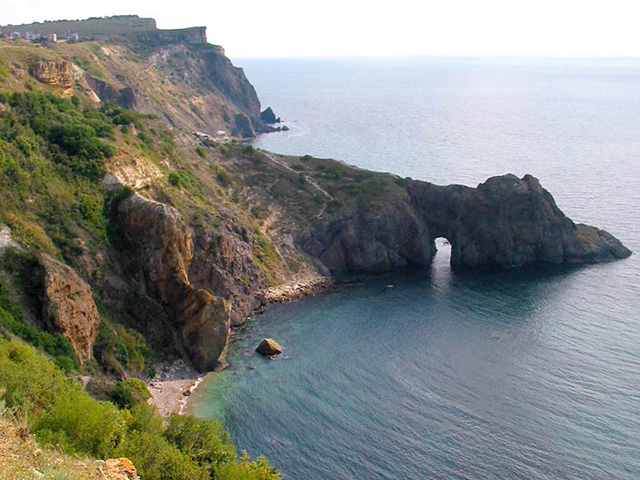
If you’re still wondering who threw girls off Cape Lermontov into Diana’s Grotto, you can search for the answer to this question on holiday in Sevastopol. Most likely, so entertained the Taureans, famous for their ferocity. They captured any seafarers, including Hellenes, were clubbed on the heads and thrown into the sea. On another occasion they would bury their enemies in the sand and cut off their heads. These they then displayed on poles as a protection for their dwellings. Ah, yes. The Taurians worshipped the goddess Virgo. This very name was later transformed into Diana, and thanks to the ethnos of the Taurians, the Crimean Peninsula was called Tauris for a long time!