 Among the various sights, which the Crimea is so rich in, the cave towns, which served as a home for thousands of local residents for many centuries, are of special interest. Once these cities were bustling with life, and today, towering above the picturesque Crimean valleys, they remind of what was the history of the Crimea, how human life has changed over the centuries.
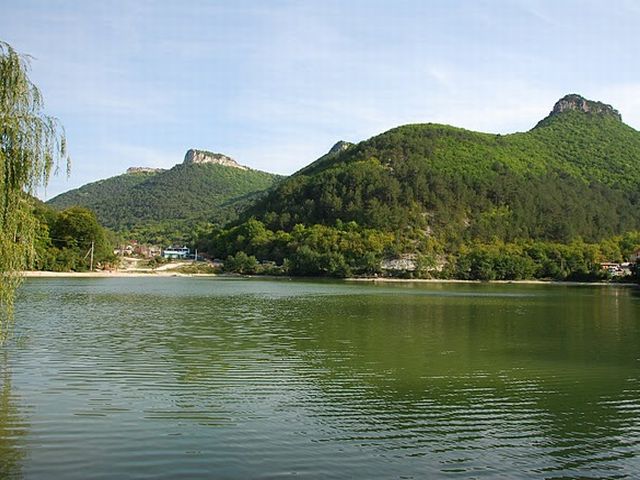
Cave City Mangup-Kale is the largest of the mountain settlements discovered in Crimea, the plateau area is about 90 hectares. This mountain massif rises majestically on the top of the mountain-station Baba-Dag (Father Mountain) above the Karalez, Dzhan-Dere and Ai-To-Dor valleys. Today, when an artificial lake appeared at the foot of the mountain, this place has become even more picturesque, inimitable in its beauty, so visiting Mangup-Kale becomes the most impressive event for guests of Crimea.
The history of Mangup-Kale is interesting and rich. People first appeared here in the III-IV century, then the Scythian-Sarmatians are replaced by Alano-Goths, who established a settlement here and catacomb burial grounds, some of which have survived to our time. In the V century the first fortifications were erected on Mangup, the founded city was called Doros — it was the capital of Crimean Gothia, the country of Dori, and in another hundred years Doros became the center of the Gothic diocese on the peninsula. This period of Mangup’s history ends in the VII century — the city of Doros subdues the Khazar Khaganate.
The most interesting period for Mangup was VIII-XV centuries — for almost 700 years it was the capital of 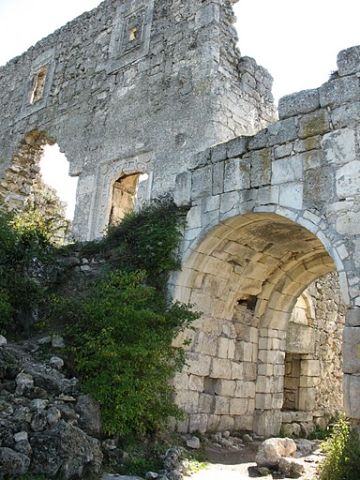 the largest Crimean principality Theodoro. It is from this period that the remains of the Mangup settlement have survived to this day. During its heyday, Theodoro reached unprecedented for this kind of city size: fortresses stretched for 1.5 km, and the entire defensive contour stretched for 6.6 km around Mangup-Kale.
Theodoro princes were relatives of Byzantine emperors Paleologos, many rulers of that time dreamed to be related to them, for example, Ivan III wanted to marry his son and the daughter of Prince Isaac, but the union was prevented by the invasion of the Turks. The medieval cave city achieved incredible development, crafts and trade flourished here, as evidenced by the Chersonese ceramics found by archaeologists.
Mangup-Kale was one of the most protected cities: impregnable cliffs, two springs that never dried up, fortifications created by Feodorites — it seemed impossible to subdue it. However, in the XV century, after a 6-month siege, the Turks did capture the city — the inhabitants, exhausted by disease and hunger, surrendered themselves. The whole city was exterminated by the bloodthirsty Turks — everyone was killed, including women and children. For some time after the capture, the Turks kept their garrison on Mangup, but after the annexation of Crimea to the Russian Empire, the last inhabitants left.
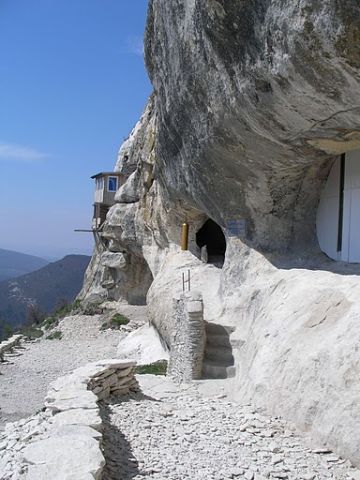 Since then, silent, subdued, but proud Mangup-Kale, remembering the times of its greatness, welcomes only numerous tourists, telling each of its amazing history. The remains of the palace of the last princes of Theodoro remind that the city was a prosperous capital; underground and above-ground churches and a large temple — that the cave city was Christian; ruins of fortifications, towers, defensive walls testify to how large and impregnable was the city, and numerous caves and graves — that here once lived, worked, loved and died people.
Visiting Mangup-Kale to get acquainted with the history of the medieval city, which began in time immemorial with the settlement of Scythian-Sarmatians, can everyone just by looking at the numerous ruins. Walking through the caves that were once the homes of people, admiring the remains of medieval and older architecture, you can feel the inexpressible atmosphere found only in such ancient places. Visiting this sevastopol attraction gives incredible sensations and leaves vivid memories forever.