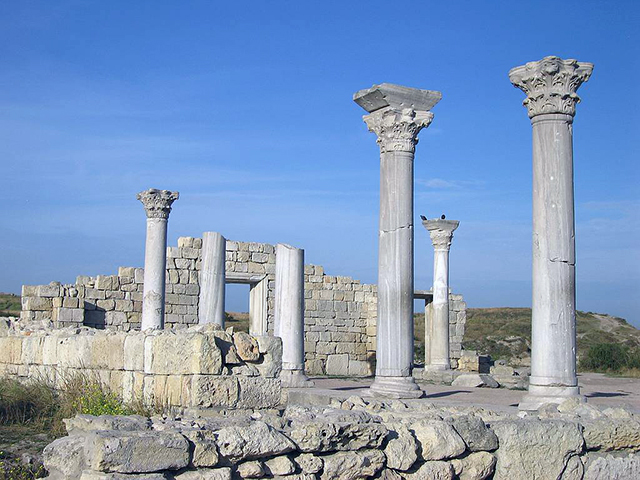
A city that remembers the past of thousands of years, a fairytale place where ancient Greeks lived by the sea dozens of centuries ago, one of the 7 wonders of Ukraine, the main attraction of Sevastopol, part of the UNESCO World Heritage Site — all this is Chersonesos Tavrichesky. This ancient city today is one of the main reasons for Sevastopol’s popularity among tourists from all over the world, many come here because of it, wanting to see the ruins of the once flourishing ancient Greek polis.
Today this place is one of the hundred most outstanding monuments of world culture, as decided by UNESCO, and this despite the fact that its list for 2013. consisted of 981 objects! It is not surprising that guests come to Sevastopol not only from all over Ukraine, but also from Europe, the United States and other parts of the world — to see such an outstanding attraction is interesting to many. And the picture that opens up to tourists justifies expectations: here before them appears really a whole city with streets, houses, squares, gates, towers, theaters, temples — of course, all this is in ruins, but the remains of buildings perfectly convey the former grandeur, allow you to imagine what this city was once when it was still alive.
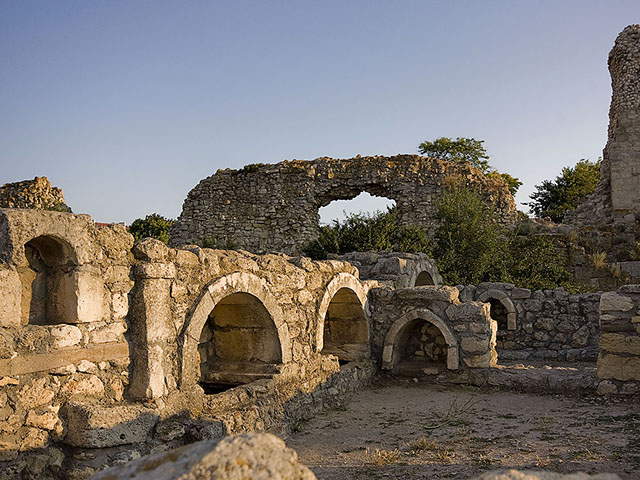
The ancient Greeks, natives of Heraclea of Pontus, gave life to Chersonesos Tauris in 529/528 BC. In search of a place for a new colony, they could not but pay attention to the picturesque peninsula (hence the name «Chersonesos» — peninsula from Greek), which reminded them of Greece and Peloponnese. It was also caressed on all sides by blue sea waters, and the climate and landscape here was just as favorable for life. Here the colonists stayed, despite the fact that all the surrounding lands belonged to the unfriendly Taurians (hence the second part of the name of the city: Taurica (country of the Taurians) then called the whole Crimea). In honor of their native land, the Hellenes named their newfound place of residence the Heraclean Peninsula. Very quickly the colony turned into the richest polis, which became a major cultural, economic and political center of the Northern Black Sea coast.
In just a century or so after the foundation of the city, streets, houses, gardens and vineyards (viticulture and fishing were the main crafts in Chersonesos) occupied the territory of the entire peninsula, which stretches from the modern Karantinnaya to Pesochnaya Bay. The Greeks erected here not only powerful defensive structures that protected them from the Taurians, but also temples, squares, theaters, and streets decorated with monumental sculptures — all in the best antique traditions. But such a beautiful oasis was not destined to exist in peace: under the onslaught of the Scythians, the Greeks were forced to turn for help to the Bosporan king Mithridates VI, who, having eliminated one enemy, himself takes away his freedom.
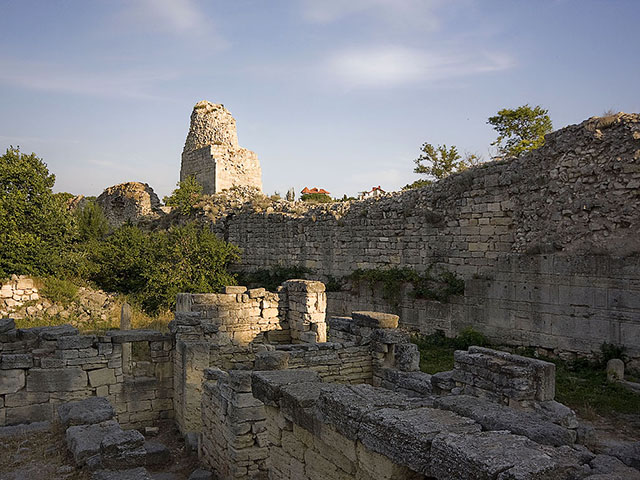
After the death of Mithridates, the city comes under Roman rule. The Roman period, during which Chersonesos reaches the highest prosperity, lasts until the 4th century, then the Roman polis becomes a part of the Byzantine Empire. During this period a significant event takes place: Prince Vladimir, the only one who manages to take the city, accepts Christianity here (the alleged place of the rite is located on the territory of the ancient settlement) in order to marry the daughter of the Byzantine emperor — all this results in the Baptism of Russia, and the city becomes an important point on the famous way «from the Varangians to the Greeks». Until the collapse of the Byzantine kingdom in the early XIII century, the city flourishes, but it is already its last centuries, after which it is destined to fall into oblivion. To the death of the city leads to several reasons: in the east of the Crimea firmly settled merchants-Genoese, who did not need competition, from the sea every now and then arrive Turks, making devastating raids, and from the north and center of Taurica periodically come the same ruthless Mongol-Tatar hordes. Blow after blow was repeated, and it became more and more difficult for the inhabitants of the city to restore it — together with the last ancient empire in the XV century, the once beautiful Chersonesos also disappeared into oblivion.
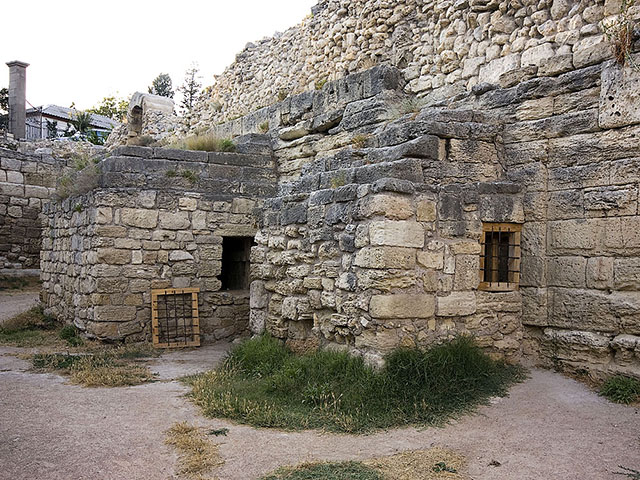
Today it is a dead city Its streets are no longer full of people and the neighborhoods are no longer verdant with gardens, only the eternal stone speaks of the fact that once there was a large prosperous polis here. Its appearance and secrets begin to be discovered four centuries after its demise: in 1827, the first excavations for scientific purposes began here, when a new city was born around the ancient Greek ruins. And now, as an eternal tribute to memory, it continues to stand mutely within the boundaries of the modern city — now it has become part of the Gagarin district of Sevastopol. In 2002. The 110th anniversary of the archaeological museum, on the basis of which the Chersonesos Historical and Archaeological Reserve was established, and the fame of Chersonesos Tauride as one of the most interesting testimonies of the past epochs is growing from year to year.
Scientists, archaeologists, historians and simply inquisitive tourists from all continents come here to see Russian Troy — that’s how Chersonesos is sometimes called. Of course, it is visited by all those who spend their holiday in Sevastopol, and many come here mostly because of it. It is a truly unique World Heritage Site, the pride of Crimea and the most interesting attraction of Ukraine, which everyone should see at least once in person.