A few hundred years before the birth of Christ, beautiful Hellas found itself in a predicament. The Peloponnesian Peninsula, the nucleus of the formation of the Greek nation, was experiencing terrible overpopulation. In the blossoming polis of ancient Greece rushed sculptors and merchants, beautiful girls and warriors from all over the Mediterranean. Therefore, some of the Hellenes were forced to go in search of new living spaces. So in the south of the present territory of Ukraine colonies appeared: Tira, Olbia, Chersonesos, Theodosia, Kimmerik and Panticapaeum. Almost all the colonies kept in touch with Mother Hellas — there was active trade between the polis on the shores of the Black Sea and the Mediterranean Sea, and if necessary, the «New Ukrainian Greeks» requested military assistance from their historical homeland.
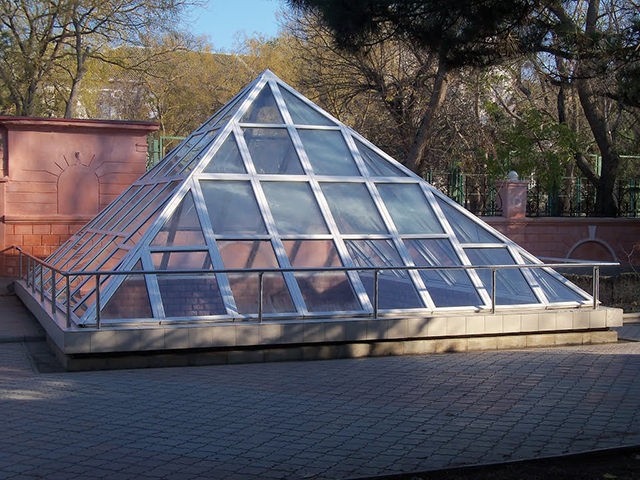
One such place where the Hellenes settled was Kerkinitida. This city was founded in the V century BC and after many hundreds of years «metamorphosed» into modern Evpatoria. The greatest number of artifacts left from the worshipers of the Olympian gods, today is concentrated on the Quarantine Cape, and the ruins of ancient buildings can be seen right on the streets of the resort. We are talking about the famous «Evpatoria pyramid», which is located on Duvanovsky Street, next to the local museum of local lore. Glass pyramid «covered» a fragment of the fortress wall of the ancient polis. Also under the dome are samples of ceramics, weapons and jewelry, once «forgotten» by the defenders of Kerkinitida.
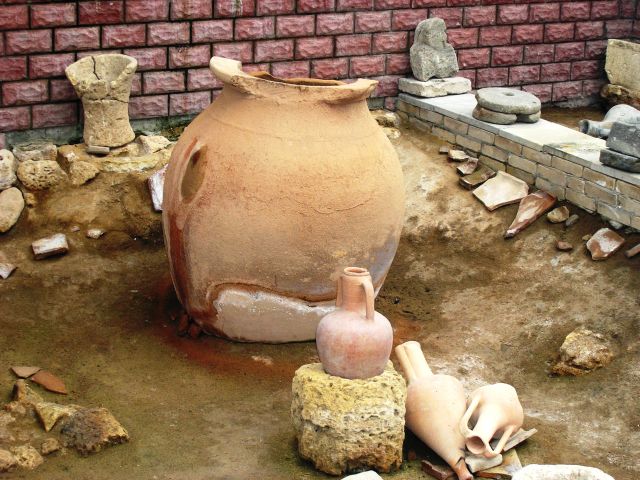
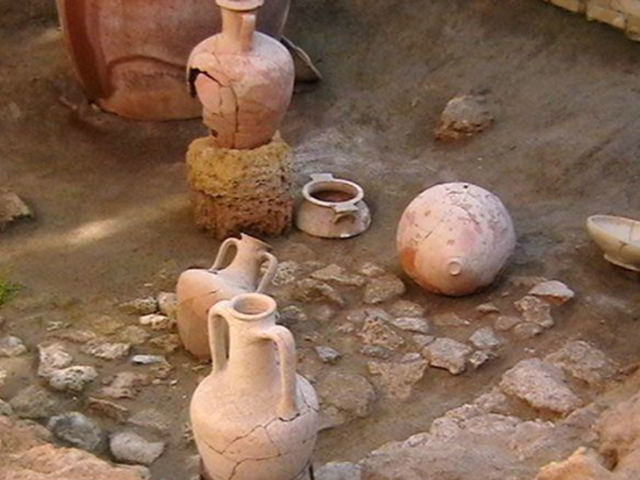
Such a pyramid, located on the street of the «living» city, will best tell the guests of Evpatoria its history. Looking into the artifacts under the glass, you will see how the Greeks, who migrated from Ionia, turn their settlement into the richest polis. Amphorae with stamps of other states, found in Evpatoria land, will tell you that Kerkinitida conducted trade with all Hellenic colonies located in the waters of the Black Sea, as well as with the legendary islands — Rhodes and Chios. Looking at the inventory hidden in the pyramid, you will realize that the population of Kerkinitidis traded with the Scythians. The Greeks bought wool, milk and meat from the nomads, selling them bread, wine, jewelry and weapons. Like all Hellenes, the Crimean colonists fished, grew wheat and tended vines.
Appetite comes at meal time — glass pyramid only kindles at visitors of Evpatoria desire to learn maximum details about its founders. Legs themselves will lead you to the museum, located next to the glass pyramid. Employees of the institution will tell that in the period of prosperity in Kerkinitida lived about 2 thousand people. This is evidenced by the hulks of 230 houses. The buildings consisted of 2-6 rooms. Some houses were two-storeyed, roofed with tiles. Each of them was designed for a family of 2 generations with several children and slaves.
The successful and wealthy polis could not remain independent for long. At the end of the 4th century BC, Kerkinitida fell under the protectorate of Chersonesos. Curiously, the city had its own and Chersonese denominations in circulation in parallel. In quantity, satisfying even Croesus, these gold and silver coins are exhibited in the showcases of Evpatoria Museum of Local Lore.
In the II century B.C. Kerkinitida was captured by the Scythians — and Khersones did not help. Their newly formed state, Naples (present-day Simferopol), demanded its own ports and other dividends associated with access to the sea. Therefore, the Scythians captured the Ionian polis. But, having no time to use the advantages of the possession of the Gulf of Calamites, they were knocked out of the city by the tribe of Roxolans — temporary allies of the Greeks. The latter were knocked out of the city by the warriors of Diophantos, a punitive detachment sent by King Mithridates VI Eupator from Panticapaeum — the present Kerch.
So many military battles in a small period of history led to the destruction of the future landmark of Ukraine. The few survivors of the Ionians left their polis on Cape Quarantine. In the IV century, the Huns were seen in the «city of crabs» — one of the translations of the word Kerkinitida. And already in XIV century on long-term vacation in Evpatoria settled subordinates of the Crimean Khan. Thanks to such a rich history, the modern resort was nicknamed «Crimean Jerusalem», and its guests can see the ancient buildings, carefully covered with a glass dome, right on the streets of the city.