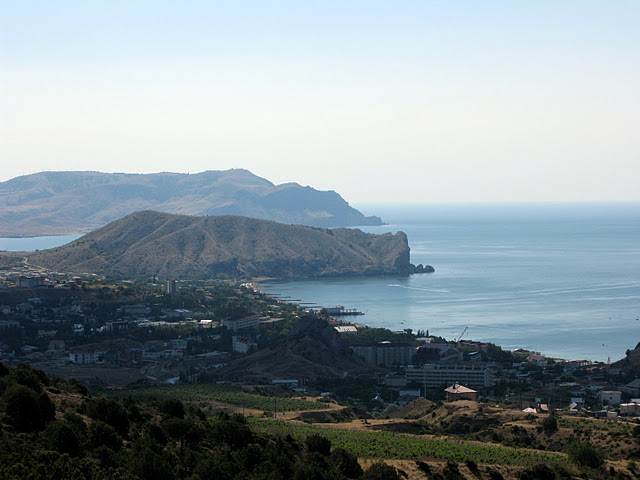
 Alchak. What an interesting name of the cape, isn’t it? However, we hasten to temper your imagination: the ancient peoples who lived in the Crimea and in Sudak in particular, did not succumb to the temptation of exoticism. Although in those days, probably, and the concept of «exotic» did not exist yet. That is why all the rocks and capes of the Crimean peninsula have quite trivial names. Alchak Cape is not an exception. In literal translation from the Turkic language «Alchak» means «low». Among the surrounding peaks, this rocky mountain is the smallest. Ancient people, unsophisticated imagination, of course, noticed this and christened the cape with a name corresponding to the «growth» of the mountain.
Cape Alchak lies just between Sudak and Kapselskaya valleys. The footpath to the cape is trampled by millions of feet, and therefore on the way to Alchak you will not need a guide. Few people know that long ago this rocky mountain was a real coral reef. This is evidenced by gray marble-like limestone and snow-white veins of calcite, which, as if by threads, Alchak is sewn through. In this Crimean corner often come together domestic and foreign archaeological groups, which for the past years have already managed to discover here more than a hundred different types of ancient fossil invertebrates. In this scattering of former «jewels» there were even huge rapans, which today, unfortunately, are no longer in the Black Sea.
You should visit Cape Alchak at least for the sake of the Aeolian Harp. It is quite an unusual rock, «inside» 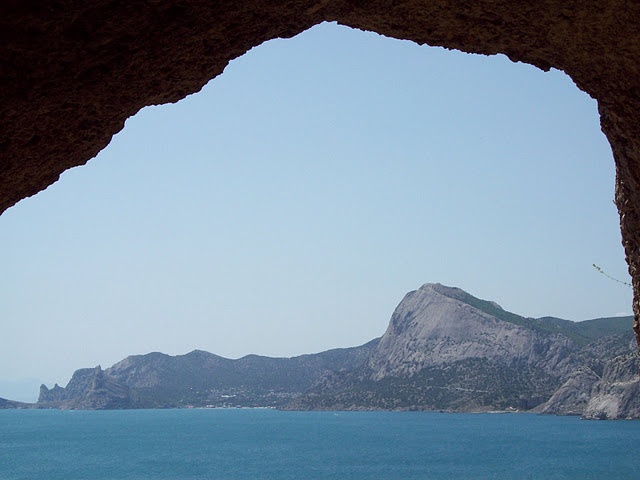 which is a huge through hole. If you look into the strange frame of the giant stone ring, you will see an unforgettable panorama of the reef massifs of New World and Sudak. Right behind the ring proudly looks into the distance Bolvan Mountain, and a little to the right «landed» a huge trapezoid of Sokol Mountain. They are accompanied by Koba-Kai peak and Cape Kapchik, which, as if frightened, clung to the sea abyss.
Many sights of Crimea can boast an abundance of iconic places and ancient tracts, house-museums of famous poets and writers and botanical gardens. Cape Alchak is much more modest in this respect. Nevertheless, many archaeological discoveries were made here at different times, which turned our idea of the past upside down. In the middle of the twentieth century at the foot of this «low» rocky mountain, scientists found a site of the Bronze Age, and in the second half of the twentieth century — a treasure trove of tens of kilograms of gold Bosporan coins! Can you imagine! Treasure! There is an impression that Cape Alchak is a certain place, drawn from fairy-tale and legendary images, from those dusty pages of history, which tell about flibusters, sea battles and the search for chests of gold. So that’s where the gold was hiding!
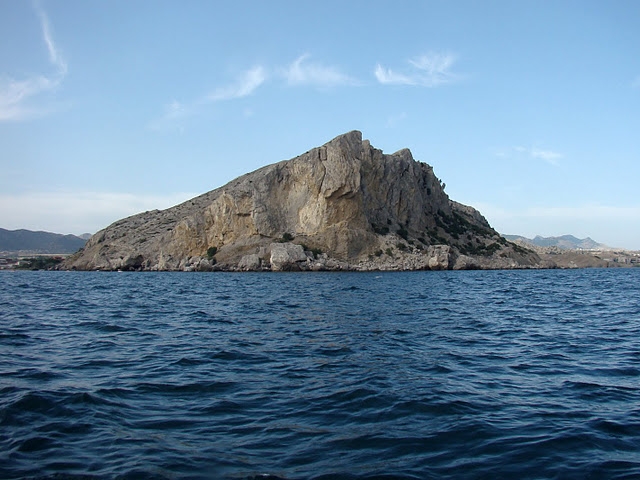 However, the fact of gold discovery did not make this landmark of Ukraine Eldorado — and thank God. But you and I nowadays can absolutely unhindered walk through these fairy-tale lands, which are dotted with colorful sea stones from the east. And in these pebbles hide «gypsy crabs» — so nicknamed by the people miniature dark crabs. The western part of the mountain is a steep cliff. Professional divers who have been in these places say that the sea there is very deep and very blue. Let’s take their word for it.
Talking about this attraction of the Crimea, it is impossible not to say that geologists have indeed confirmed the presence of golden pyrite on this piece of Crimean land. Local children back in the XIX century washed out of the clay a lot of miniature crystals, which were later exchanged or played with. At the turn of the XIX and XX centuries, fences appeared on the beaches of Sudak, indicating the beginning of gold mining operations. However, a little later geologists made their final verdict: gold on the eastern coast is so little that it can be of interest only to scientists, especially since this precious metal is of local origin. Since then, Cape Alchak has never been called the Klondike, but it has been called one of the most picturesque and enchanting places on the Crimean peninsula millions of times.