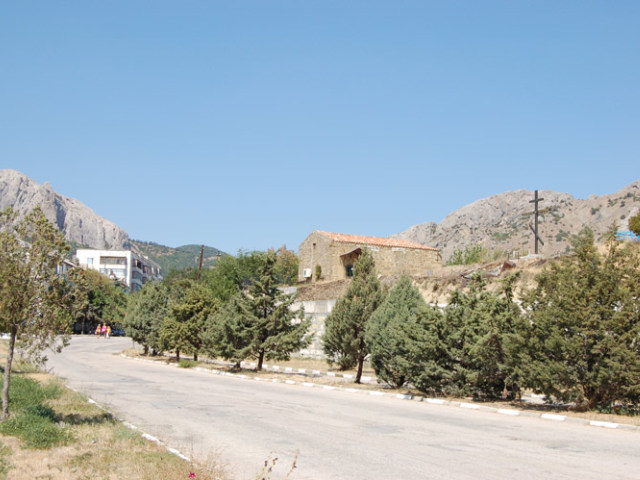
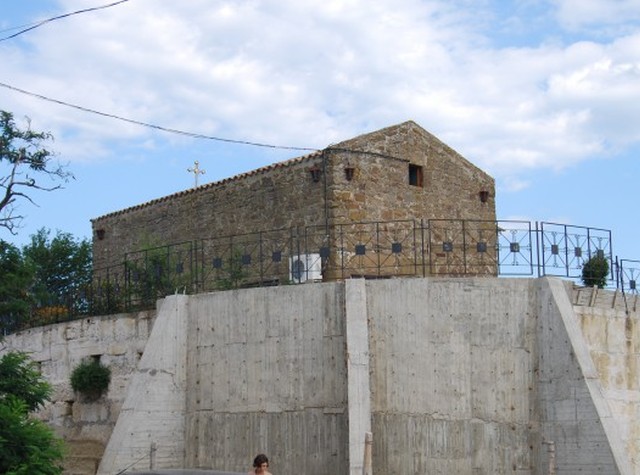
This is the oldest of the active temples in Crimea: the time of its construction dates back to IX-XII centuries. The temple rises on a hill in the center of the village, near the bus stop. Svyato-Ilyinsky temple differs from modern churches not only by its architecture, but also by the unusual throne of God and its location. The throne in this ancient temple consists of three stone slabs and tightly adjoins the eastern wall of the church, so that it is impossible to go around it. The door to the church, located in the south wall, is so low that one has to bend down to enter. Because of this, some residents call it the «door of humility.» The large stone above the front door is decorated with five carved rosettes with Greek crosses, but today they are hardly visible. The sunlight enters the church through two small windows, rather like forts. They are located on the eastern and western walls. During the excavations near the church, fragments of masonry on clay «in herringbone» were found. This suggests that an older church stood on the site of today’s temple earlier than the 10th century.
 .
.
Originally the temple belonged to the Greeks. According to Suvorov’s report on the number of Christian settlers from the Crimea, presented to Count Rumyantsev, on September 18, 1778, 38 men and 36 women came from the village of Kozy. For such a number of parishioners the small Kozy church was quite sufficient (the village Solnechnaya Dolina was called Kozy until 1944). A few years earlier, the priest in the Koza church was Father Peter. He was killed by the Turks in 1771. The parishioners of the church buried the body of the murdered priest at the entrance to the church. A smooth stone slab was placed over his grave, and a bench was placed next to it. Father Peter was revered by the locals as a martyr and miracle worker and was honored not only by Christians but also by Muslims. The sick were brought and brought to the bench at the tomb for healing. People tried to take a handful of earth from Father Peter’s grave as a sacred relic, so there was always a small hole under the slab.
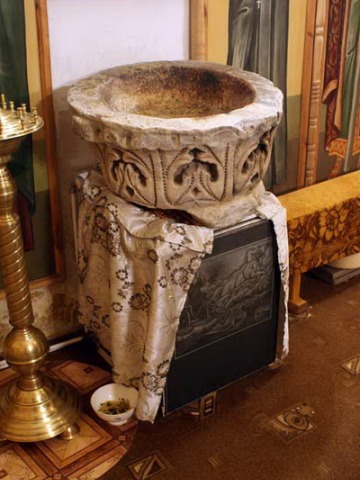
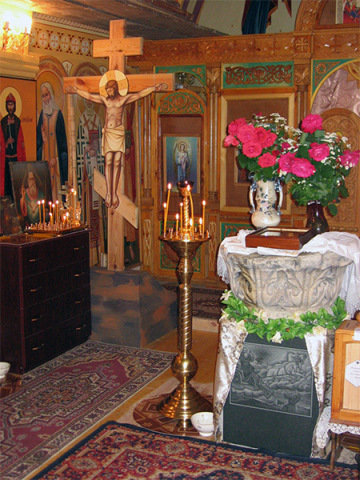
The main relic of the temple was an ancient marble font of the IV-V centuries brought from Constantinople, made from the marble capitals of the columns of the ancient temple. The marble was brought from the island of Prokonese on the Sea of Marmara.
After the resettlement of the Greeks in the Azov region in 1778, the temple was looked after by local residents. In 1904 the temple was repaired, repainted, services were resumed from July 18, 1904. In those years St. Elijah’s Church stood on a neat hill surrounded by a low stone fence. On the north side of the church was a lake, over which a huge old mulberry tree towered. The lake was almost ten times the size of the church.
After the arrival of Soviet power the temple did not remain active for long: in 1939 it was closed and a granary was built in the premises of the temple.
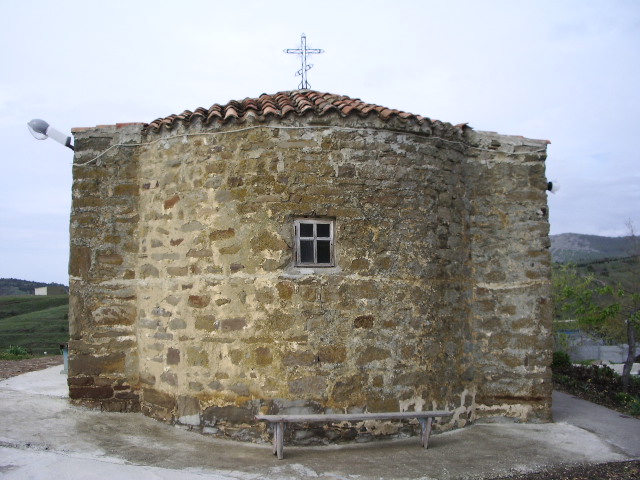
During the war years the church was briefly opened for Romanian troops stationed in Koza, but after the war it was again abandoned and fell into disrepair. In the 60s, the lake near the temple was drained, the hill was cut, and the church decided to demolish. But archaeologists intervened: they investigated the temple and hung a cast-iron plate, which said that the temple — a monument of architecture X-XI centuries. and is protected by law. At that time the northwest corner of the church was practically hanging in the air, and the walls began to give strong cracks. To prevent the temple from collapsing, the mutilated hill was enclosed with lime slabs. Around the same time the ancient marble font disappeared from the church.
In 1998, with the blessing of His Eminence Archbishop of Simferopol and Crimean Lazarus in Sun Valley revived the Orthodox community. In the temple carried out restoration work. By the Throne Feast (August 2) in 2000 was returned to the temple ancient marble font.
In 2001, the tomb of the martyr priest Peter, which had been looted during the Soviet era, was found. Only small parts of the priest’s vestments, medical bandages and a small silver coin were found. A stone slab in memory of the murdered priest was again placed on the grave site. The inscription on the slab reads: «Under this slab rested the relics of the priest Peter, killed by the Turks in August 1771».
Restoration work inside and outside the temple continues. Warm and good wooden flooring was laid, doors were replaced, choirs for singers were built, and a stand was made under the ancient font. In 2004 there was a fire in the temple premises: the floor near the font caught fire. The fire lasted all night, and when in the morning the temple was opened and the smoke cleared, everyone was surprised to find that the fire did not move further than half a meter from the font. And this is in a small temple, where all the trim is made of wood! The fire is now reminded of the «patch» of new floor boards under the font.
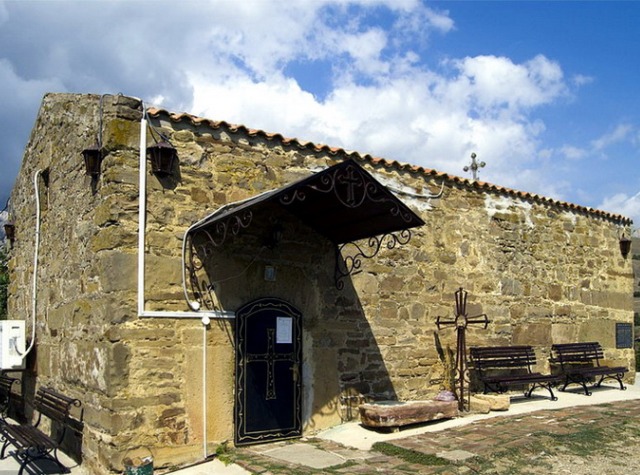
Also, a small miracle happens in Sun Valley every year. Among the hot summer days, when the earth cracks from the heat and the sky does not give a drop of moisture for many months, there is one day when rain is a must in the village. This is the Throne Feast of the Solnechnodolinskaya Church — the day of the holy prophet Elijah, the patron saint of rain and thunder. On August 2, even if it is a cloudless day, the «wind» is sure to bring a small cloud that will sprinkle the church with a few drops of moisture, and in the sky there will be a light rumble of thunder, as if an echo of the fiery chariot of the holy prophet rushing through the sky. And sometimes, during the festive service, the Sun Valley is literally flooded with the rain of grace.