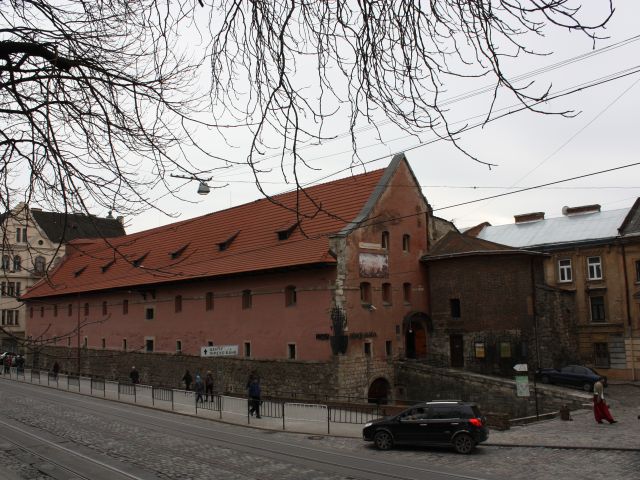
Arsenal (City Arsenal) is an architectural monument of the XVI century. It is one of the few buildings of defense type, which has survived to this day. On this place already 1430 there was a small armory, which in 1554 was dismantled, and in its place under the guidance of master Ivan Lis in 1555-1556 years built a new, almost completely destroyed by fire in 1571. The building, which survived to our days, was erected in 1574-1575 with the participation of Lviv builders Pavel (Pavel Happy?), Ganush, Sebastian (Sebastian Mochigemba?). Since the construction was carried out at the expense of the city, the building was called the City Arsenal.
The arsenal was part of the Lviv fortification system. Its eastern side was attached to the High Defense Wall between two towers — Tokarska and Povoroznitska from the north and Shevska from the south. A bastion stood in front of the building. All this together created a powerful node of the city’s defense. In the Arsenal weapons were stored and repaired. Next to the Arsenal was an ammunition depot.
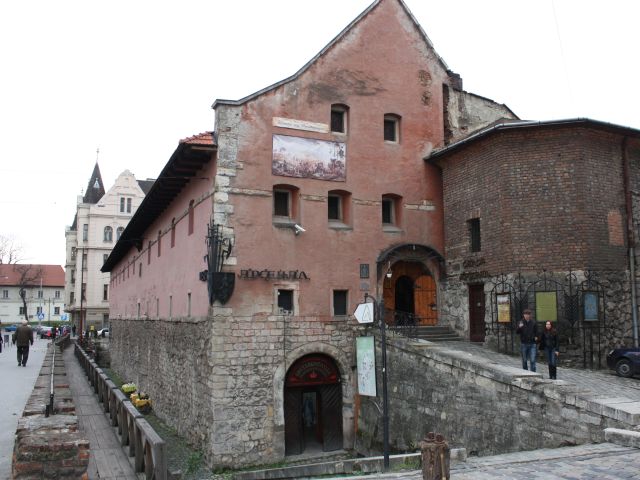
Since 1582 at the Arsenal (from the side of the street of Brothers Rogatintsev) there was a ludvisarnya (foundry) of cannons, which were cast for the defense of the city and for sale.
During the Swedish attack in 1704 the building of the Arsenal was burned and destroyed, but two years later it was rebuilt. In the XVIII century . The Arsenal was used as an unofficial prison. In 1768 — 1770 the prisoners of haidamaks — participants of the Koliavshchina were kept here. A memorial table by Lviv sculptor Anatoliy Galyan (1970) immortalized their memory. In 1777 the Austrian authorities decided to rebuild the Arsenal into a prison, but did not find the means to do so. In 1800, the premises of the Carmelite monastery were used as a prison, and the Arsenal was converted into a military warehouse. The third floor was added to increase the number of rooms.
In 1850, the Arsenal again began to store weapons confiscated from the population of Lviv and the surrounding area after the revolutionary events of 1848. Next, it was a food warehouse for storing grain. In November 1918, the warehouses of the Ukrainian Food Board were located here. The Arsenal was also used as a warehouse for goods in Soviet times.
In 1975, by the decision of the city council, the Arsenal was handed over to the Lviv Historical Museum. After the completion of restoration works on the International Museum Day — May 18, 1991 — the exposition department of the Lviv Historical Museum — Museum-Arsenal was solemnly opened here.
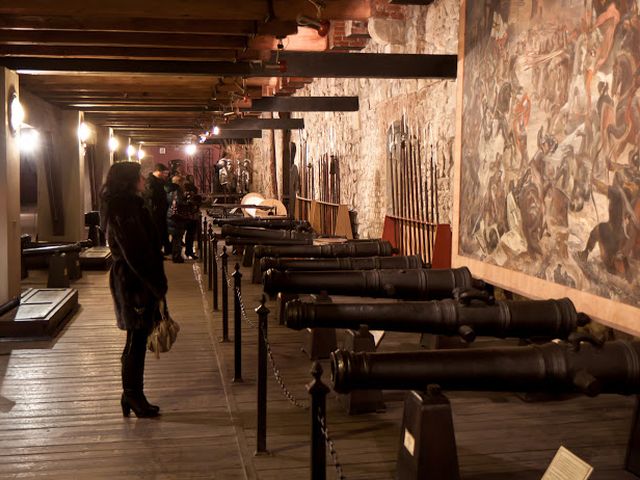
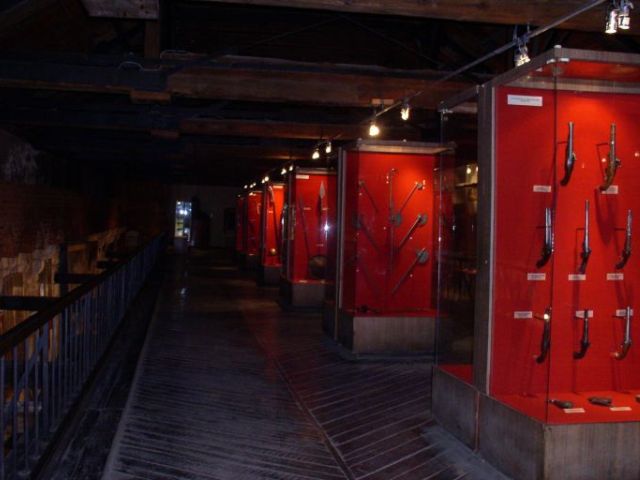
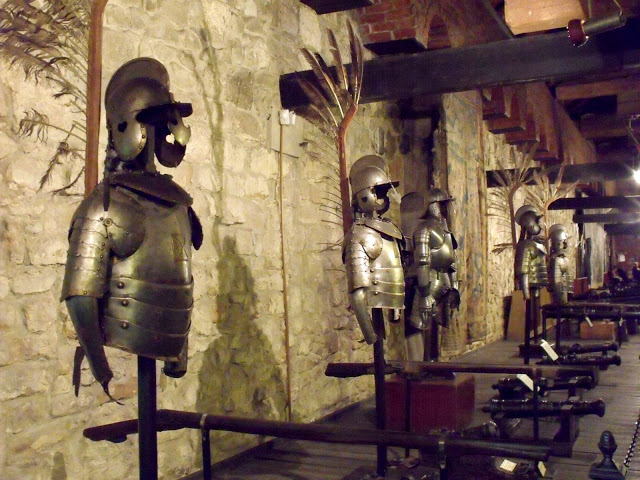
The exposition presents samples of ancient weapons from more than 30 countries of the world. The exposition is organized chronologically and thematically, by types and place of weapon manufacture.
 .
.
The chronological framework of the exhibits covers the XI — early . The chronological framework of the exhibits covers the 11th — early 20th centuries and gives an idea of the evolution of weapons, their types, kinds, places of manufacture, aesthetic tastes of masters — gunsmiths, the level of technical development of society, etc.. The luxurious decoration of many exhibits allows us to speak of them as works of applied art. Many specimens are decorated with precious metals, stones, ivory, pearls, coral and mother-of-pearl.
There is an interesting one and a half-handed sword of the XIV century, the head of the hilt of which is decorated with a brass cross — a sign of the Teutonic Order. This monument is a witness of the heroic struggle of the Slavic peoples against the German knights. Huge two-handed swords of the XVI century, which were used in the defense of fortresses to knock down assault ladders, they were armed with guards of commanders and flag. The jewel of the collection is a saber of the XVII century of the oriental type with a double blade — the so-called «Zulfakar».
 .
.
In the Museum — Arsenal are presented all the main types of weapons: cold, throwing, firearms, items of protective armament.
In addition to weapons in the Arsenal is an exhibition of holograms of ancient orders, made from authentic awards, which are kept in the funds of the Lviv Historical Museum. Visitors can see, in particular, holographic images of the orders of St. Andrew, the Golden Fleece, the Legion of Honor and many other famous awards of Europe and Asia.
The Arsenal building preserves a valuable monument of Lviv castings — the statue of Archangel Michael, made by the master Kaspar Franke. It once decorated the portal of the Royal Arsenal in Lviv (1638).
The Museum-Arsenal is a unique museum, which has no analogues in Ukraine.