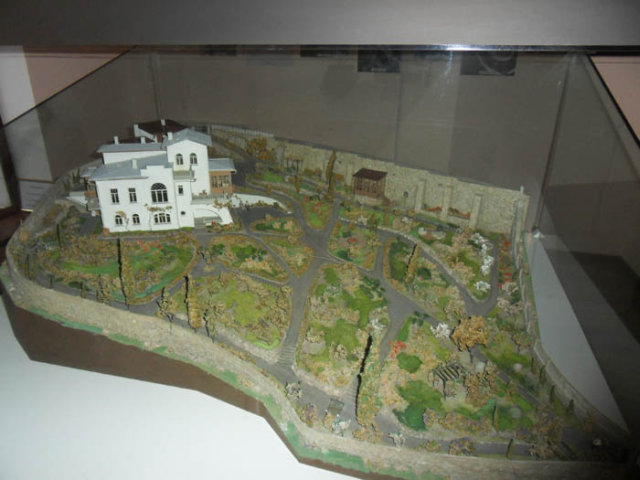
A. P. Chekhov came to Yalta many times. In 1898, due to aggravated lung disease, on the advice of doctors he chose the Southern coast of Crimea for a permanent place of residence.
In October 1898, the writer, who first lived in private dachas, buys a small plot of land on the outskirts of Yalta in the village of Verkhnyaya Autka. Chekhov entrusted the construction of the house to the young architect L. N. Shapovalov. The writer himself took part in the planning of the rooms. In September 1899 he celebrated a housewarming party together with his mother Evgenia Yakovlevna.
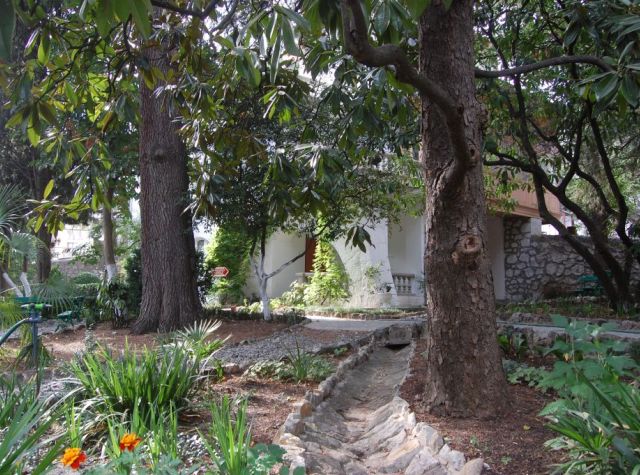
At the same time with the construction Anton Pavlovich was engaged in the improvement of the site. Chekhov’s hands planted more than 150 species of various trees and shrubs in the stony soil.
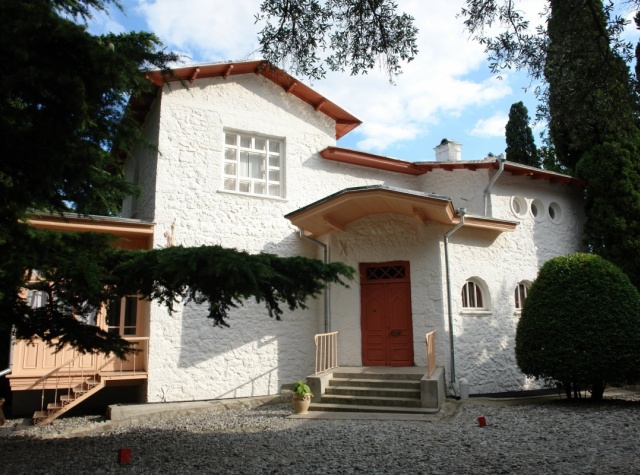
Chekhov’s cozy house, which locals called «Belaya Dacha», becomes a place of pilgrimage for representatives of advanced Russian culture. A. M. Gorky, I. A. Bunin, A. I. Kuprin, V. G. Korolenko, N. D. Teleshov, D. N. Mamin-Sibiryak, I. I. Levitan, V. M. Vasnetsov, S. V. Rachmaninoff, F. I. Chaliapin and others visited Chekhov’s house.
Despite a serious illness, Chekhov did not stop working. From under his talented pen here come out stories «Lady with a Dog», «The Bishop», «On Christmas Eve», «The Bride», the story «In the ravine», the play «Three Sisters», «The Cherry Orchard». A complete collection of his works was prepared for publication.
 .
.
The exposition tells about the writer’s active participation in the public life of the city, about his activity as a trustee of the women’s gymnasium, about his material assistance in the construction and maintenance of the school in the village of Mukhalatka, about collecting money for the starving people of the Volga region, about organizing donations for the construction of the boarding house «Yauzlar» — the first sanatorium for indigent patients on the South Coast of Crimea.
After Chekhov’s death, according to his will, the writer’s sister Maria Pavlovna Chekhova began to live in the Yalta house. The growing popularity of the master of the word prompted her to keep this house as a national treasure «for all who love Chekhov, as a great writer and an exceptional man. People began to come to the house asking to see the rooms where the writer lived, to talk about his life and work.
In 1911, a guest book appeared. The first entry in it was made by M. G. Savina, an actress of the Alexandria Theater.
But only after the October Revolution, May 4, 1919, Simferopol revcom declared the house a national treasure and M. P. Chekhov appointed for life keeper of the house. And on April 9, 1921 she was issued a letter of protection Yalta County and City Revolutionary Committee. «White Dacha» officially became a museum — the first state literary and memorial museum of the Crimea. M. P. Chekhova did a great job of systematizing the rich epistolary heritage of the writer and prepared for publication a 6-volume collection of his letters.
During the Nazi occupation Maria Pavlovna managed to preserve all of Chekhov’s priceless relics, for which she was awarded the Order of the Red Banner of Labor in 1944.
On April 16, 1944, the day Yalta was liberated, the hospitable Chekhov’s house opened its doors again. The first visitors were Soviet soldiers. And then S. Ya. Я. Marshak, M. S. Shaginian, M. A. Aliger, K. G. Paustovsky, I. S. Kozlovsky and many other figures of Soviet culture visited the house.
Every year replenish the funds of the Chekhov House Museum in Yalta. Now the number of exhibits has reached 13.4 thousand.
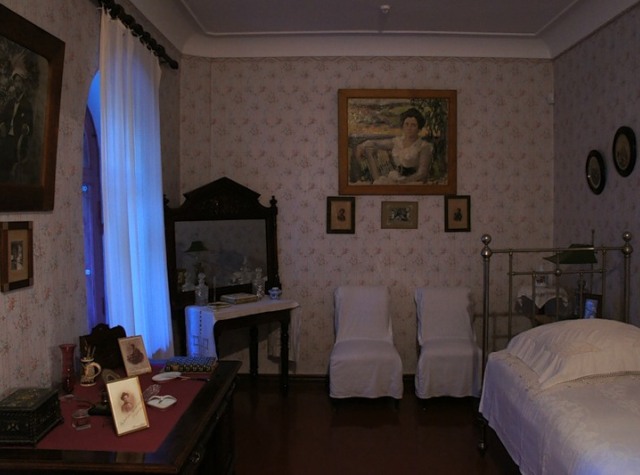
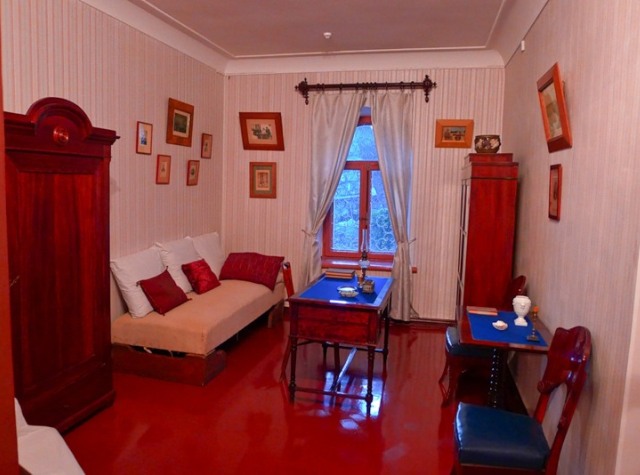
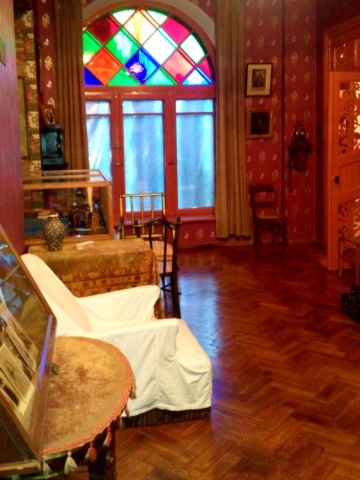
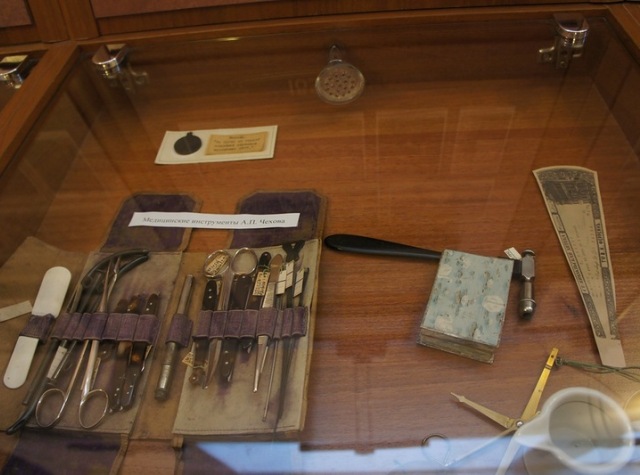
The most valuable of them are Chekhov’s autographs, lifetime editions of his works, photographs, personal belongings of Anton Pavlovich, business cards and photographs with gift inscriptions of Chekhov’s contemporary artists, actors and writers; 8 paintings by I. I. Levitan. The furnishings of the writer’s living room, bedroom and study have been fully preserved.
In 1964 a literary exposition was opened near Chekhov’s estate in a specially built building. The large hall chronologically presents materials about the life, creative and social activities of the great Russian writer in Taganrog, Moscow, Melikhov and his trip to Sakhalin Island.
A special place is occupied by the section devoted to the Yalta period. Numerous stands and showcases display photos, documents, personal belongings of Anton Pavlovich, his manuscripts, books, posters of plays and movies based on Chekhov’s works.
In the small hall of the exposition there are editions of the writer’s works in the languages of the world, a collection of collections of Anton Chekhov’s works and letters. A. P. Chekhov, lifetime editions.
The section «Chekhov — Lenin’s favorite writer» tells about the importance that Vladimir Ilyich attached to the writer and his work. It presents Lenin’s works, in which Chekhov’s artistic images are used.
The tour of the literary exposition ends with the section «History of the Anton Chekhov House-Museum in Yalta». Together with the construction of the house Anton Pavlovich laid his garden. Nowadays about half of the plants planted by the writer have survived. In the corner of the garden is «Gorky’s bench». Chekhov and Gorky liked to sit and talk on it.
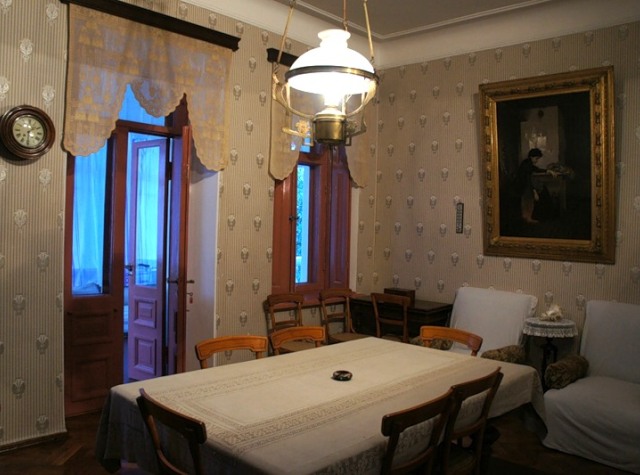
There are 9 rooms in the memorial house of the writer. On the first floor there is a dining room, a room of the writer’s wife O. L. Knipper-Chekhova, rooms for relatives and guests. The first floor was opened for inspection in 1964. On the second floor there is a room of the writer’s mother, E. Y. Chekhova, a living room, a study, the writer’s bedroom.
In 1987 A. P. Chekhov’s Gurzuf dacha became a department of the museum (Gurzuf settlement, 23 Chekhova St.).