 The small town of Turka, located in the south of Lviv region, lacks only a worthy chronicler and minstrel. Because a settlement with such historical baggage should be as famous as Reims, Cannes or Verona. Turka is famous as the main location of the unique ethnos of the Boyks, the most Ukrainianized of the Orcs. Turka is known as the last place in the Carpathian Mountains, where live aurochs — round-horned beauties, ancestors of livestock — were seen. In addition, the small town in the intermountain hollow of the Skolivskie Beskid has its own Market Square and seven temples, each of which is a small masterpiece of sacred art.
One of the strongest places for religious rituals in the small Carpathian town was the Synagogue Tempel. The reason for its appearance in what is now Western Ukraine was the resettlement of 25 Jewish families to Turku. They arrived at the personal invitation of Antoni Kalinowski, a kind of Peter the Great of Poland. It was he who obtained the Magdeburg Law for the city, built Rynok Square and the first version of the Town Hall. Jewish merchants were invited to revitalize commerce in the newly «rebuilt» settlement. Favorable conditions of trade operations were created for them. Antoni Kalinovsky built houses, a school, a printing house for the Turk Jewish community and allocated a place for a cemetery and a synagogue.
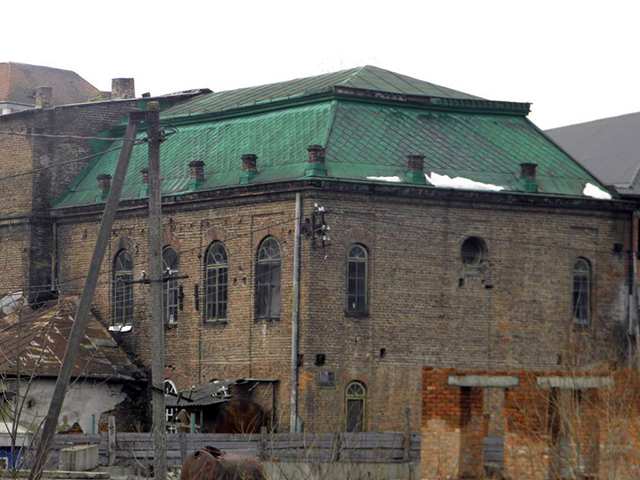
Jews came to the city in 1730, and by the end of the XVIII century Turk already had its own synagogue — Tempel. Its style is labeled as Romantic Art Nouveau. Translated into non-artistic language, it means that the Jewish temple looks like a knight’s castle. When you come on vacation in Turku, and walking along Jerele Street, you will really see a massive castle-shaped quadrangular building with characteristic lancet windows. It is adjoined by baroque towers, one of which was used for ritualistic activities. Only the roof is disappointing — it is made in the typical Carpathian style. This is a correction for the region.
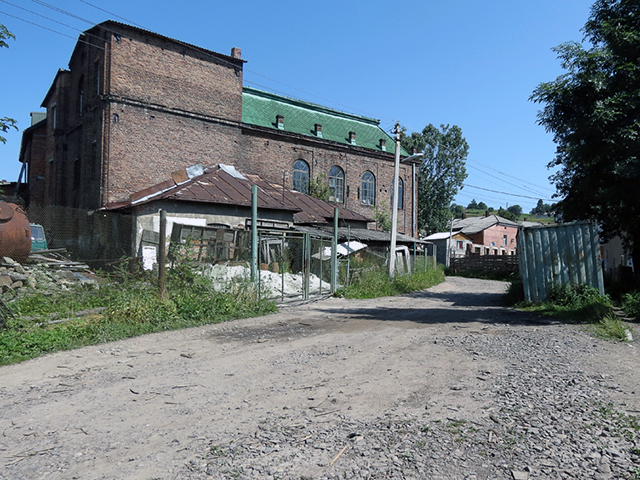 Synagogue Tempel would have been a decoration of Turki, but the XX century became «black» not only for this architectural structure. In 1916 century the temple was mutilated by Russian soldiers. In 1941 the synagogue became a place for the Jewish ghetto organized by the Nazis. In 1942, a kind of transit point was created here: from here people were sent to Polish concentration camps or shot on the spot — on the territory of the Okopiska cemetery.
The Soviet authorities behaved no less godly towards the synagogue after the end of the war. In 1945, a few surviving Jews were «squeezed» out of their consent to use the temple for economic purposes. If you get to the same Dzherelna Street today, you will see a furniture workshop in the middle of the former synagogue.
If a miracle happens and Tempel Synagogue resumes its activity as a temple, it could take an honorable place in the cohort of the best attractions of Turka. Then the city could claim the title of the capital of Judaism in Western Ukraine, and holidays in the Carpathians would become no less popular than a tour to Mecca or Jerusalem. Unfortunately, those who come to Turku today will be able to please themselves with many natural and architectural wonders, but not with contemplation of the living miracle of Galician-Jewish sacred romanticism