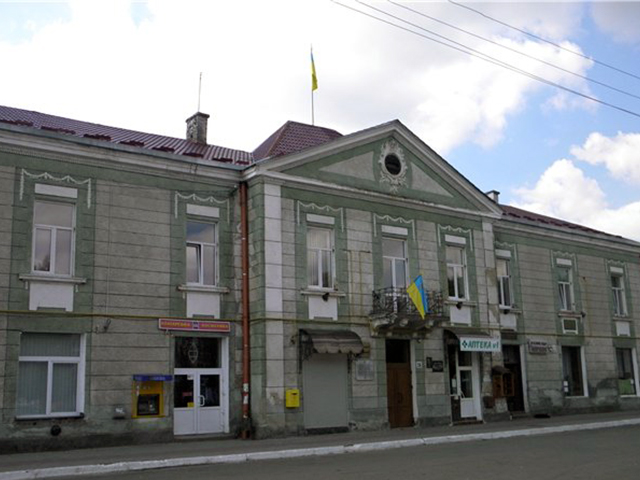
 Leisure in the Carpathians always promises travelers a lot of discoveries and wild things. In addition to the mountain ranges, on the territory of one area you can find hundreds of springs of mineral waters, differing in chemical composition and, of course, healing effect on the body. Here you can easily find the remains of Phrygian fortifications and an active cave monastery dating back to the XIII century, petrographs and artifacts left by primitive people.
One of such regions, where cultural and historical sights are not less than in a small European capital, is the south of Lviv region — Skoliv and Turkivka districts. The town of Turka, the district center of the latter, appeared in the valley of Stryja as one of the elements of the «Russian Road». This was the name of the road from Western Europe to Moldavia in the Neolithic period. A little later, the Uzhotsk road, which connected Galicia with Transcarpathia, passed through Turku.
Not as a stronghold of traders, but as an independent settlement, Turka was formed in 1280, when Lev Galitsky annexed Transcarpathia and the lands lying on the way to «unification» to his principality. In honor of this event, a pillar with writing was erected on Mount Pikuy, which marked the boundaries of the princely possessions. The formation of the Boyk ethnos, one of the most distinctive groups of the Ukrainian people, which is confined to the Carpathians and bounded by the Lemnica and San riverbeds, is also associated with this time.
In the XIV century, the proud boyks, together with the surrounding lands, were «inherited» by the Wallachian Count Vanche Valach. Polish King Vladislav the Second made such gifts to his subjects! A key milestone in the development of the town was the sale of the picturesque valley of Stryj in the XVIII century by the heirs of the Wallachian crusader to Mr. Antoni Kalinovsky. The nobleman made the town his residence, invited Jesuits here and stimulated the process of obtaining the Magdeburg Law by Turka. Kalinowski financed the construction of a wooden church and mission premises for the Jesuits, and for the development of the town and self-government, a Market Square was created, following the example of famous European cities.
 Rynok Square is the historical center of the city. Under the Soviets it was renamed Lenin Square, but now it has been returned to its historic name. Work on the square began in 1730 on a convenient bend formed by Jabluńka, a tributary of the Stryj. The first to be built was the wooden Town Hall. It is a voluminous cone-shaped two-storey building. Initially it was raised above the ground by 34 pillars and girdled by a gallery. A two-story covered porch was added for the convenience of the viit, assessors, counselors and the elected president Turki. At the walls were chutes with fodder for horses and three stores for «gallant» goods. The Town Hall itself contained the town clerk’s office, an inn and a tavern. It was decorated with a dome with a multibeam star on top, and each room had a wooden floor and tiled stoves.
Unfortunately, in 1907 the main attraction of Turki was rebuilt. The wooden structure was replaced with brick. The new unified Art Nouveau Town Hall still housed the local government. In 1992, after the World Boyk Festival in Turki, the People’s Museum «Boykivschina» was established in the Town Hall. It includes: ethnographic department, history of Turk, Ukrainian diaspora and the room of ethnographer Zubritsky, who studied the life and culture of the «Carpathian Orcs». The current address of the Town Hall with the museum is Rynok Square, 26.
In addition to the Town Hall, Kalinowski built up Rynok Square with houses with original porches and large roofs that «lay» on wooden poles. This was done so that the townspeople could hide under them from the rain. Some of the houses were inns, some were offices of logging companies. Some of them had room for taverns, others for stores and drugstores. The square was quadrangular, and the front of each house did not exceed the famous «three-window width».
To see what remains of the former medieval splendor of the Market Square, we invite you on a vacation to Turku. Hay for horses, a tavern and a hotel will be guaranteed to everyone who is on vacation in the Carpathians and has spared no time to see the unique turka sights. You’ll notice the signpost to the city on the «Uzhocki Shliach», sorry, the Lvov — Uzhgorod, 137 kilometers away from the city of Lviv or 70 kilometers away from a friendly family of water and oil resorts: Boryslaw, Shodnica, Truskavets and Drohobych.