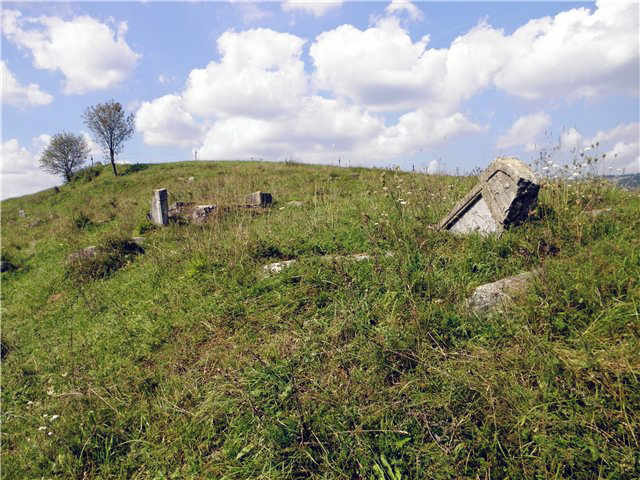
 Jewish Cemetery is a twice dead memorial.
Each city has its own unofficial nickname or set of epithets, hearing which, you immediately understand about which settlement we are talking about. For example, everyone knows a stable bunch of words: romantic Paris, New York — the city of the «yellow devil» or the Big Apple. The sayings of Albius Tibullus that Rome is an «eternal city» or Nestor the Chronicler who labeled Kiev as «the mother of Russian cities» have survived centuries.
A very interesting discussion has developed around the unofficial nickname and possible brand for the small town of Turki, located in the southern part of the Lviv region. The point is that it claims to be the «capital of Boikivshchyna» and the main city of the Jews of Western Ukraine. Turky is already rich in history, and here two outstanding cultural layers have been raised, which form the image of the city, the region and the country at the international level.
At first, the Turka neighborhood was settled by Turks, Boyks and a feudal lord — a distant relative of Count Dracula, but the Jewish population appeared in the city later than anyone else. In 1730, after Turky received the Magdeburg Law, the last and most progressive owner of this land, Antoni Kalinowski, invited 25 Jewish families to the town. This was done in order to develop healthy commercial relations in the city and to give it a European gloss. Newly built houses, a synagogue, a school and a printing house were prepared for the invited merchants. They were given privileges for commercial operations and land was allocated for the Jewish cemetery, aka Okopysko.
The necropolis is located on the slope of the mountain, which rises above Rynok Square, the historical center of the city. They are separated by the Jabłunka River and a small rise. The river was a symbolic border between the kingdom of the dead and the living, and the uphill climb made it difficult for a person to move to the other world, to death. Although the local population, the same Boyks and Poles, believed that in this way the Jews were getting closer to God and wanted to take the first places in the queue for the Last Judgment. That is why they placed their cemeteries in the neighborhood.
If we come back to the question of which nation should Turku be considered the unofficial capital of, we should cite a couple of figures. In 1921 the city had 10 thousand inhabitants, of whom 4200 were members of the Jewish community.
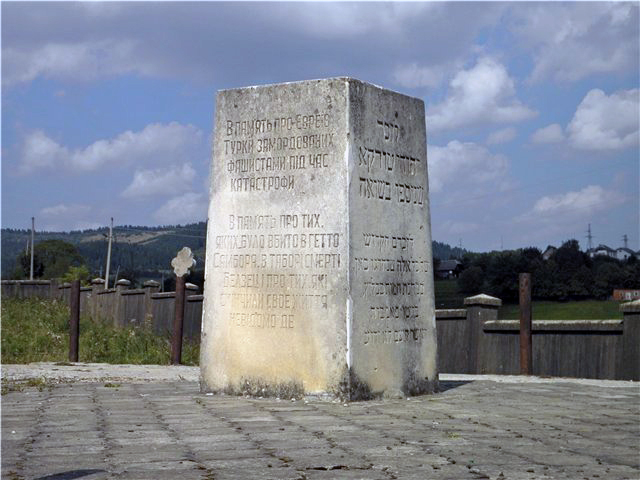 The black period for the citizens and the active growth of the Jewish cemetery is connected with the German occupation in the city. In 1941 on the territory of the local synagogue the Nazis created a ghetto. Some Jews were shot there, and some were transferred to the nearest concentration camps — Belzhitsy and Auschwitz-Berkenau, aka Auschwitz. In 1942, it was on the territory of the local cemetery that almost all the descendants of King Solomon and the biblical prophets Turki were shot. After the extermination of the last Jews, the Okopische cemetery ceased to function — there was no one left to bury.
The Jewish community of Turki suffered another death, but a moral one, during the Soviet era. For unknown reasons, the Communists hid the Nazi atrocities. The territory of the Okopiszcz was artificially landscaped, and the unique decorated tombstones were used as a monument to the «Warriors-Liberators».
Only in 1991, when the USSR collapsed, a memorial to the victims of fascism was erected on Okopiszcz, the central entrance and monuments were cleaned. Many of them still bear Jewish symbols — menorahs, lions, birds, grapes and Jewish writing.
The Jewish cemetery today is one of the most important and historically significant turka attractions. Many tourists from Israel, USA and Canada, Australia and South Africa specifically plan vacations in the Carpathians to get the opportunity to visit this memorable place. Staying on vacation in Turka, do not spare time, climb the Okopyishche — a place close to God and the Last Judgment.