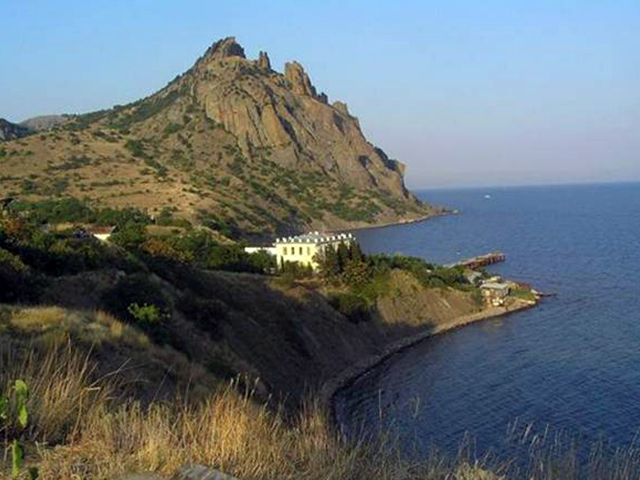
 One of the most magnificent protected places in Crimea is considered to be the Karadag volcano with its adjacent territories and water areas. And the headquarters of the best nature protection object of Crimea is the so-called «Karadag Biostation».
Imagine a vast mountain massif overhanging the Black Sea and composed of hundreds of volcanoes from the Jurassic period. In some places on the top of Kara-Dag there are still volcanic cones, miniature but «living» evidence of endogenous processes that raged on the territory of the peninsula in the Mesozoic period. In addition to the figures of mini-Vesuvius and crumbs-Etn, the peaks of the mountain massif are covered with dense herbal cover — lavender, thyme, clover, which intoxicate and stupefy with their aromas anyone who gets acquainted with Kara-Dag, following an employee of the reserve along a special «ecological trail».
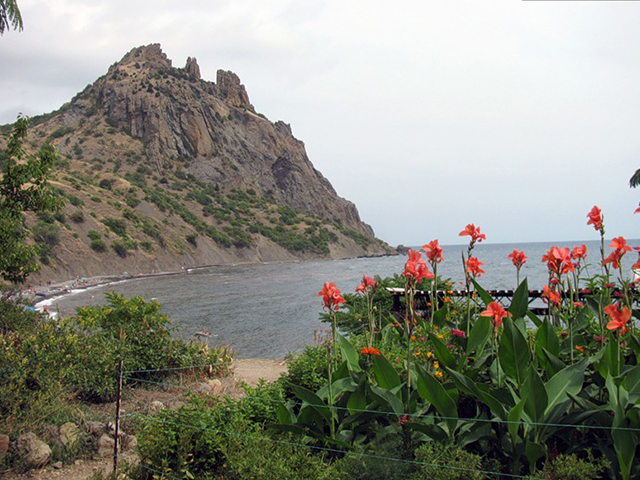 The narrow strip of land between the sea and the volcano is lined not with simple sand, but with fragments of semi-precious and finishing stones — jasper, zeolites, onyxes, opals, rock crystal, carnelians and amethysts, mixed with quartz detailed by waves. In its time, the Karadag beach provided material for a good half of the books by Academician Fersman, the guru of Soviet mineralogy. Unfortunately or fortunately, today it is closed for tourists, who would gladly take it for souvenirs.
In the sea, being a logical continuation of the volcanic massif, stick out numerous rocks-ostantsy, which have become symbols of the entire Black Sea coast of Crimea: Ivan the Bandit, Devil’s Finger and Golden Gate. Between them swim, glistening in the sun with glossy bodies, white-sided dolphins, afalines and porpoises, attracted by the level of nature protection system of the reserve. Near Kara-Dag are the villages of Kurortny, Shchebetovka and legendary Koktebel, famous for its nudist beaches, cognac and the house-museum of Maximilian Voloshin.
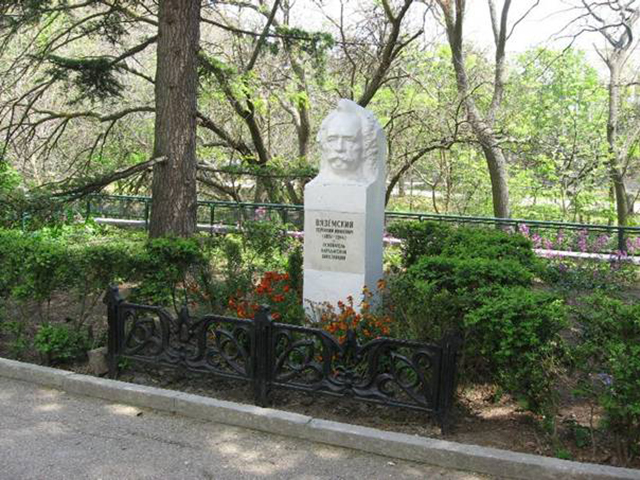 The entire territory of the reserve — 2065.1 hectares, and water area of 809.1 hectares, is managed by «Karadag Biostation», as one of the subdivisions of the Institute of Biology of the Southern Seas, one of the structural units of the Academy of Sciences of Ukraine. The initiator of its foundation was T.I. Vyazemsky, one of the first Russian balneologists and hydrotherapists. In 1914 the station celebrated its first birthday and received a library of 40 thousand books as a gift from the founding father.
Vyazemsky Biostation, as such, existed until 1963, after which it was joined to the Institute of Biology of the Southern Seas, and in 1979, after the formation of «Karadagsky Nature Reserve», it became the main place of work of the desk scientists of the complex.
In addition to mesmerizing landscapes and abundance of endemic flora and fauna, «Karadag biostation» became famous as the first place where the USSR began to keep dolphins in captivity. 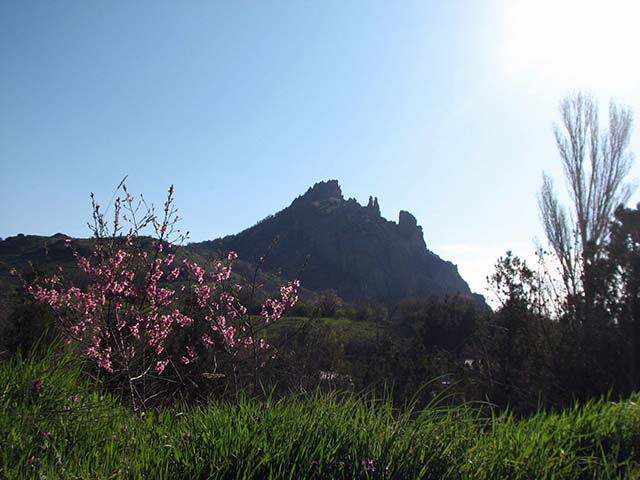 The Ministry of Defense was interested in the animals, planning to use them as live torpedoes or sea watchdogs to detect foreign submarines. Having traveled the whole «great and mighty», Leningrad colonels stopped at the old pool of the Crimean biostation, built under Vyazemsky. The military biologists learned the wisdom of keeping mammals by experience, using azovoks and squirrels caught in the sea near Karadag.
When the pace of military power in 1977 in the state slightly subsided and data about the intellectual potential of these animals appeared, funds were allocated for the construction of a dolphinarium, in which research work was combined with concert performances of the wards. In addition, the dolphinarium at the biostation was used by all Soviet filmmakers who needed dolphin actors.
Those who will come to holiday in Koktebel, will be able to see the show of dolphins and seals, visiting the «Karadag biostation». In addition, tourists are waiting for a boat ride through «Golden Gate» and a two-hour walk along the «ecological path» of the ancient volcano.