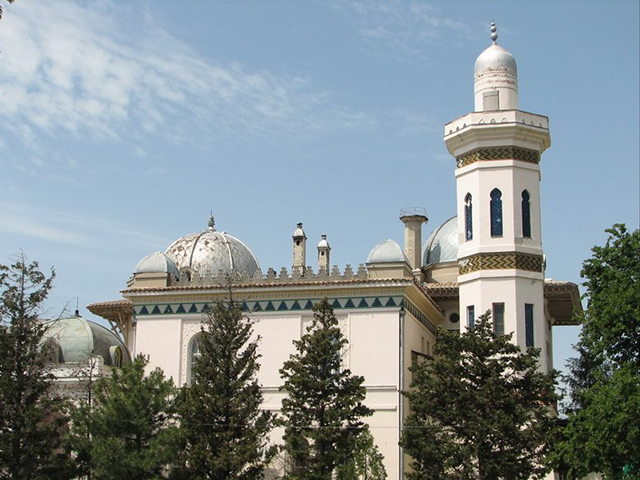
 Dacha Stamboli is one of the most famous and controversial sights of Feodosia. Its image is easily recognizable among dozens of other photos of palaces, villas and mansions of the Crimean peninsula. It survived two World Wars, a couple of revolutions and sheltered the Center, where artifacts raised from the bottom of the Black Sea are restored.
The Stamboli Dacha was built thanks to the love that merchant Iosif Stamboli felt for his wife Rachel. He decided to mark the tenth anniversary of their marriage union with an expensive gift, the same as he considered his wife in the formation of his own destiny. After all, only thanks to her, he — the son of the richest tobacco manufacturer, did not drink, did not go down, and increased the capital of his father.
In 1910 began, and in 1914 completed the construction of the «gift», the estimate of which stretched to 1 million and 100 thousand rubles. And this was at a time when every paper ruble issued by the state was backed by one gram of gold.
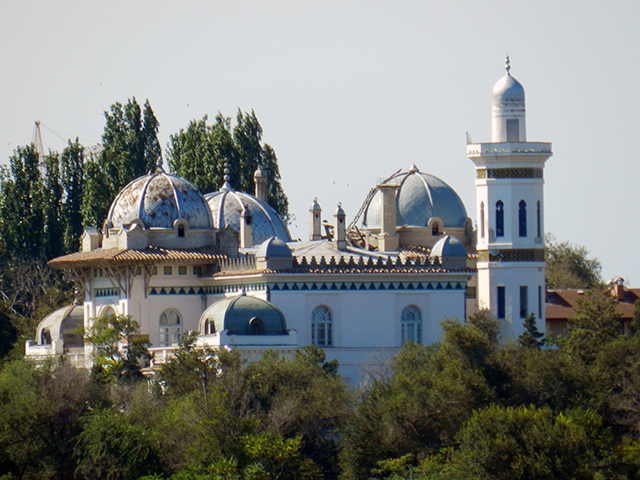 Unfortunately, to date, the name of the architect has not been accurately established. Some historians call the author of «Stamboli Dacha» Austrian Otto Wagner, others — St. Petersburg resident Oskar Wegener. In any case, many of those who have seen this building will be surprised by the combination of Moorish architectural style with Karaite and Byzantine.
Externally, the Stamboli mansion resembles those temples with which Constantinople once conquered the hearts of pagan rulers — snow-white walls, hemispheres of domes and a powerful fortress-like appearance. Many attribute the Stamboli dacha to the Moorish style. But only one of its wings, however, brought to the foreground, like a minaret. Although, it was it that gave the mansion a hundred percent recognizability.
The Karaite origin of the owner is emphasized by elements of traditional architecture — grottoes, covered galleries and construction materials made of sandstone. They are clearly associated with the cave cities left behind on the territory of the Crimean peninsula by the few representatives of the Turkic ethnos.
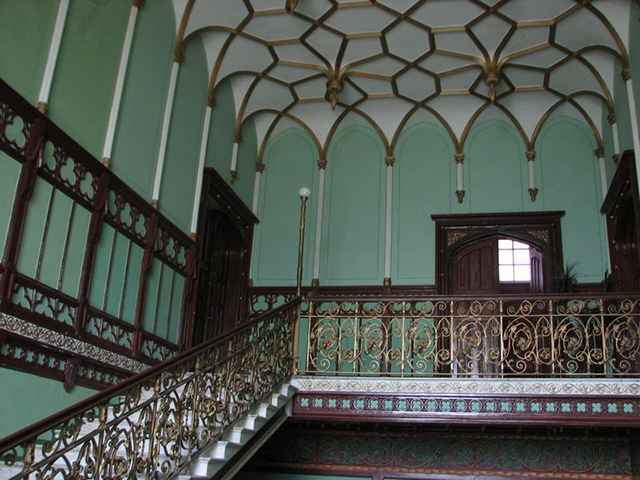
The interior of the mansion is decorated in pseudo-classical style — marble, forging, stone bas-reliefs, painted walls and ceilings. By the way, it was because of this wild mixture of styles (the term «eclecticism» was not in use then) that Maximilian Voloshin repeatedly proposed to demolish the mansion, calling it a «Museum of bad taste».
 It didn’t take long for Joseph and Rachel to enjoy their architectural mix and the views of Feodosia Bay from the windows of their dacha. The revolution took them by surprise — the «holy family» barely escaped being shot and migrated to France. The Chekists gladly occupied the vacated mansion. In the servants’ cottage on the grounds they kept the captive White Guards and their accomplices until they were shot.
In 1921 the dacha was turned into a sanatorium for workers — for Moscow state workers, and just before the war it was repurposed into the «Joseph Stalin Sanatorium». The Germans, when they occupied Crimea, were the first to use the services of the new health center. The building housed a hospital, and soldiers and officers from Lindemann’s infantry division were buried on the territory.
After the war, a pioneer camp was located at the Stamboli dacha, and in 1970, the Dovzhenko Narcology Clinic moved in here. Due to Ukraine’s independence, the luxurious mansion was privatized. First, bankers settled under its historic domes and painted vaults, then restaurateurs.
Today this attraction of Feodosia has become a shelter for two ideologically opposite objects. On one of its halves a cafe with the same name as the dacha was equipped. If you wish to visit Krym not only for gastronomic pleasures, you will be interested in the second part of the «merchant’s gift». In the second half of the Stamboli dacha there is a Center engaged in underwater research, restoration and presentation of what was raised from the bottom of the Black Sea. This part of the building was reprivatized after UNESCO became interested in the mansion and the city was able to show the world something equal to Aivazovsky’s art gallery.