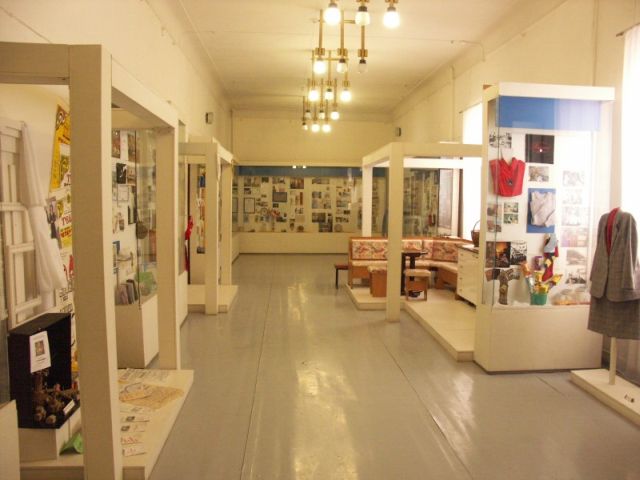
 Mariupol Local History Museum was founded on February 6, 1920 on the initiative and under the leadership of I.P. Kovalenko.
Throughout its existence, the institution is located in the historical building of the former Yekaterinoslaski zemstvo training and crafts house for the disabled of the First World War.
The museum collection was based on the collection of museums and libraries of Mariupol gymnasiums, visual aids of the home for the disabled. Annual expeditions, which were conducted by the scientific staff in 20-30 years of the twentieth century, contributed to the creation of archeological, ethnographic, geological and other museum collections. 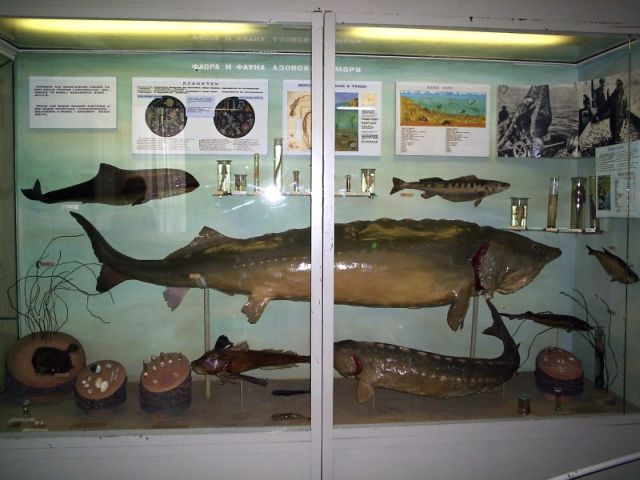 The first natural reserves «Khomutovskaya Steppe» (1926), «Belosarayskaya Spit» (1927), «Kamenny Mogily» (1927), which were subordinated to the museum, were created with the participation of the scientific staff of the museum.
Currently, the museum collection consists of more than 55 thousand museum objects.
The most valuable collections include monuments of paleontology: remains of ancient animals that once lived in our region — mastodon, woolly rhinoceros, hipparion, prints of fossil plants — tree ferns, horsetails.
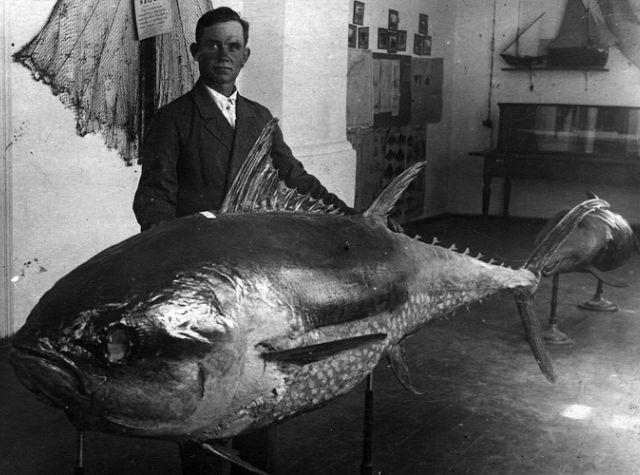 The archeological collection occupies a special place. These are materials of settlements, sites, burials of the Eneolithic, Bronze, early Iron Age, nomads. Unique materials of Mariupol Neolithic burial ground of the late Neolithic epoch — jewelry, tools, amulets are kept in the funds. More than 30 stone Cumans statues are the adornment of the medieval collection.
The museum collection includes a collection of numismatics and paper money signs of different countries. The greatest interest is the hoard of silver coins, which dates back to the beginning of the XVIII century. The earliest in the hoard are the coins of Ivan the Terrible. The collection includes coins of ancient Rome, medieval Europe, the Russian Empire and others.
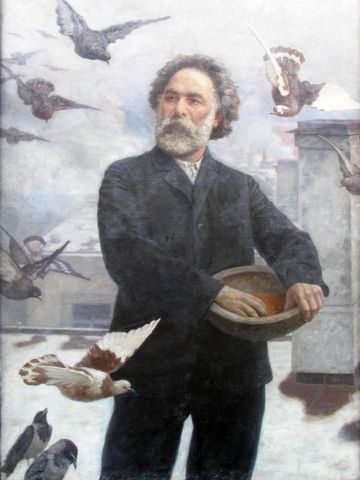 The museum has a small but informative collection reflecting the history of Orthodoxy in the region. It includes liturgical and church items, photo and documentary sources, books. Liturgical items of the XVIII century include a silver chalice, a silver chased censer, and a shroud. Among the books are folios of the XVII-XX centuries: the Trebnik of 1620-1645, the Gospels of 1748 and 1811 printed in Greece, the Gospel of 1800 published in Moscow. The collection also includes other ecclesiastical accessories: icons, various folds, images, crosses, lamps, bells, sprinkles, kandilo, katsia, incense, etc. The collection also includes a number of other items.
Mariupol Museum of Local Lore has several branches. In 1962 the museum opened an art gallery on a voluntary basis, 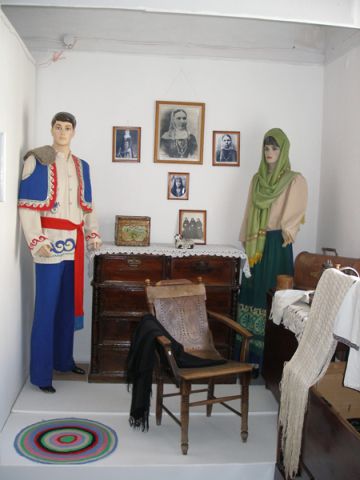 in which the works of local artists, including A.I. Kuindzhi, were demonstrated. Ten years later the exhibition hall named after our outstanding countryman opened its doors.
In 1969 the memorial house-museum of A.A. Zhdanov was opened, in 1989 it was transformed into the Museum of Folk Life. The materials of the Museum of History and Ethnography of the Greeks of the Azov region in Sartana, created on the basis of the museum on a voluntary basis in 1992, tell about the culture and life of Mariupol Greeks. In 2010, the A.I. Kuindzhi Art Museum was opened.