Mariupol is one of the 3 existing centers of metallurgical industry in Ukraine. It has no resources of its own, so iron ore is delivered here from Kerch Peninsula, manganese — from Nikopol, and coking coal — from Donbass. In the city in the south of Donetsk region, the raw materials brought here are smelted into the finished product by 2 plants — Ilyich and Azovstal. The latter plant is unrivaled in the region in terms of volume and range of products. Azovstal shops produce sheet and shaped rolled products, railroad rails, fasteners and channels, profiles for the mining industry, as well as by-products — oxygen, argon, lime flour and slag products.
The idea to build a metallurgical plant at the crossroads of transportation routes — sea and railroad, was born in 1928. In 1930 in the city on the shore of the Sea of Azov the work on the construction of the blast furnace shop and expansion of the sea port receiving ore was already boiling. And already in 1933 the first blast furnace and open-hearth furnace were launched at the plant. Before the war «Azovstal» correctly provided part of the needs of the military-industrial complex of the USSR with its products, but on October 7, 1941 all the furnaces were stopped. Some of the workers were evacuated, and some went to the front or took part in the partisan movement.
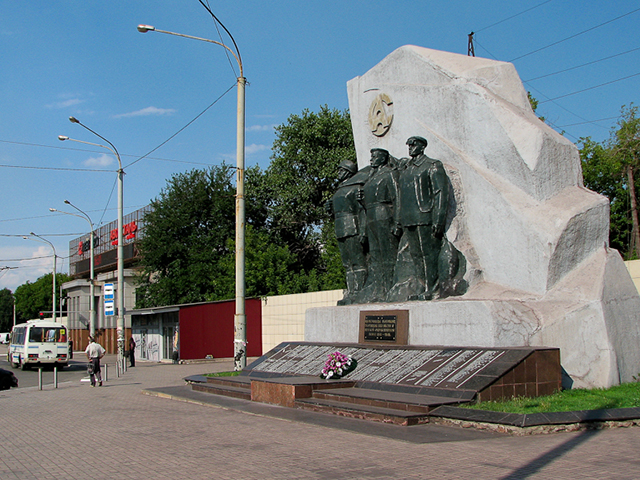
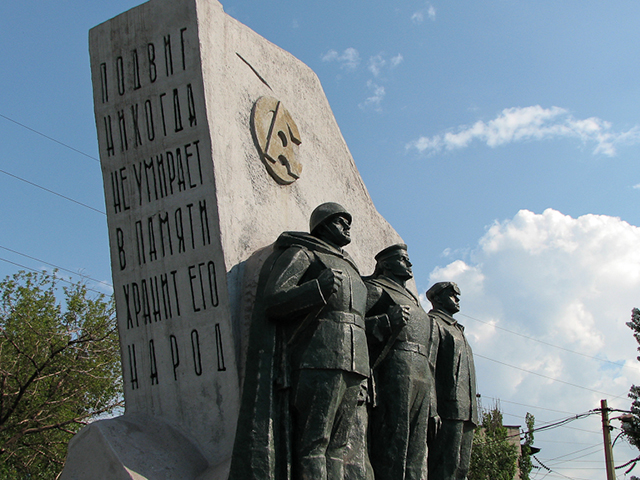
When World War II ended, it was estimated that 458 steelworkers had died. Therefore, in 1967 near the eastern passageways of the enterprise was established Monument in honor of the fallen workers of «Azovstal». Thanks to this placement, hundreds of metallurgists pass by it every day and have an opportunity to mentally commemorate the heroic deeds of their colleagues. The Mariupol memorial was designed by sculptor Batyai and architect Lenkov.
The monument is a giant light gray wall imitating a rock. Under it, placed for execution, stand three bogatyrs. They are a soldier, a sailor and a steelworker, who at the cost of their lives «forged» victory in a terrible, bloody war. The figures, as well as the people themselves, are cast from metal, so they have become a model of fortitude and steadfastness of spirit for many generations of Mariupol residents. Under the monument there are granite slabs, on which the surnames of all 458 dead people are embossed and the promise that «the feat does not die», but is kept in people’s memory.
The monument to the workers of Azovstal is not a typical, entertainment and tourist attraction of Mariupol. But just like Poland’s Auschwitz-Berkenau, Warsaw’s «Monument to the Young Rebel» or Weimar’s Buchenwald, this site is included in all sightseeing tours of the city. If you plan to visit the Azov region, you will be able to appreciate for yourself the level of strength and metal fortress, which is still radiating from the monument to 458 workers of Azovstal who died in the war.