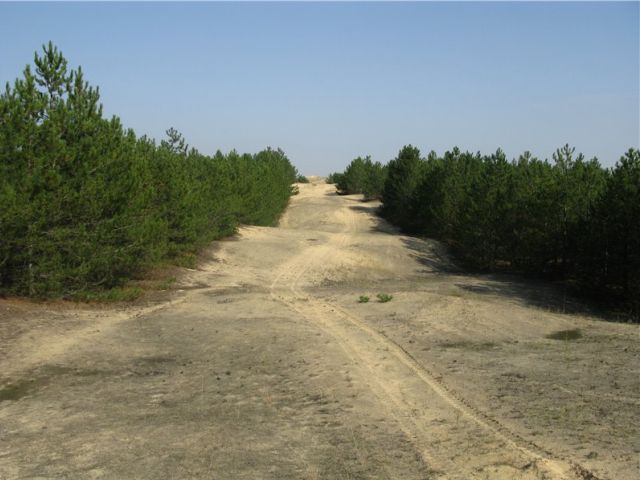
There are many deserts on our planet that surprise and amaze. Each of them is unique in its own way. Landscapes, weather, flora and fauna define the character of each desert. The desert, which will be discussed below, becomes unremarkable in the background when it comes to, for example, the Sahara or the Gobi. It is far from the image of the deserts we are used to seeing in person or on TV. But it has one privilege that will not let you lose sight of it — a location that is not typical for this part of the world. Our desert, Aleshkovskie Sands, is located in Europe, namely in Ukraine!
Leafing through and reading information about the Aleshkovskie Sands, you repeatedly come across arguments about whether it is a desert or a sand massif after all. Whatever it is, it is quite an unusual landscape for Europe.
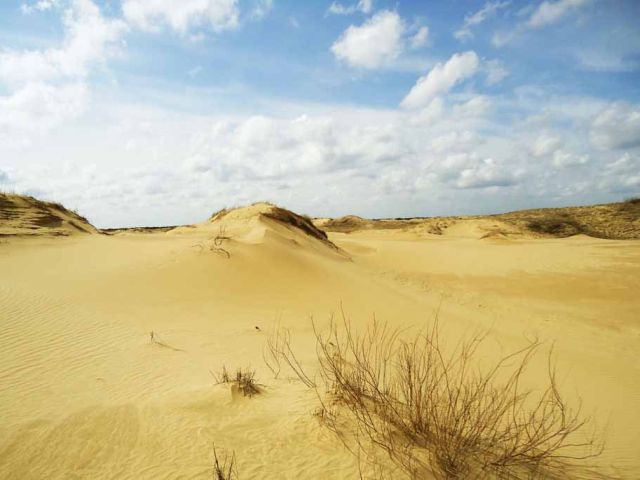
And besides, if you do a comparative characterization, with another desert, they are very similar in terms of conditions.
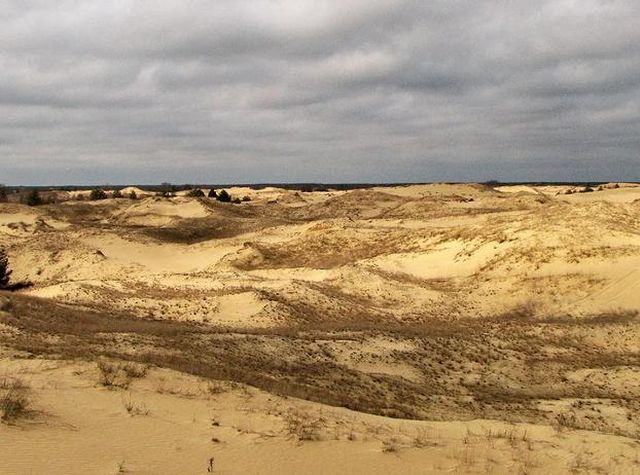
The sand of Oleshya is very fine and light, sometimes you can observe relatively high tornadoes, there are sandstorms. Climatic conditions are difficult — in summer the sand heats up to +75? C and hot rising streams coming from the sand disperse rain clouds, and therefore there is little rain here.
If we compare Aleshkovsky sands and, for example, the well-known Kalahari by some criteria, we can see similarities. The average annual amount of precipitation in the Kalahari reaches up to 500 mm, and in the Ukrainian desert even less — 419 mm, 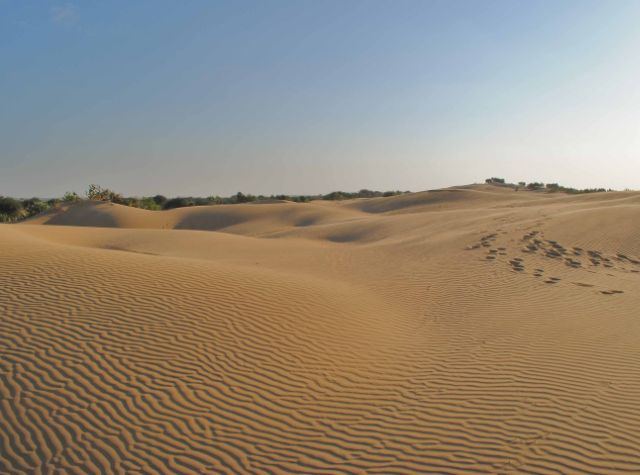 the average maximum temperature in the Kalahari is + 29 degrees Celsius, in the Ukrainian desert + 28.5 degrees Celsius, etc.
Aleshkovsky sands are located in the south of Ukraine, near the city of Kherson. It is the largest desert area in Ukraine and possibly in Europe, as it shares the palm of superiority with the Ryn-sands due to disagreement in calculating the area. Nevertheless, the surface of the Ukrainian desert is covered with dunes up to 5 meters high.
Aleshkovskie sands are quite a young desert by age. Sands in this area are sediments that were formed after the ice age. At the end of the XVIII century sheep breeding began to develop intensively here. Baron Faltz-Fein alone, the founder of the Askania Nova Reserve, owned huge flocks of up to a million head, 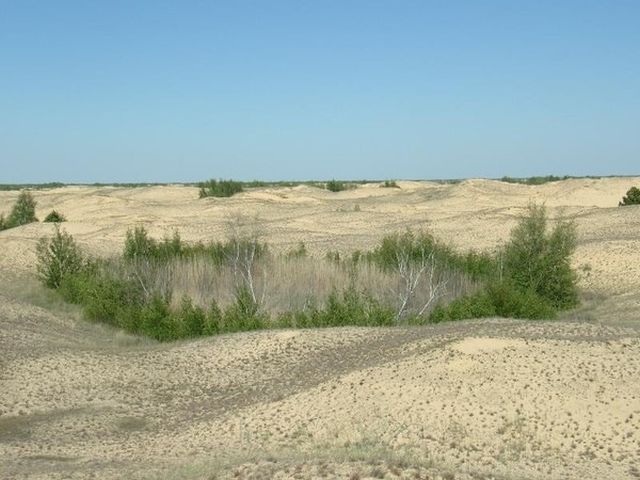 which were grazing in the local meadows, which led to the destruction of the vegetation cover. Thus, by allowing the wind to spread sand, the area of the massif began to increase.
In order to stop the rapid growth of the area, in the 1920s, in the edges of Aleshkovskie sands began to plant forests with a total area of 1000 square kilometers. In the 50s, a research station and several forestry farms began to operate here. Now acacia, birch, pine and vineyards grow in the forest belts.
According to archeologists, the local places are known since the XI century. Earlier, the ancient Russian city of Oleshie was located here, which included three lands: the lower reaches of the Dnieper, the lower reaches of the Southern Bug and the shores of the Gulf of Karkinit.
The Lavians called this area Oleshie, which means «forest». Hence the name of the desert. Here, at the beginning of the XVIII century was located free Aleshkovskaya Sich headed by the koshevoy ataman Kost Gordienko. It was a fortified with moats and ramparts of about 1.5 meters, with redoubts at the corners and the main gate in the north.
Aleshkovskie Sands was the site of bombing exercises, where pilots from Warsaw Pact countries honed their skills. In fact, where else could such a structure be hidden but not in the huge Aleshkovskie Sands, stretching almost 30 kilometers from west to east and 150 kilometers from north to south, from Kakhovka to Kinburnskaya kosa.
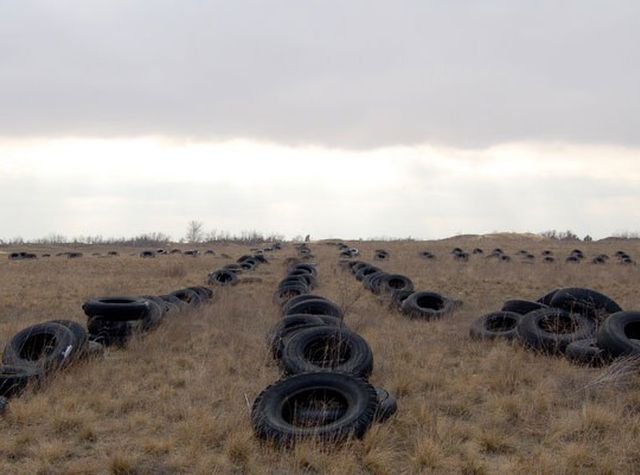
The landmarks for pilots were crosses 220 meters in diameter made of rubber tires. There are still unexploded ordnance in some places.
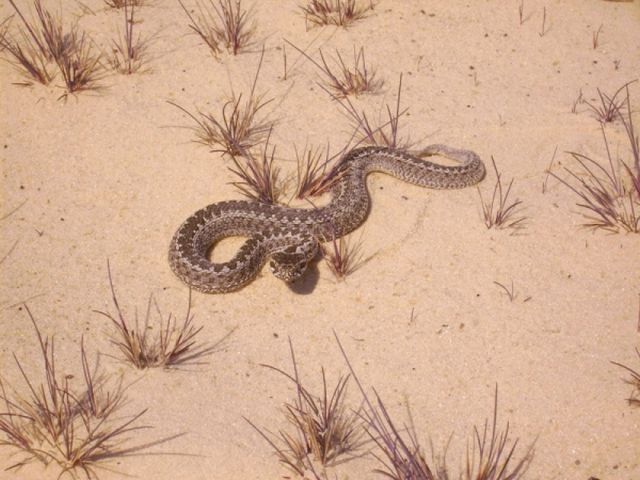
The area of the treeless territory is 176.7 square kilometers, that is 17662.5 hectares. On the territory there is the eponymous National Natural Park «Oleshkovskie Sands», created in 2010. Wild boars and wolves, dozens of species of birds, reptiles and 20 species of mammals can be found on the territory of the desert. Often there are lakes in the Aleshkovskaya desert — both dried up and full-flowing, as well as mineral lakes. At a depth of 300-400 meters there is a fresh underground lake with clear and surprisingly tasty water.
Fans of extreme sensations occasionally cross the sands on foot, on bicycles, motorcycles and cars, in groups and alone. The Department of Culture and Tourism of Kherson regional administration is currently developing 3 routes of different length and complexity, and jeep tours on UAZ off-road vehicles are already available since summer 2008, when a new tourist route «Safari to the desert «Oleshkovskie Sands» was opened.
Unfortunately, most of our compatriots do not suspect that there is a desert in their homeland. So now you don’t need to leave Ukraine and spend thousands of dollars on a safari to drive jeeps across the desert. To feel what it is like to get into the heart of the real heat, 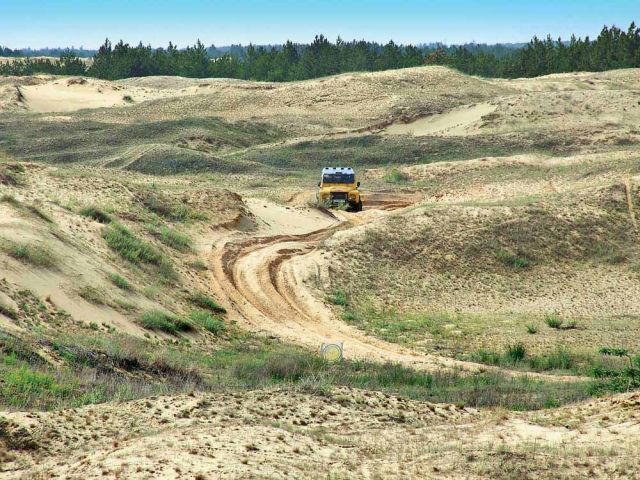 to get to the top of the mountain and look around to see nothing but desert — go to Ukraine. Skadovsk and Aleshkovskie Sands are waiting for you!