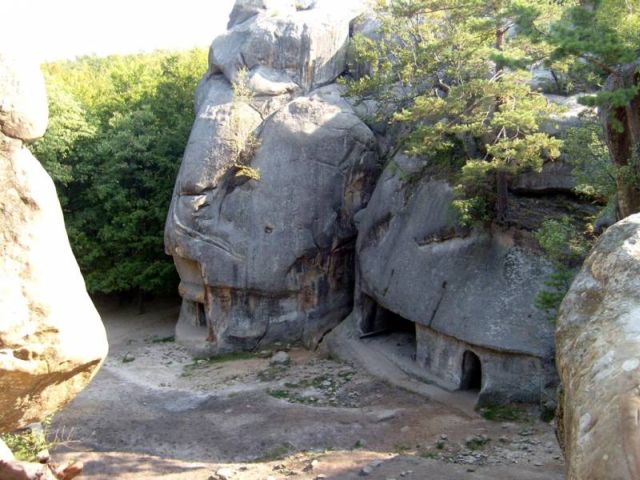
 The rocks got their name in honor of Oleksa Dovbush — a legendary Hutsul hero who fought in the Carpathians against feudal lords who cruelly oppressed peasants. There are several Dovbush rocks in the Ukrainian Carpathians today: near Yaremche, Verkhny Sinevidny and near the village of Bubnishche in Ivano-Frankivsk region. Locals attribute this to the fact that after the hero’s death, his body was dismembered into many parts and spread across the Carpathians to intimidate unruly peasants. According to legends, since then the soul of the brave oprishka Dovbush lives in different corners of this mountainous region, and the mysterious huge rocks are his body parts. To make a cherished wish come true, it is necessary to find a stone in the Carpathians, which is Dovbush’s heart, touch it, and then the wish will definitely come true.
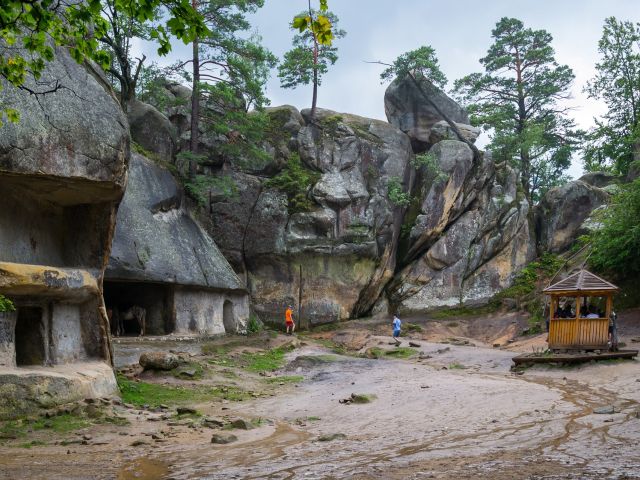 The most attractive for tourists rock complex, named after the legendary Oleksa Dovbush, is located in the tract of Bubnishche, at an altitude of 668 m above sea level. Historians claim that Dovbush was in this place in October 1774, returning from the military actions near Drohobych and Turki. There is an old legend connected with the name of the Bubnishche tract: during the attack of enemies on Hutsulshchina, one of the local girls ran to the rocks, and the heavy rocks, protecting the girl from the enemies, closed over her. From that moment, the fugitive remained living in the mountains, and whenever enemies appeared, she would climb to the top of the rock and beat a tambourine to warn her fellow villagers of the danger.
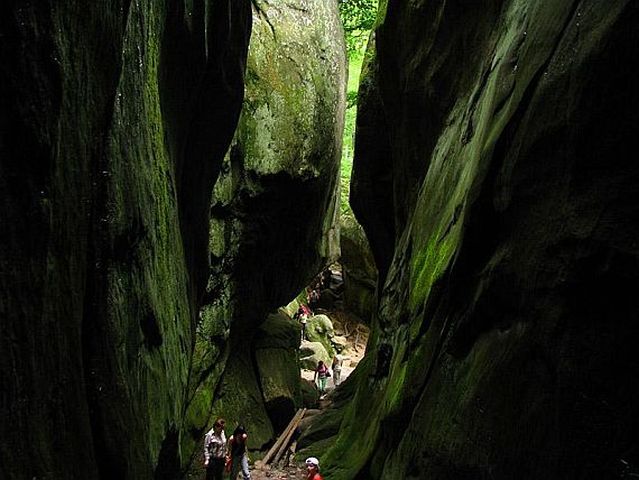 The Dovbusha Rocks, located in the tract of Bubnishche, were formed from sandstone more than 70 million years ago, and for some time were at the bottom of the warm sea. Then, when the sea dried up, the sandstone was compressed, weathered and acquired the most unusual shapes, so the rocks, named after Dovbush, today look like fantastic creatures.
The road to Bubnishch is quite difficult, but the hike is worth it — there is nothing around but wildlife and landscapes of marvelous beauty. The first stone giant appears on the way quite unexpectedly. A lone rock called Hermit, with a diameter of about seventy meters, raises its top to more than thirty meters high. A little farther away is the main massif of rocks. They form a semicircular wall covering an area of more than a hectare from the east and north. The height of the cliff tops reaches forty meters. Each peak has its own name and history. At an altitude of 900 meters there is the Dead Lake, at the bottom of which, according to legend, the treasures of Dovbush are hidden.
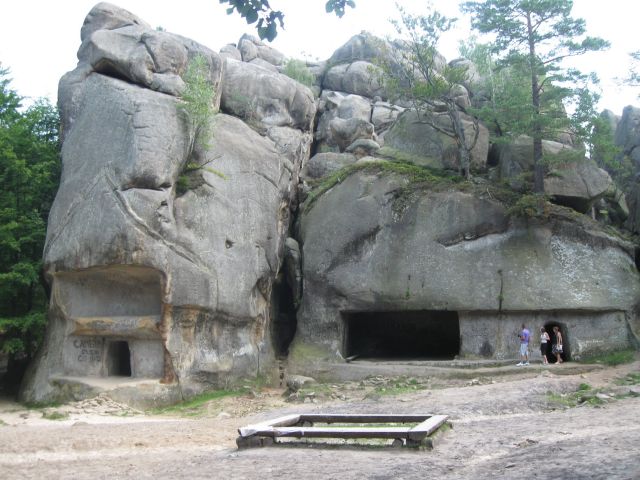 The Dovbush rocks have preserved many caves, niches, shelves and steps carved in stones. Scientists have come to the conclusion that in pre-Christian times there was a pagan temple here, where locals hid from enemy invasions. After the spread of Christianity in the Carpathians, the sanctuary became unnecessary, and then in its place people formed a cave monastery — hermitage, and even later, in the time of Daniel of Galicia — a watch fortress that protected the borders of the principality. Three caves were hollowed out in the rocks, there are traces of a well and the remains of a stone vault. The cave rooms still amaze with their clear geometric forms, correct proportions, smooth surfaces of vertical walls and ceiling. In the gap between the rocks you can see steps leading upwards. Where the semicircle of rocks is open, the fortress was protected by fortifications: a five-meter deep ditch and a six-meter high rampart. The remains of these earthworks can still be seen today.
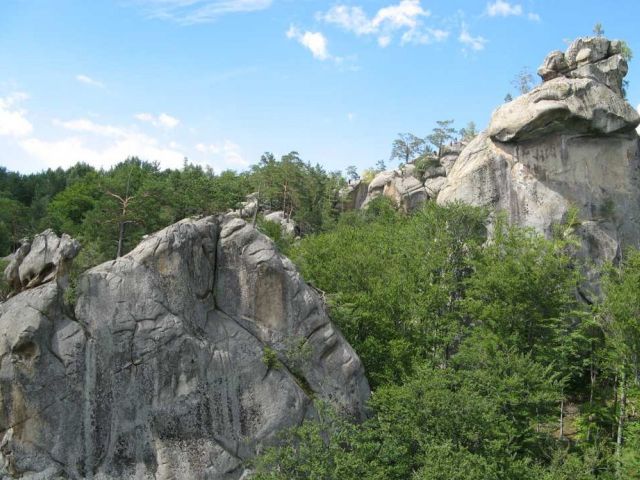 Dovbush Rocks Later these man-made caves in the rocks served as a refuge for the people’s avengers — oprishki and their leader Oleksa Dovbush.
Nowadays the Dovbush Rocks are a botanical and geomorphologic preserve, a natural monument. Sheer walls of giant stones are very popular among mountaineers who came on vacation in the Carpathians. You can download a climbing guide to Dovbush Rocks here. From the top of the cliffs you can enjoy a breathtaking view of the nearby mountain ranges of the Carpathians.