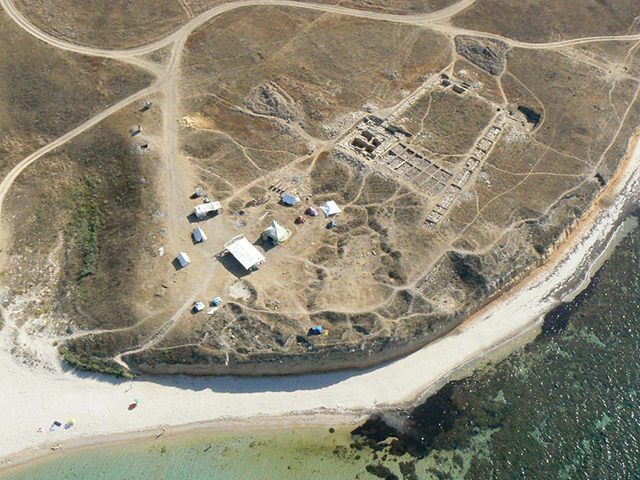
Olenivka village is recognized as one of the most interesting resorts in Crimea. It is located in the extreme west of the Tarkhankutsk peninsula, just in the place where the cape of the same name bifurcates like a snake’s tongue. The «Scherbinka» on the body of the peninsula is signed on maps as Karadzhinskaya Bay.
Some of the vacationers choose the brilliant South Coast, someone regularly comes to Saki or Evpatoria to pamper themselves with balneological procedures. In contrast to the traditional clientele of the most popular Crimean resorts, Olenivka attracts a very specific audience — divers and archaeologists, creative people with a limited budget and informals of all stripes, attracted by the wild energy and non-Ukrainian picturesqueness of local places.
Perhaps it was this external similarity of Cape Tarkhankut with the shores of the Peloponnesian Peninsula that caused the Dorian Greeks to settle here. More precisely, the Hellenes from the polis of Chersonesos chose this place for their distant chora. So the natives of the Peloponnese, the southern islands of the Aegean Sea and Dorida called their agricultural land outside the city limits. Each inhabitant of the polis had his own plot of land, which could not be sold, exchanged or drunk. This system of providing citizens with cultivated areas was considered the basis for the vitality of the entire community, as well as a guarantee of democracy. Due to the lack of agricultural land in the vicinity of Khersones Tavricheskij, some Dorians received a chora on Cape Tarkhankut.
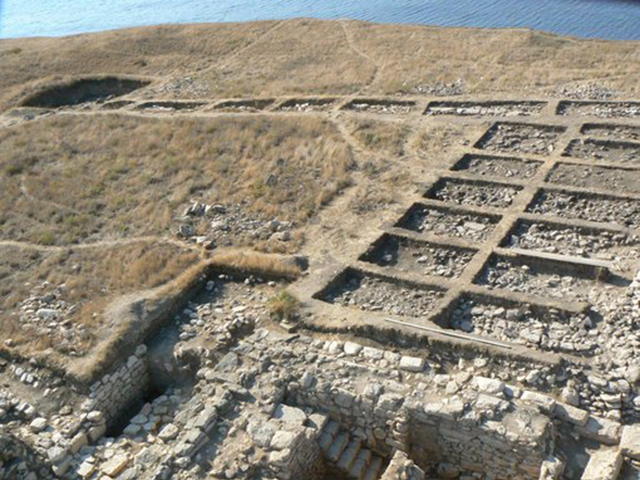
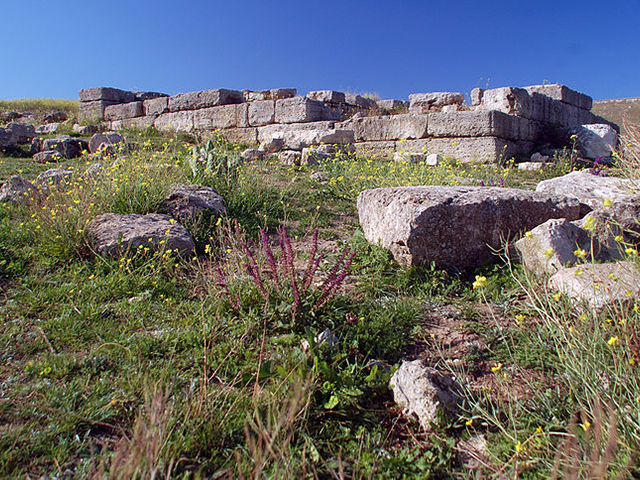
Today this settlement is known as Tarkhankut or Karadzhin settlement. On the territory of 3.2 hectares archaeologists excavated the hulks of houses and farm buildings, «nerve fibers» of streets and the pier from which grain, wine, wool were transported to the metropolis. The buildings that have been recovered from the soil and broken rocks surprise archaeologists and their volunteers with the quality of the masonry and the size of the limestone blocks. They are, of course, inferior in size to the monoliths from which the Egyptian pyramids are built, but not by much.
As in the excavations of other Greek polis, many samples of ceramics, but few weapons were found at the Tarkhankuta site. This fact indicates a relatively low level of interest of nomadic peoples in the remote Chersonese chora. Another peculiarity of the Karadzhinsky settlement is the absence of really «star» artifacts. For example, the bronze figurine of Demeter found at Kalos Limen, or the statue of Apollo recovered from Pompeian lava. Fans of recreation on Tarkhankut explain the «sparseness» of the settlement for luxurious archaeological finds by the fact that it is still insufficiently studied.
Among the same admirers of Cape Tarkhankut there is a legend circulating that they rest with a view of the Dorian Hellenes’ chora, but near the remains of the legendary Tamirak polis. About it, as well as about the tribe of Amazons, mentioned in his works Herodotus, but did not indicate a specific location. According to the version of the father of history, the city of Tamiraka existed in the III — II century BC. It surprised its guests with its wealth and perfect system of self-government.
Whatever it was — Tamiraka or Chersonese Chora, but in the II century AD Tarkhankut fell into the field of vision of Scythian nomads. The settlement was captured, a little plundered. Practically for 18 centuries the future sightseeing Olenevka disappeared from the maps — hidden in the bosom of the earth. And only now Russian archaeologists, coming on holidays in Ukraine, and domestic volunteers, layer by layer uncovering Tarkhankutskoe ancient settlement, persuading the Lady of History to share its secrets.