
«Olbia» is one of the Greek colonies on the territory of modern Ukraine, founded in the first quarter of VI B.C. The name translates from Greek as «happy».
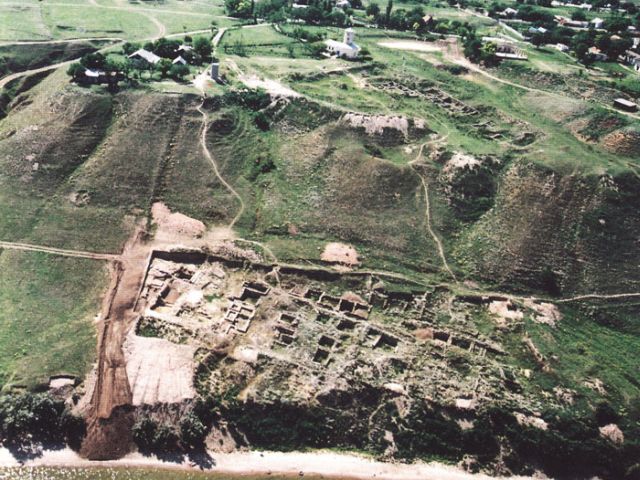
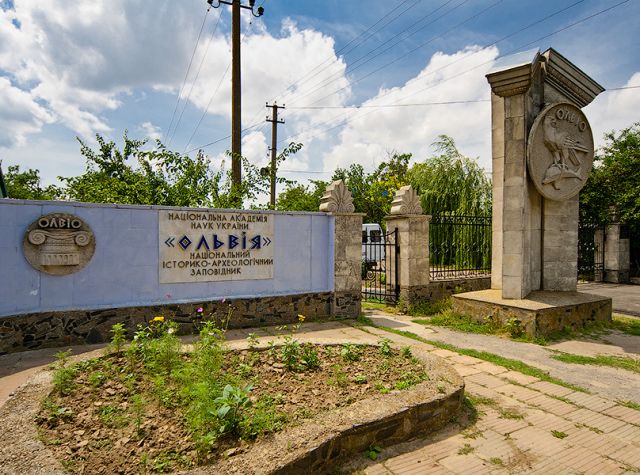
Today it is National Historical and Archaeological Reserve «Olvia», which is still undergoing excavations. It is located near the village of Parutino in the Nikolaev region.
During its heyday «Olvia» was an important trade center, here were engaged in fishing and winemaking. Over time, the Greek population was naturally replaced by Cimmerians and Scythians. The first description of the geography, history and customs of the local inhabitants was made as early as Herodotus.
 .
.
This ancient Greek city-state, which was visited by the «father of history» Herodotus himself, was one of the largest ancient centers in the Northern Black Sea coast, had a huge rural area in the form of settlements and farms along the shores of the sea and its estuaries, trade and economic ties with Hellas. In the heyday the territory of the city reached 55 hectares, its necropolis — up to 500 hectares, and on the banks of the Bug, Dnieper and Berezan estuaries there were one hundred and fifty rural settlements, which made up the rural district of the city. Throughout its history Olvia was closely connected both with the ancient world and with the local, so-called barbarian environment. On the one hand, it was part of the Athenian maritime union, on the other hand, Olbia significantly influenced the development of the surrounding Scythian and Sarmatian tribes.
«Olbia» in 331 BC unsuccessfully tried to conquer one of the generals of Alexander the Great — Zopyri, but already in 55 BC the polis was conquered by the Hittite king Burebista.
Later «Olbia» resumed its existence, but on a much smaller territory. In 198 AD it was annexed to the Roman Empire, and after the invasion of the Huns in the 70s it ceased to exist.
Then for many centuries «Olbia» was forgotten. Its location was established at the end of the XVIII century. Systematic excavations on the territory of the National Historical and Archaeological Reserve «Olbia» began in the first half of the twentieth century. Today the reserve is a part of the Institute of Archaeology of the National Academy of Sciences of Ukraine. History students are regularly sent here for practical training. In «Olvia» are still carried out robotics on conservation and restoration of archaeological finds, as well as the protection of areas that may be destroyed by the waters of the estuary.
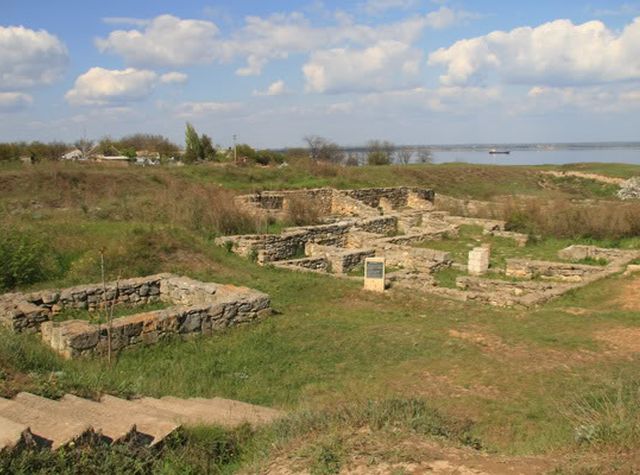
As a result of scientific research, about 5 hectares of the city territory were excavated, two Temenos (sacred sites) with remains of temples, agora — the central square with surrounding buildings, gymnasiums, courthouse, residential quarters and industrial and economic complexes were discovered. The necropolis and the part of the city now flooded by the waters of the Bug estuary have been explored. During many years of excavations a great number of works of art were discovered, which decorate many famous museums of the world. Dozens of professional archaeologists, hundreds of students and schoolchildren participate in the excavations of Olbia. It is a school for specialists in classical archaeology not only in Ukraine, but also in the world.
Recently the 200th anniversary of scientific research of this monument was celebrated, which gave valuable material about the period of history of the Lower Pobozhye in the times of Ancient Greece and Ancient Rome. The main disaster for the museum is looting excavations.
To see the reserve, you can come between May and September. They say that the most interesting here is in May — the steppe is very beautiful. And in July-August archeological expeditions are organized here.
The territory is certainly not as colorful as in Khersonese, but there is something to see. The reserve consists of a settlement and a necropolis. The area of the Olbia Museum — the remains of the ancient settlement and necropolis — is about 270 hectares. The reserve also includes 23.6 hectares of the territory of Berezan Island, where there was the oldest ancient settlement in the Northern Black Sea coast, founded in the VII century BC.
The reserve has a museum, funds of archaeological materials, a scientific library, an exposition of architectural and construction remains of ancient times.
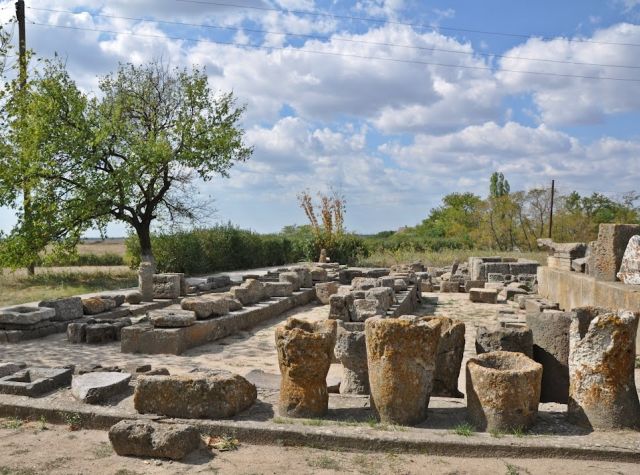
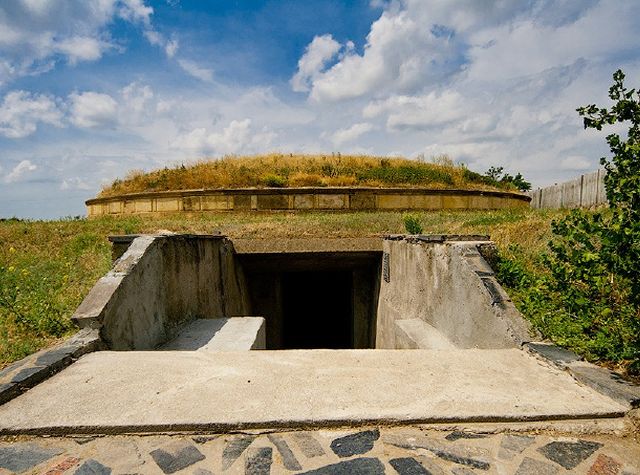
Remains of fortress walls, Roman citadel, Western and Central Temenos, burial vaults, etc. are exhibited.
The Upper Town is the most representative, here you can see the remains of the ancient quarter, the main road, dugouts, temples. The altar in front of the temple of Apollo has been preserved, on which even now symbolically sacrifices are made in the form of wine libation. Not far from the main entrance to the reserve there is a museum with valuable finds.
Alas, the lower city and harbor has gone under water. But if you have the opportunity to take an aqualung here, you can go diving.
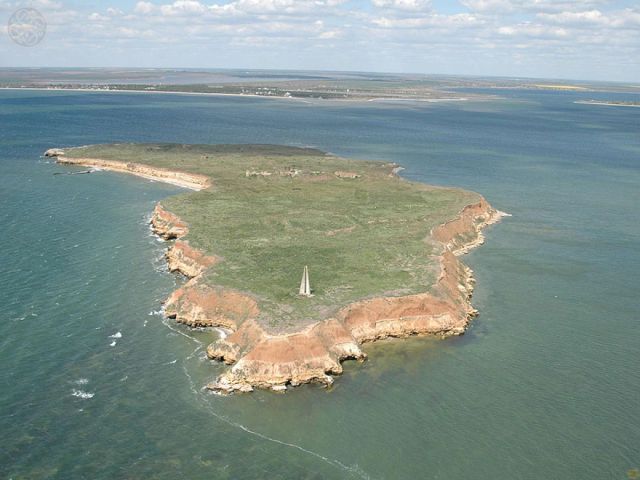
Are there many places on earth, where you can sit in the evening on the steps hanging right above the cliff (and once the ancient Greeks walked on them) and admire the evening sea? The place has its unique ancient magic, it is worth coming here!
There would be a desire, you can arrange an active and informative vacation and join a group of archaeologists. Of course, you will not be allowed to the important excavation sites, but you will be entrusted with simple works, you always need free hands. And right in front of your eyes will be working masters of their craft with brushes and brushes, and perhaps and will discover very important finds.