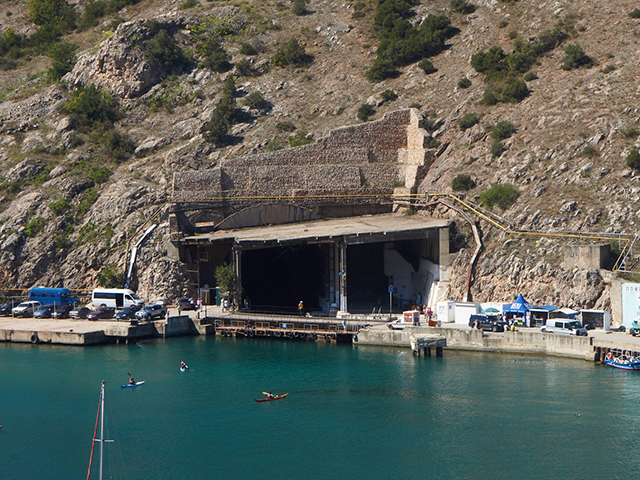
Balaklava is one of the most interesting vacation spots of Crimea. The Genoese fortress and the first ridges of the Crimean mountains, colorful Tatar streets and stylish Europeanized mansions built on the seafront at the beginning of the last century. Ah, yes! The embankment is the main decoration of Balaklava! It stretches along the narrow and winding left bank of the Balaklava Bay. It is a berth for hundreds of nimble excursion boats and a mooring place for dozens of luxury ships-restaurants. On the quay you can buy everything that the Crimean Peninsula is rich in, and look at the guests from all over the world who came here to get to the famous submarine base.
By the way, even in a terrible dream such a picture of Balaklava could not have been imagined 50 years ago. After all, since 1953, the ancient city, founded by the Scythians, lost its status and turned into a closed district of Sevastopol. The reason for such urban discrimination was the placement in the Tavros rock massif on the right bank of the Balaklava Bay of a grandiose underground base — «Object 825 GTS», specializing in receiving and servicing submarines filled with nuclear weapons.
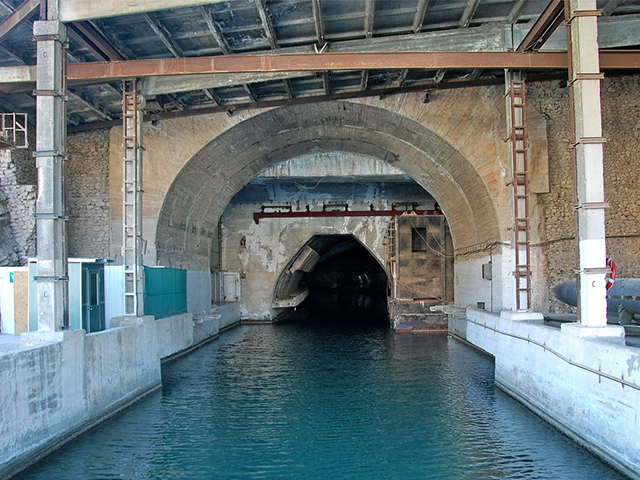
The base was a grandiose through channel, with branches for a dry dock, repair shops and warehouses. The structure was designed to withstand a direct hit by a 100 Kt atomic bomb, and in case of necessity it was covered by a bathoport, which strengthened its resistance to massive attacks from outside. The two exits from the canal were also covered with batoports, nets and were skillfully camouflaged.
By the way, one of the reasons why Balaklava Bay was chosen as the location of the strategic object was its geomorphologic and climatic properties. First, this bay is narrow and twisted, so its waters never begin to dance frenzied dances when the Black Sea storms. That is, the submarine base will never be subjected to additional uncontrolled loads. Secondly, Balaklava Bay is so dashingly curved that no uninitiated Viking will ever guess about its existence, nor will he be able to inspect and map it.
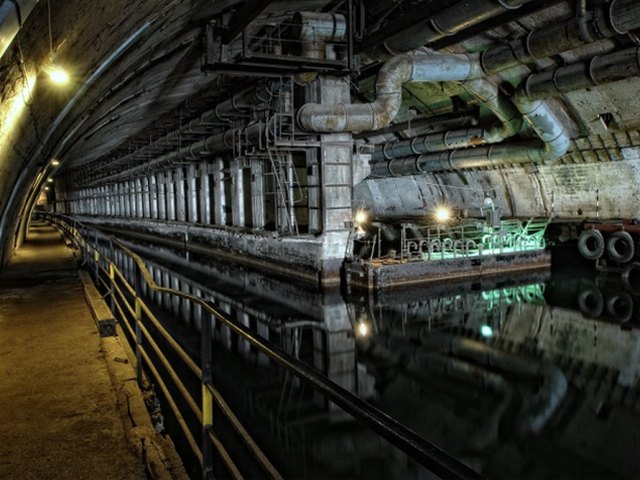
The base took 8 years to build, from 1953 to 1961. At first it was entrusted to military builders, but later Metrostroy joined them. Curiously enough, but all the rock removed from the body of the rock Tavros, taken out on barges and dumped into the open sea only under the cover of night to hide the amount of work being done.
The length of the channel hollowed out in the Tavros rock is 602 meters. This made it possible for the 825 GTS facility to receive, service and load bombs for 7 submarines simultaneously. Due to the fact that the base had a warehouse with such a dangerous type of weapon, its interior was kept at a stable air temperature of 15°C and the humidity was artificially regulated.
The first to note the strategic potential of Balaklava were Beria’s subordinates. By direct order of Stalin, they were looking for an ideal place for a secret and safe base for Soviet submarines. Then the city was classified. But at the height of the arms race, which began between the U.S. and the USSR, it was deprived of the status of urban-type settlements and transferred under the jurisdiction of Sevastopol. Which, by the way, is remote from its classified area by a distance of 10 kilometers.
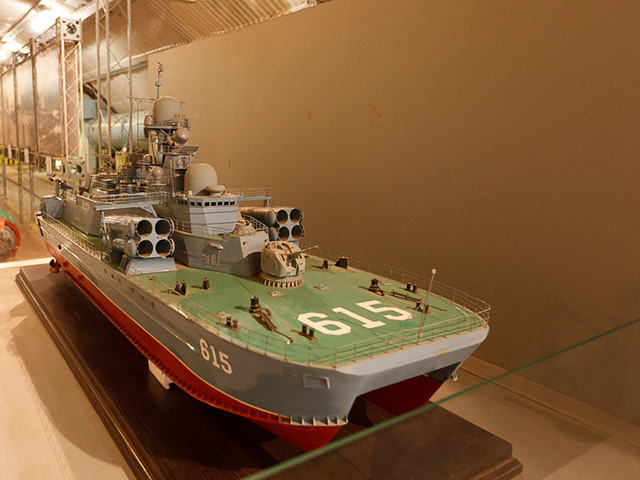
When the Soviet Union collapsed, the unique site wasn’t even guarded, but succumbed to mass looting — former and active military personnel, as well as retrained black archaeologists, cut up base metals and hauled away unique Cold War artifacts.
In 2002, the former, somewhat denuded and looted base was turned into a Naval Museum, adorning the list of Balaklava sights. In addition to a very interesting tour of the former submarine base and nuclear arsenal, guests of this area of Sevastopol can see one of the 4 Genoese fortresses of Crimea — Fort Cembalo, as well as book a boat tour to Aya Cape, one of the most beautiful landscape preserves of the peninsula.