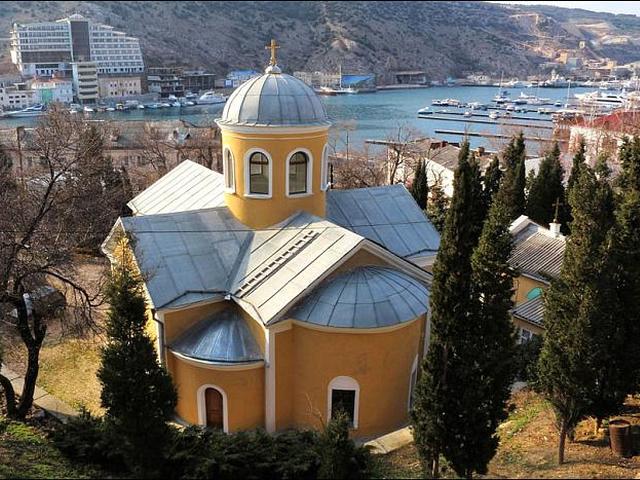
Balaklava is a unique place! By the beauty of nature and richness of the historical past. The city is located at a bizarre bay, which is connected to the sea by a narrow passage (in the old days it was blocked by a thick chain). From the sea the bay is almost invisible, it is hidden by high rocky shores. Balaklava is located in a deep basin, its houses run up on rocky terraces. And above the city are the ruins of the ancient Genoese tower Cembalo. From here from the Fortress Mountain opens a beautiful view: in the distance you can see Cape Aya, on the right — the rocks and the entrance from the sea into the bay, in the north beautifully curved bay itself and spread Balaklava. And the sea, the sea, the sea…
At any time you can come to the ancient town of fishermen and see for yourself the ruins of the fortress, as well as one of the oldest Orthodox churches in Crimea.
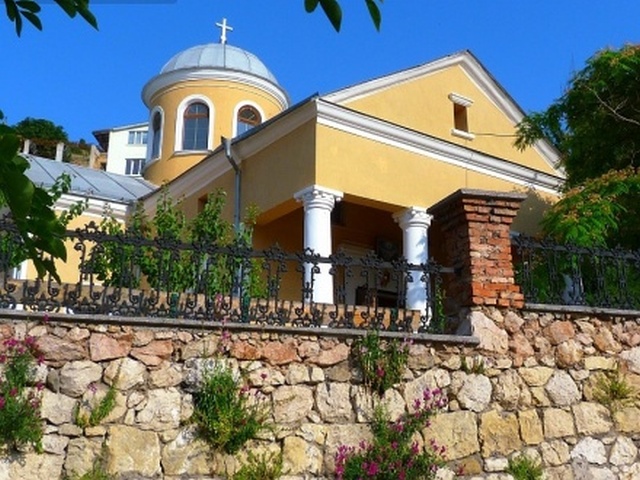
There are several opinions about the date of its foundation. During the reconstruction of the church, a construction board was found embedded in the wall (such boards were left by Genoese masters in the buildings they built), on which an inscription was preserved: «1357, on the day of September, this building was begun during the administration of the humble man Simone de Orto, consul and castellan». This stone was hidden by a layer of plaster, so some researchers believe that it was reused in the construction of the temple. In 1864, Bishop of Simferopol and Tauride Hermogenes wrote: «Back in 1375 in Balaklava was built church in the name of the Twelve Apostles. The present stone church was built in 1794, but in the Crimean War was damaged by the enemy and then renewed by parishioners and consecrated July 8, 1875 in the name of St. Nicholas the Wonderworker». In it were kept the banners and other relics of the Balaklava Greek battalion.
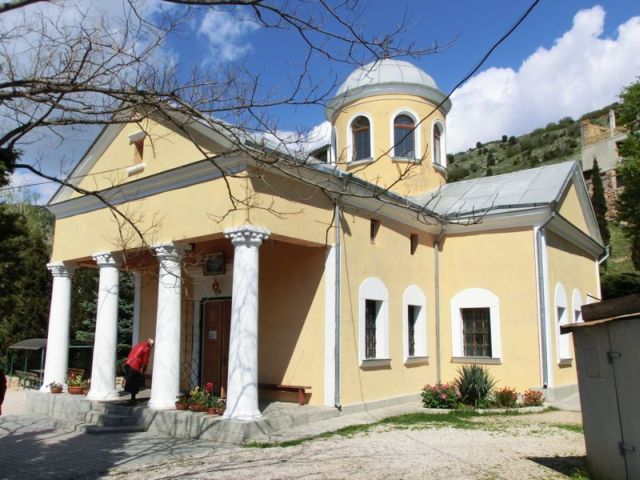
The church was at first under the jurisdiction of the Chief Priest of the Army and Navy, and when the Greek Battalion was abolished in 1859, it was transferred to the diocesan office. The Church of the Holy Apostles, built on the ancient cemetery, was closed in 1924 and dismantled in the 40s. Only the chapel and part of the apse remain.
During the years of Soviet power, the church of St. Nicholas was closed and first the House of Pioneers, and then the club OSOAVIAHIM. Only in 1990 it was again given to the church. Kiev architect Y. Lositsky developed a project of its restoration. The temple is a unique architectural XVIII century, according to many experts, this architectural type is not found in the structures of the Crimea or neighboring regions. It is a four-column cross-dome building made of rubble limestone. The temple is small in volume, but nevertheless majestic.
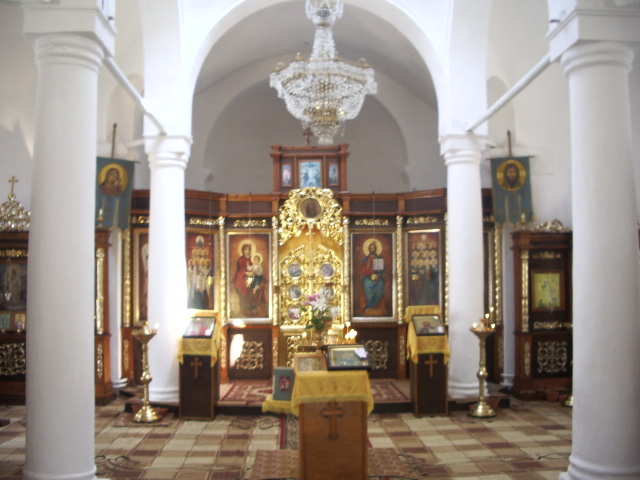
There are no paintings inside, but in earlier centuries they may have adorned its walls. The supporting columns, also of Doric order, point upwards and give an impression of grandeur.
While the restoration was in progress, services were held in a small room in the courtyard, seating about 30 people. The temple was restored in 1990 by the work of Archimandrite Augustine (then Archpriest Alexander) and consecrated on July 13 in the name of the Twelve Apostles, for the first time in many years under its arches sounded that day the words of prayer.
Now the church is a suburb of Inkerman Holy Klimentovsky Monastery. Here are kept precious relics — parts of the relics of St. Sergius of Radonezh and St. Blessed Basil.