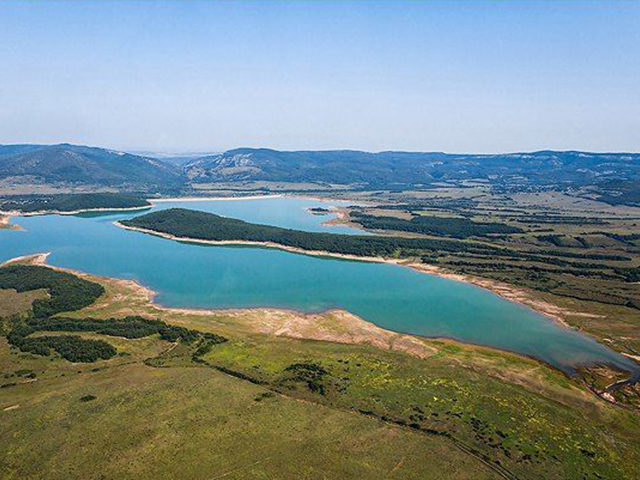
Due to the arid climate, as many as sixteen reservoirs are located on the territory of the Crimean peninsula. Not counting those nine, which are confined specifically to the North Crimean channel. The first sixteen artificial reservoirs are designed to accumulate liquid, designed to meet the needs of fresh water for the inhabitants of a number of settlements in Crimea. The second group of reservoirs are reservoirs whose moisture is used exclusively for irrigation of agricultural land.
The abundance of reservoirs is associated with the branches of specialization of Crimea. These are grain growing, viticulture, horticulture, cultivation of essential oil plants and vegetable growing. Of these, only grapes, lavender, roses and sage are ready to be satisfied with the minimum precipitation that falls on the land of the peninsula from the sky. All other plants consume water in immeasurable quantities. Therefore, for the successful development of these industries, people have to accumulate it and use it evenly to maintain the life cycle of their plants.
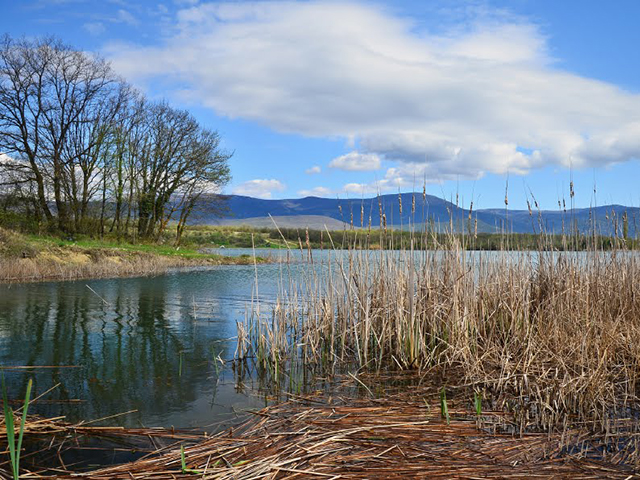
One of the most important Crimean reservoirs is the Chernorechenskoye Reservoir. It is built on the expanded channel of the river Chernaya. It is one of the most powerful permanent watercourses flowing through the territory of the Crimean peninsula. It runs along the Baidar Valley, collecting water from the Main and Inner Ridge of the Crimean Mountains. The length of the river is 34.1 km. It belongs to the Black Sea basin and flows into it near Inkerman. Naturally, it is the river Chernaya became the main water artery of Sevastopol. And Chernorechenskoye Reservoir is the main reservoir of drinking and technical water for the residents of Sevastopol, Balaklava, Inkerman and 30 more agrarian and special settlements.
The Chernorechenskoye reservoir appeared on the river in 1956. At the same time, unique, in terms of history, lands were flooded. Archaeologists proved that the first people in the Baidar Valley appeared about 5 thousand years ago. Menhirs, similar to the «Carnac stones» of French Brittany and those found in Sardinia, were located near the village of Skelei. During the times of global construction projects sponsored by the USSR, little attention was paid to preserving the memory of ancestors. Therefore, some of the artifacts from the Crimean man of the Stone Age are now hidden by the waters of the Chernorechenskoye Reservoir.
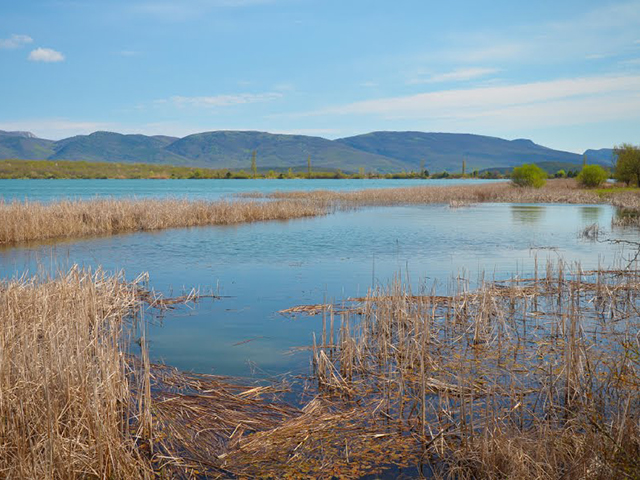
Staying in these parts today, a guest of the peninsula will see only a beautiful body of water, the shape of which resembles a gem cut under the «marquis». The color of the liquid varies from emerald to dark steel. The «frame» of the Chernorechensk crystal is the first ridges, such light «bloating» of the looming Crimean mountains. Sevastopol is visible behind them, and the presence of the sea can be guessed by the blowing of the wind saturated with iodine. On the other side of the Chernorechenskoye Reservoir there is a road one car wide.
Today this artificial reservoir has a mirror area of 6 km². Due to the peculiarities of the relief of the Baidar Valley, its maximum depth reaches 31.7 meters, and the average varies within 10-11 meters. It «stores» 64.2 million m³ of invaluable liquid. It is held by a spillway gravity dam. The first time a baffle was attempted was before World War II, but human and material resources were then required by the government elsewhere. Only in 1956 the dam was built with a height of 28 meters, and in 1984 it was increased to 36 meters. Thanks to it, the Chernorechenskoye Reservoir became the largest reservoir of this type in Crimea.
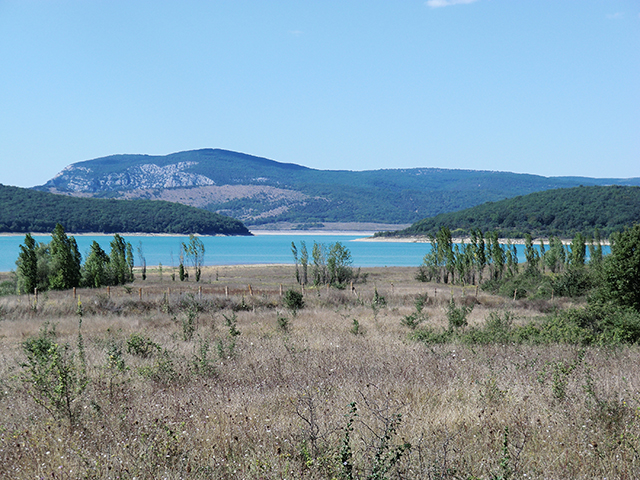
Water is great, but there is one thing that needs to be mentioned. Staying on vacation in Foros, in the same Balaklava or in Ozerny, guests cannot count on swimming in this reservoir. After all, it is the main reservoir of fresh water for the entire southeastern tip of the peninsula. There are signs everywhere informing about the prohibition of bathing and recreation on the banks of the Chernorechenskoye reservoir, and the territory itself is constantly monitored by foresters of the «Baidar» reserve and the Committee for Water Management Construction of the Republic of Krym.