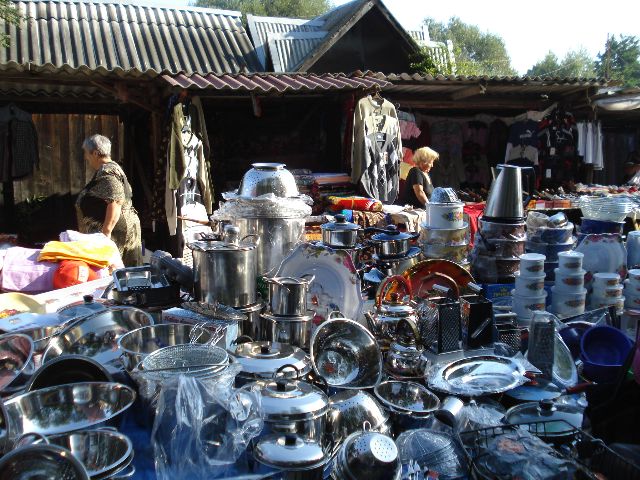
 Kolomyia is a true tourist star of the Carpathian region. First of all, in it not just preserved, but really prevails over the dull standard gray building of the Soviet era Austro-Hungarian architectural harmony. Ratusha of 1877, the building of the former gymnasium of 1875, the Church of St. Archangel Michael and many residential houses that form the historical center of the city, make a vacation in a small town on the outskirts of Ivano-Frankivsk region similar to a stay in a tour of Europe. The illusion of the imperial, Austro-Hungarian spirit is especially strong in Kolomiya at dusk, when the street lights are turned on. The only thing missing is the sound of clattering horses’ hooves cutting sparks from the stone sidewalk, and the clatter of the wheels of a fiacre taking guests to the local theater.
Secondly, despite its heavenly appearance and the presence of a huge number of architectural monuments in the style of Secession, Art Nouveau and sacred historicism, the city has a strong commercial fame. The local markets gained fame as early as the 16th century, when the city began to trade throughout Central Europe in salt boiled by fifty Colomian industrialists. Cooler than Magdeburg Law was the local law, a privilege that forbade the surrounding merchants to avoid Kolomyia, and to trade anywhere else but in the local Market Square.
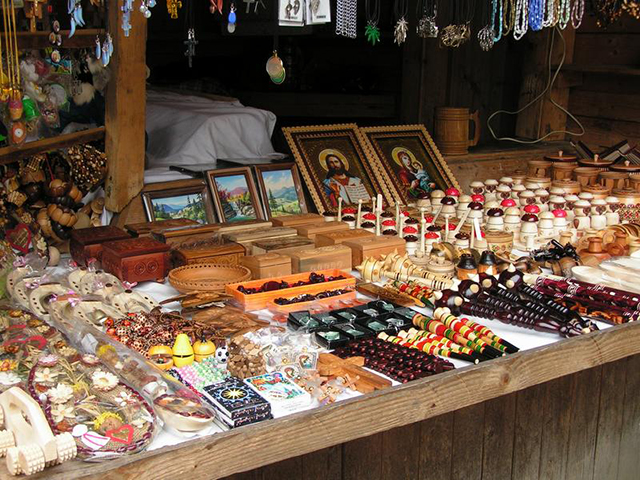 The fame of one of the largest Salt and Industrial markets of Pokutia today continued local Souvenir market «Hutsulshchina» and the only wholesale market of embroideries in Ukraine, which has long since shut behind the belt reanimated Sorochinsky fair and exhibition of pseudo-ethno-textiles on Andreevsky Uzvoz. A separate place in the hearts and memory of tourists takes Kolomiya Souvenir Market No. 1.
This really outstanding object is located on the bypass road of Kolomyia, at the so-called 156th kilometer. Such placement is justified, because the market «Hutsulschina» its size is comparable to the parameters of a good Ukrainian farm. In addition to the usual Carpathian tourist set — logs, sheep skins, clay bowls and small wooden items — caskets, maces, massagers, rocking chairs and makogon, more expensive and large souvenirs are presented here in abundance.
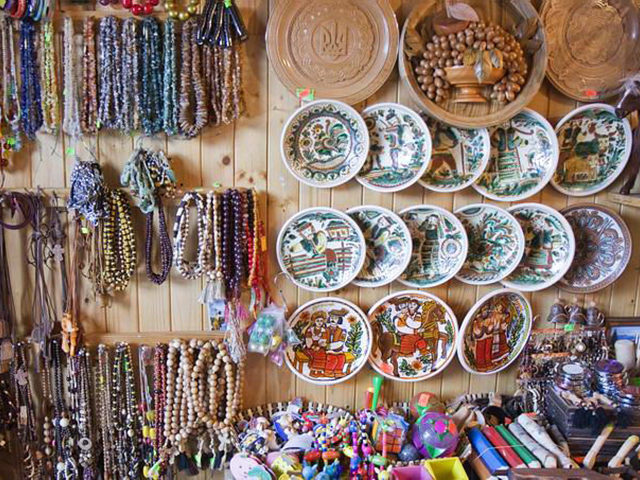 A good half of the territory of «Hutsulschina» is occupied by wooden mills, garden gnomes and non-gnomes — Baba Yezhka, Cossacks, various animals, heroes of Ukrainian folklore and miniature models of popular politicians. A special branch of specialization of this Souvenir Market are swings and gazebos, barrels for honey and wine, beehives, dog boxes and bird feeders, that is, everything made of wood by craftsmen from the surrounding villages. A special interest of the poor tourists is forging — stylish chandeliers, horn stands, sconces and sets for fireplaces, which are much cheaper here than at occasional city fairs and in design salons in many capitals.
On the territory of the Souvenir Market there is the «City of Masters», where children of visitors of the unique trading platform will be taught some folk craft while their parents are shopping in Kolomiya style. And then all together they can have a snack in one of the kolibas, ordering both Hutsul and standard Ukrainian dishes.
The third trump card of vacation in the Carpathians, in this locality, can be called local meetings of wonders. «Museum of Folk Art of Hutsulschyna and Pokutia» and the one-of-a-kind Muzej Pisanka are among the most visited attractions in Kolomyja, despite the fact that you can’t buy anything there. Also not for sale, but for a long time remains in the memory of visitors, the amazing atmosphere of this «signature» Austro-Hungarian town, the most successful, harmonious and interesting settlement of Pokutia.