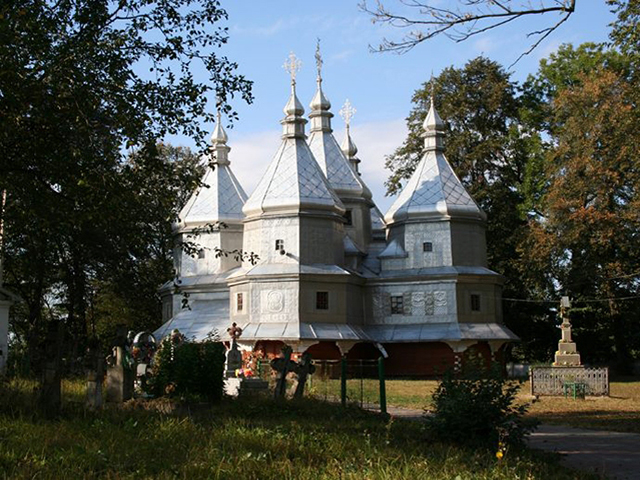
 Among all kinds of architectural monuments of the Carpathian region a special place is occupied by ancient religious buildings — wooden temples, which have survived to our days from the depths of centuries. These are truly unique, amazing structures that have brought their atmosphere from the vanished era to our modern times. One of such amazing sights is located in the village of Nizhny Verbizh, Kolomiya district.
Being in the village of Lower Verbizh, it is impossible not to get acquainted with this attraction — this building is the oldest in the village, its main treasure, priceless and fervently loved by all residents. The village is located near the town of Kolomyia, and many vacationers come here specially to see one of the masterpieces of wooden Hutsul architecture.
The construction of the Church of the Nativity of the Blessed Virgin Mary in the village of Lower Verbizh was completed in 1808, but it began long before that. According to extant information, the temple in the village decided to build a temple on his own money one of the local residents — G. Semenyuk. In his youth he was one of the oprishki — a member of the rebel detachment of the legendary Oleksa Dovbush, but one day he decided to leave his brothers in arms with the treasures and ran away. These treasures became both the reason and the means for the construction of a church in the village of Nizhny Verbizh — Semenyuk began to build a temple to atone for his sins. It is not known exactly when the construction began: according to some sources in 1788, others — even earlier in 1756. Whatever the case, the temple, which had been under construction for several years, was completed, and the village received not only a spiritual monastery, but also one of the most beautiful buildings.
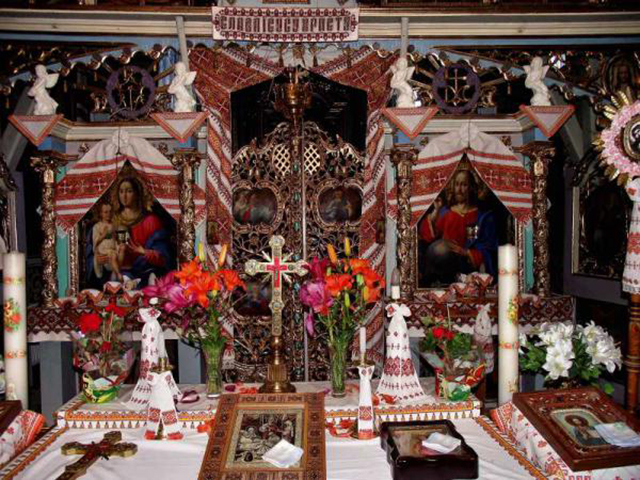 The church of the Nativity of the Blessed Virgin Mary, which is five-ban and cross in plan, became a real masterpiece of Hutsul architecture. It was built in the best traditions of folk wooden architecture, which reflect the worldview of the Slavs who lived in such distant times, their perception of nature, the world and the place of man in this world. Like other similar buildings, the temple harmoniously complemented the surrounding landscape, making the overall picture somewhat fairy-tale and very impressive.
In the 1990s, the church, which had been intact for more than two centuries, underwent a serious reconstruction: its roof and domes were covered with galvanized tin, either to preserve the wood from destruction or for some other purpose. As a result, the temple partially lost its authenticity, but this did not prevent it from being inscribed on the UNESCO World Heritage List. In 2013, as part of the site «Wooden Churches of the Carpathian Region in Poland and Ukraine», which included 16 ancient wooden churches, the Church of the Nativity of the Blessed Virgin Mary became one of the objects of cultural heritage of the country protected by UNESCO. So few attractions of the Carpathians have received such high recognition so far, which makes each object on this list particularly important. Today, locals hope that the upcoming restoration and removal of galvanized tin will allow the temple to regain its original appearance, but even in its current form it is of interest, looking rather unusual, even somewhat fantastic.
The Church of the Nativity of the Blessed Virgin Mary is worth seeing, and even after the partial loss of its original appearance, connoisseurs of the beauty of religious architecture do not cease to come here, with pleasure getting acquainted with the temple with such an interesting and ancient history.