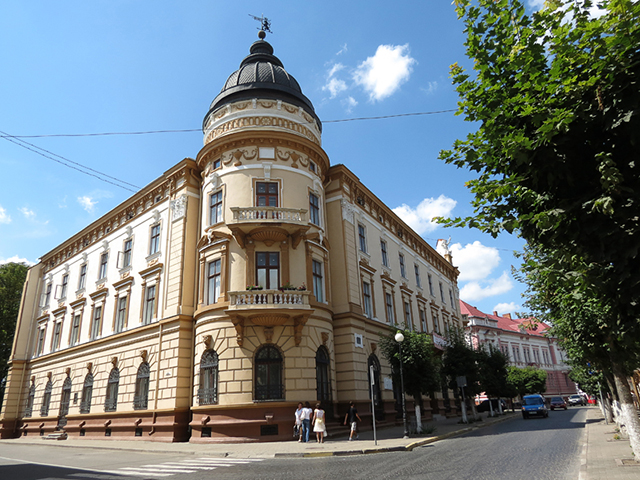
 The architecture of Kolomyia — a small town with a population of only about 70 thousand people, is admired by tourists even with a rich «experience». And whether to impress the guests even more, or just by coincidence, in some places the beauty of this city merges with its history. The most striking example of this is the Museum of Folk Art of Hutsulshchyna and Pokutya, which is housed in the walls of one of the most impressive houses in the city.
The house at number 25 on Teatralnaya Street, which today houses the Museum of Folk Art, is considered one of the most striking buildings on this street. It is one of the architectural treasures of the city, given to it by architects L. Bekker and N. Krichkovsky. It was erected in 1880 at the expense of the Ukrainian community of Kolomyia under the leadership of the famous cultural, social and church figure Iosafat Kobrinsky, who devoted the last years of his life to working on it.
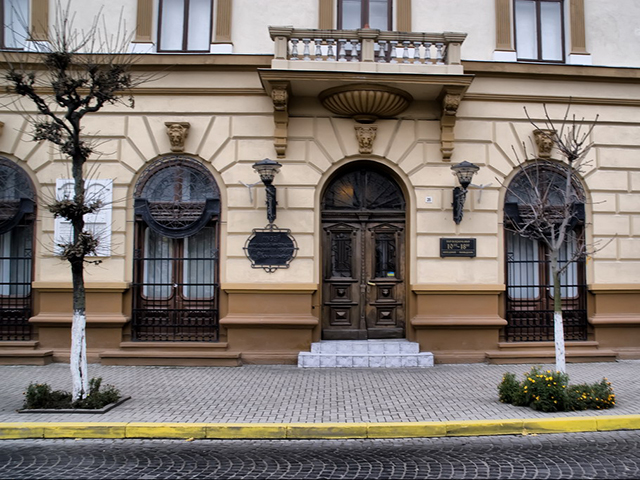 Despite the ridicule and the fact that many people did not believe that the priest and his assistants would really succeed in building a large public building in the best neighborhood of the city, Kobrynsky, together with his enthusiastic supporters, tirelessly raised funds. The residents of the town and the surrounding area, who were particularly infected by Kobrinsky’s idea, used carts to bring wood and stones to the construction site, where they worked for weeks. In the end, they achieved the goal — they built not just a People’s House, but one of the most impressively beautiful buildings. Today it is valuable both from an aesthetic point of view and as a place where the entire history of the ancient city of Kolomyia is kept.
Built in 1901, the building with a theater hall, school, museum and library became a cultural center from the moment of its foundation. In 1926 it finally secured this status when the Museum of Folk Art of Hutsul and Pokutia was founded there. Today, the museum’s expositions are located in 18 halls, and its total area is about one square kilometer. The collections contain more than 50 thousand exhibits representing all forms of traditional folk art of Pokutians and Hutsuls, starting from the XVIII century. In addition, artifacts dating back thousands of years and representing the ancient Tripolye culture are kept here. Among the exhibits of the museum are the most beautiful examples of artistic woodworking (burning, inlaying, carving), as well as leather and metal, clothes, embroidery, carpets, weaving and pottery. Permanent expositions — sacral art, Hutsul furniture and clothes, interiors of Hutsul houses, memorial room of the famous writer A. Tchaikovsky, tapestries by M. Bilas, paintings by Ukrainian artists.
Every year the Museum of Folk Art of Hutsul and Pokutia is visited by 200-250 thousand tourists from all over the country, as well as its guests. An excursion to this attraction of Kolomyja is both an unforgettable journey into the world of the most interesting culture of the indigenous ethnic groups of the Carpathians and the Carpathian region, and an opportunity to visit the most beautiful building of the city — the former People’s House.