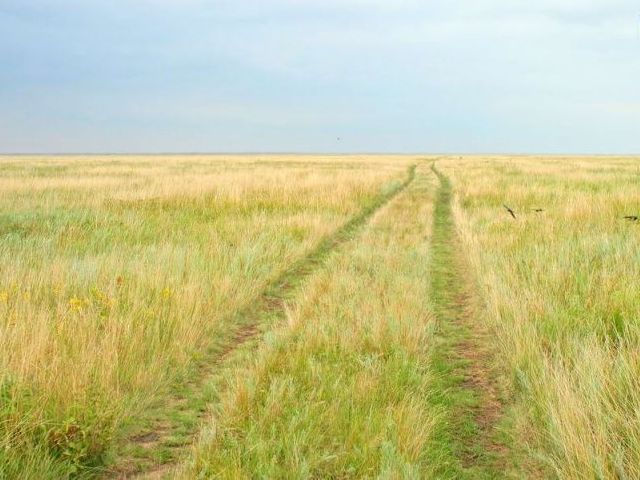
The Northern Azov region, where Kamennye Mogily and other natural reserve zones of the Donetsk region are located, has long attracted tourists and researchers with interesting findings of archaeologists, picturesque views and rich peculiar steppe vegetation. In order to preserve the natural state and careful use of the steppe landscapes of the Azov region, where virgin steppe plots are still intact, in recent years, the Donetsk Regional Council established in 1999 the landscape reserve «Bestash» with an area of 437 hectares and in 2000 the regional landscape park «Polovetsian Steppe» with an area of 1335 hectares.
The Polovtsian Steppe Landscape Park was named in memory of the Polovtsians, a large steppe people who inhabited this region about a thousand years ago. In our steppes there are burial places of the Polovtsians, their burial mounds and sanctuaries. On them Polovtsians put their stone statues. Now we call them Polovtsian women. Statues were made in human height from limestone, sandstone and granite. They were installed facing east. We should pay tribute to the ancient Cumans sculptors, the images of men and women expressively convey facial features and many details of clothing of their heroes. A rich gallery of Polovtsian women, collected in the steppes of our region, can now be seen at the building of the Donetsk Museum of Local Lore. Cumans made sanctuaries on elevated places. A platform was made of stone, next to it there was a place for sacrifice. In the sanctuary stood two stone figures — a man and a woman. The main gods of the Kipchaks were the sun god Tengri Khan and his wife Umai, the patroness of women and children.
Statues as gods were given gifts and sacrifices. Stone statues took part in festivities. The gods were «fed» by smearing their lips with the blood and fat of sacrificed animals.
The Kipchaks communicated closely with Russia. Neighboring peoples often fought among themselves and made raids on each other. But often Kipchaks and Russians acted together against the common enemy. Many Russian princes and Polovtsian khans had kinship ties. In the literary monument «The Tale of Igor’s Regiment» and chronicles it is told that the eldest son of Novgorod-Seversky prince Igor took as his wife and brought to himself the daughter of the Polovtsian prince Konchak, at whom before that prince Igor was in captivity and fled. This lyrical story is the basis for the libretto of the famous opera «Prince Igor» by composer A. Borodin. The title «Polovtsian Steppe» makes us remember these and many other historical events that took place in our lands.
Tourists coming to the landscape park get acquainted with the archaeological past of Volodarsky district, where the park lies, and the neighboring Pershotravnevy district. They are told about the excavations of the glacial period human settlements, about burials of pit and catacomb times. People who lived 14 thousand years ago on the banks of the river Karatysh were skillful craftsmen and perfectly processed stone and bone. They will show the remains of an ancient sanctuary fenced with carefully worked, human-like stones called balbals. The number of hewn stones shows how many enemies were killed.
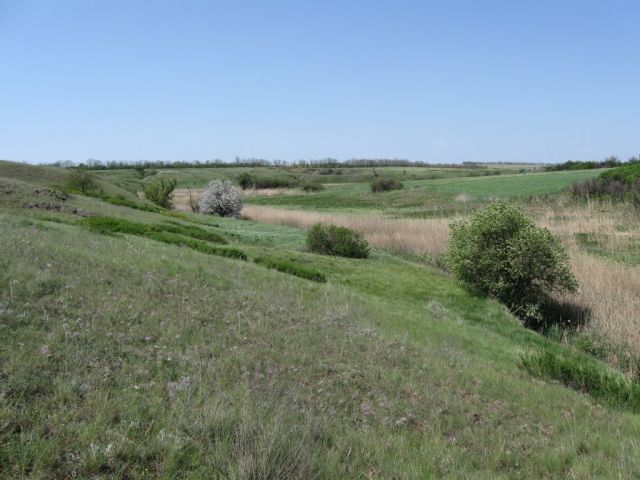
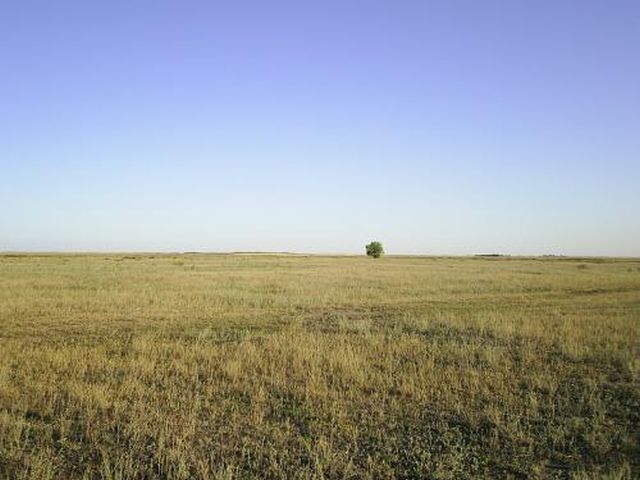
The Polovetskaya Steppe Landscape Park is located in the floodplain of the middle reaches of the Berda River and its tributaries the Karatyuk and Temryuk rivers. The territory of the park is a grassy-typchak-kovyal steppe with forest crops planted in some places. Nearby in the floodplain of the river Bestash the landscape reserve «Bestash» stretches for 6.5 kilometers. The landscape and natural conditions of both protected objects are practically the same, therefore we consider them as a common nature protection zone and call it Park for short.
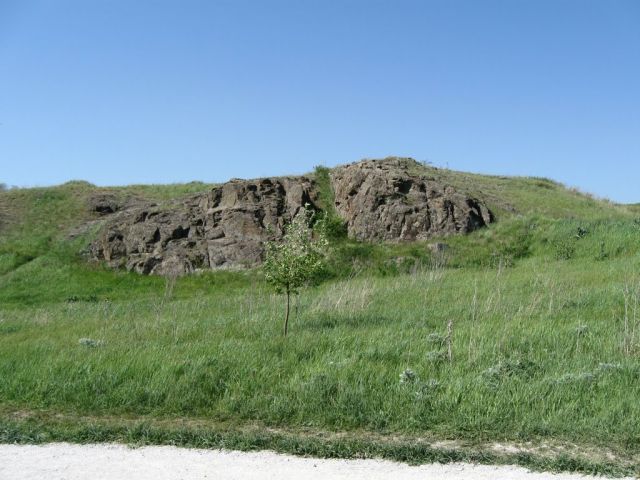
According to the physical-geographical zoning of Donbass, the Park belongs to the Steppe region of the north-eastern Azov region. The landscape is a terrain strongly dissected by river valleys, gullies and pits, which cut into the protruding rocks and granite rocks, creating picturesque landscapes. This part of Donbass is a unique region in terms of richness of natural resources with a rather favorable climate. Climatic conditions related to the geographical location and the influence of the parent carbonate rocks located at a shallow depth formed virgin steppe with drought-resistant stone-loving vegetation.
The territory of the park is a place of growth of more than 200 species of stony-steppe, steppe, meadow-steppe and other plants, among them a large number of medicinal herbs and rare plants. The Red Book includes Scythian caragana, granite tulip, prostrel (sleep-grass), sagebrush, and many species of woolly, granite, Lessing’s, and Ukrainian woads.
 .
.
The Park protects steppe phytocenoses — group growth of different plant species, in particular, group formations of hairy, granitic and Lessing’s grasses have been identified.
The bird world of the Park is rich. In spring the coastal thickets of rivers and reservoirs are filled with singing of different species of reed warblers. Wild ducks, mallards, diving ducks, water hens and sandpipers nest in the reeds. One can hear the loud voice of a heron and the voice of a miniature heron — a little tufted egret. The marsh harrier — the storm of all wetland birds — builds its nest in old reed beds. Among steppe birds the most widespread are field larks, starlings, swallows, sparrows, bluebirds and tailed larks. The beautiful buzzard soars in the sky, an ornament of the steppe landscape. Flocks of wild geese and many other migratory birds stop here for rest during seasonal migrations.
In recent years in Donets region a large number of nature protection objects have been created. In 2007, there were more than a hundred of them, and their area exceeded 3% of the region’s territory. However, not small protected areas are of great benefit, but large natural parks, where nature protection and biological and other scientific research are much more productive. In 2009, the National Natural Park «Meotida» was created, which united all the natural reserve objects of Priazov region. The Polovtsian Steppe Landscape Park and the Bestash Wildlife Refuge became part of this National Natural Park.