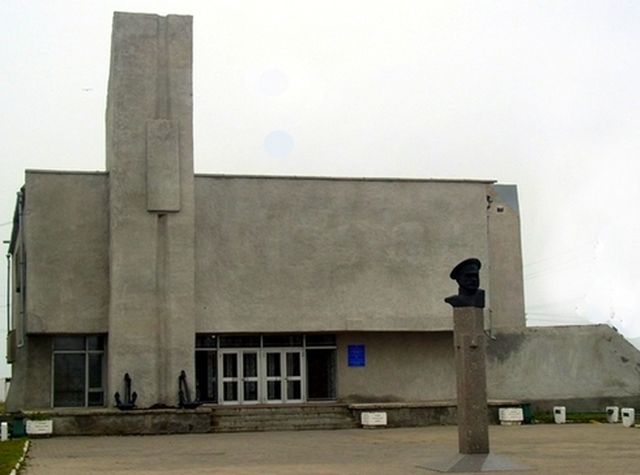
The best monument to the feat of the Arctic pioneer is the Historical Museum of G. Y. Sedov. The opening of the museum of G.Ya. Sedov took place on July 8, 1990 at the birthplace of the conqueror of northern latitudes in the village of Sedovo, Novoazovsk district, Donetsk region.
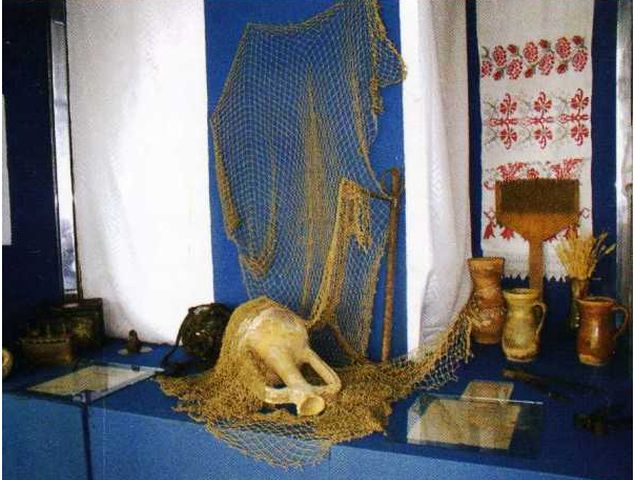
The two-storied building of the museum, which looks like a silhouette of a sailing ship, was specially built according to the project, the authors of which were V.S.Solomin and O.K.Pleskov. As a result of joint efforts an interesting historical museum of the great Arctic explorer was created, which was splendidly decorated by artists of the St. Petersburg Combine of Painting and Decorating Art. Since 1990 the G.Ya.Sedov Museum has been a department of Donets Regional Museum of Local Lore. Two years later, the G.Y.Sedov Museum is an independent historical museum… Georgy Sedov (1877 — 1914) … Once just Zhorka, «Sedovy» was the son of an Azov sailor from Krivaya Kosa. The exposition presents items that were used in the Sedov family: a model of a fishing hut, a net for fishing, utensils, textbooks. In 1895 Georgy Sedov entered the seafaring classes in Rostov-on-Don, where at the age of 21 he received a diploma of coastal navigation navigator.
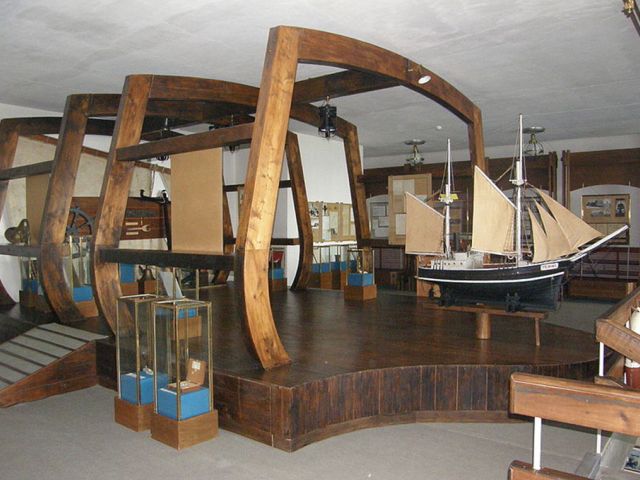
Here visitors are also familiarized with the materials telling about Sedov’s life in St. Petersburg, when after passing the exams for the course of the Naval Cadet Corps and becoming an officer — hydrographer, he began to live in this city.
In 24 Sedov was promoted to lieutenant in the Admiralty, sent to the Hydrographic Expedition of the Arctic Ocean to explore Novaya Zemlya and the Kara Sea. It was his first expedition to the «land of white silence», after which his superiors spoke about Sedov as a «bold to the point of madness lieutenant». 1904 — 1907. — Service in the Amur River Flotilla in Nikolaevsk-on-Amur. During the Russo-Japanese War in 1905 Sedov commanded a destroyer in the Amur flotilla. Georgy Yakovlevich Sedov is known not only as a polar explorer, but also as a hydrographer who made a great contribution to the study of the seas, mainly Arctic. The 30-year-old hydrographer was elected a full member of the Russian Geographical and then Russian Astronomical Societies. Visitors to the museum have the opportunity to familiarize themselves with the materials of G.Y.Sedov’s previous expeditions to Kolyma in 1909 and to the Caspian Sea in 1911.
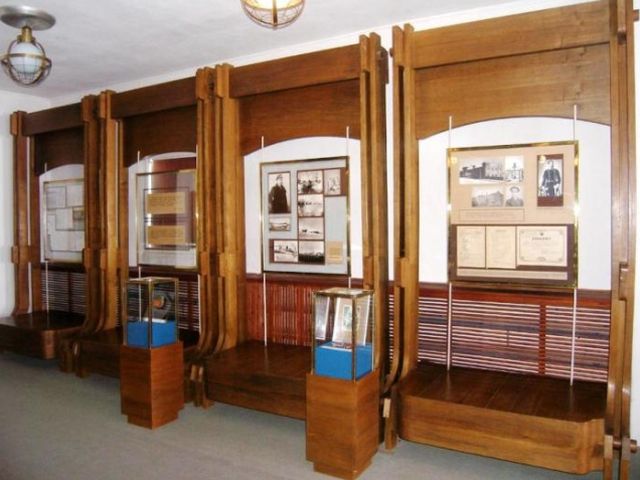
The results of G.Ya.Sedov’s expeditions were highly appreciated: he was awarded with high awards — the Order of St. Anna of the 3rd degree and the Order of St. Stanislav of the 3rd degree.
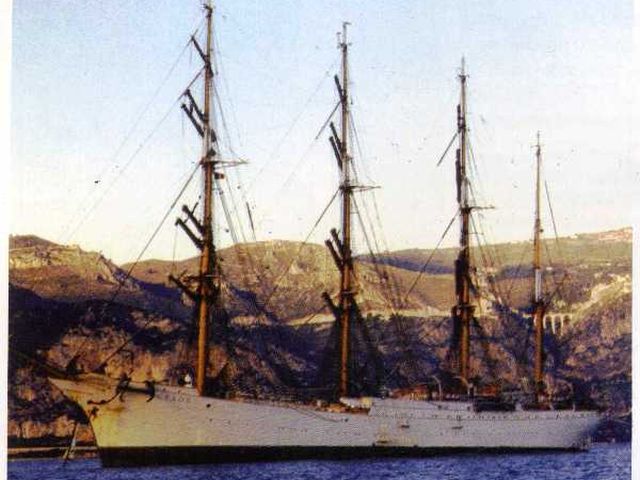
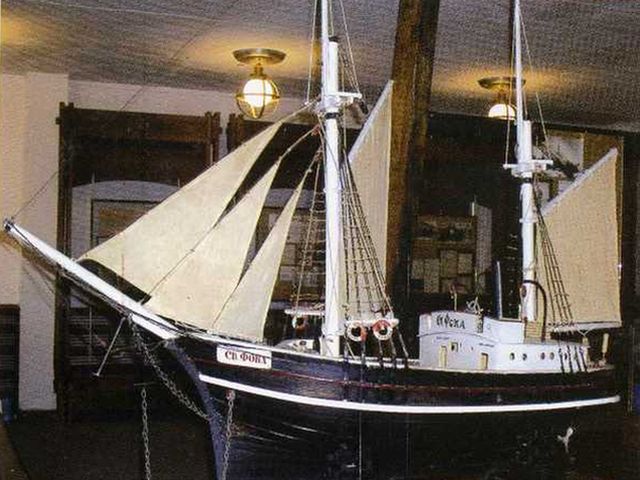
It was during his stay on Novaya Zemlya that Sedov had the idea of organizing an expedition to reach the North Pole. With extraordinary courage he began to prepare for the realization of his dream — the conquest of the North Pole. In the exposition of the museum there is a map of the polar expedition, copies of accounts of voluntary donations for the purchase of dogs and food. There are also authentic exhibits from the ship «St. Martyr Foka», on which G.Ya.Sedov went to his last exploit. Part of the plating and horseshoes of the ship, a shovel found at the place of G.Ya.Sedov’s death on Rudolf Island, parts of a camera, a razor, brushes, which belonged to the participant of the expedition artist N.V.Pinegin. And next to Nikolai Vasilyevich’s positives, an expressive drawing of the schooner «St. Foka», made by the artist himself and presented to the museum by his wife.
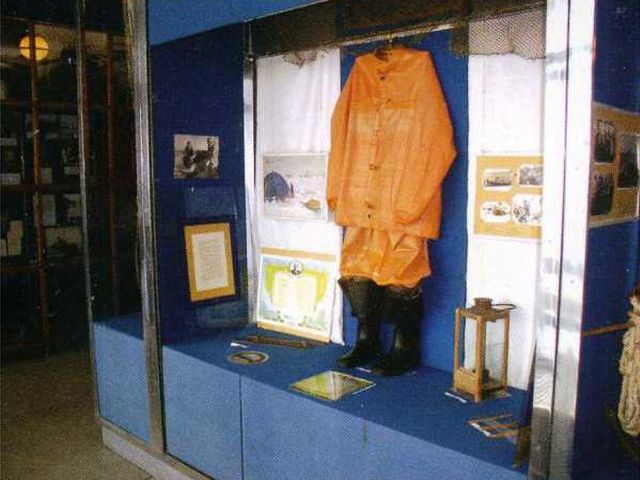
«My main goal is precisely to reach the Pole as a quite definite astronomical point». In addition to Sedov himself, the expedition included geographer V.Yu.Vise, geologist M.A.Pavlov, artist N.V.Pinegin, and famous future scientists. In total there were 27 people on the ship.
Inhuman efforts managed to equip a small ship «Saint Martyr Foka», on which on August 27, 1912 the brave sailor went to his immortality. The exposition section «G.Y.Sedov — the Arctic pioneer» allows to trace the most important stages of life and activity of the leader of the first Russian expedition to the North Pole. Documents, photos, valuable relics presented in the museum tell about the expedition organized by our fellow countryman. 1912 near the coast of Novaya Zemlya the ship «Svyatoy Foka» met impassable ice, the expedition was forced to winterize. 1913г. — Freed from ice, the ship «Svyatoy Foka» took a course to Franz Josef Land and here, in the Tikhoy Bay of Hooker Island, stood for the second wintering.
1914г. — On February 15, in the polar darkness and snow storms, already sick with scurvy, Sedov with sailors Pustoshny and Linnik on three dog sleds left Tikhuyu Bay and headed for the North Pole. Sedov’s last letter to his wife Vera Valerianovna May — Mayevskaya. It is written in beautiful smooth handwriting, which is not typical for Sedov. Each phrase was long thought over and weighed. G.Ya.Sedov died on March 5, 1914 from an insidious disease on the way to his cherished dream and was buried on Rudolf Island — the northernmost tip of the archipelago of Franz Josef Land.
A large section of the exposition «Realization of G.Y. Sedov’s dream» is devoted to the modern development of the North. Here you can see a model of the first polar station under the leadership of I.D. Papanin, materials of the last pole expeditions, philatelic collections about the expeditions to the North Pole. Not only a historical museum, but also a local history museum is being created.
The workers of the museum collect materials on the history of Sedovo settlement, fishing industry of Novoazovskiy district. Visitors of the museum have an opportunity to see the first pages of the history of the farm Krivaya Kosa (now Sedovo village), the life of fishermen.
Undoubtedly, of great interest are interior items of peasant hut, tools, exhibited in the section «History of the farm Krivaya Kosa». The section «Place of work — Azov Sea» acquaints excursionists with the chronicle of the fish farm «Zavety Ilyicha» (now agroceh No. 36 OJSC «Ilyicha Mariupol Metallurgical Plant»), reflects the hard working conditions of fishermen. Here you can see the fishing tools of fishermen: nets, buoy (kuhtyl), fork, wooden needles (glichki), hooks, bagor, etc.
It is difficult to overestimate the importance of the cultural heritage left by the Sedov expedition. The materials collected by the expedition members are of great scientific importance.
Great works were carried out in the field of geodesy, hydrography, meteorology, geology, cartography, glaciology, terrestrial magnetism. Grateful mankind does not forget its heroes. Cold Arctic waters now wash off the Sedov Islands near Severnaya Zemlya. On Novaya Zemlya, Sedov Peak soared into the pale polar sky. Sedov Cape on Franz Josef Land, from where he left on his last heroic journey, turned its face to the north.
Only in Soviet times Sedov’s dream of developing the Northern Sea Route came true: two decades after his death this route was opened for regular voyages. Visiting the Sedov Historical Museum, people will not be able to forget about the naval officer in the rank of senior lieutenant, who in his incomplete 37 years already rested under blocks of ice on Rudolf Island in the name of science.