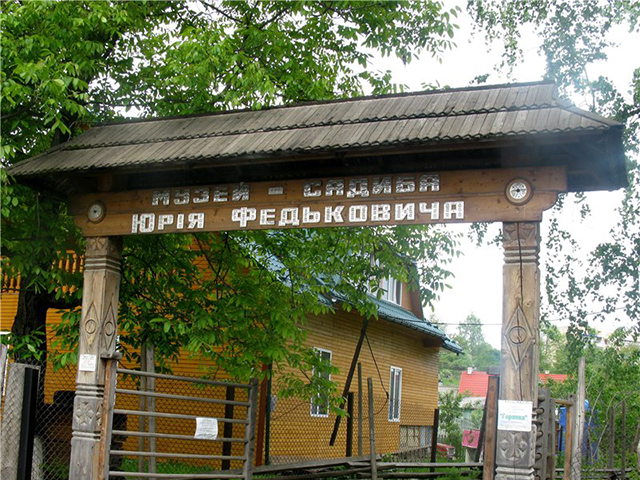
 Yuriy Fedkovych is an extraordinary personality even for Bukovina, a region as multinational and colorful as the ribbons that sheepdogs weave into the manes of their horses. Before the famous Kamenyar — Ivan Frank, Fedkovych was considered the coolest writer of Western Ukraine. At the end of his life-literary journey, he was invited to Lviv, worked as editor of Prosvita and of the theater Russkaya Obeseda, later turned into the Theater of Ukrainian Conversation.
Interestingly enough, the first half of Osip-Dominik Gordinsky de Fedkovich’s life, which is how Yuri Fedkovich’s true name sounds, did not pass as poetically and aesthetically as his maturity. Born in Putil, in the family of a nobleman and a petty official of the Austro-Hungarian Empire, young Osip-Dominik had to finish a German school in Chernivtsi, serve in the army and take part in the Austrian military campaign in Italy. When Osip de Fedkovich returned to his homeland, he was elected viit of his native Putila. A viit is a position identical to today’s mayor, i.e. the future writer Jurij Fedković managed the local, in this case Putila, self-government, controlled tax collection, organized the courts — ensuring the trial by jury, initiated road construction and managed the community’s immovable property.
For some reason, while serving as a viit, Yuriy Fedkovych was «drawn» to write poetry and dramas from Hutsul life, as well as to translate into Ukrainian the works of Shakespeare, Goethe and Schiller, the Grimm brothers and Andersen. All Fedkovych’s works were published in Galician journals, they were willingly published and discussed by advanced lovers of Ukrainian ethnography and the national idea. Therefore, having given up the title of the «first man» of Putila, Yuriy Fedkovych set out to conquer the literary Ukrainian Olympus.
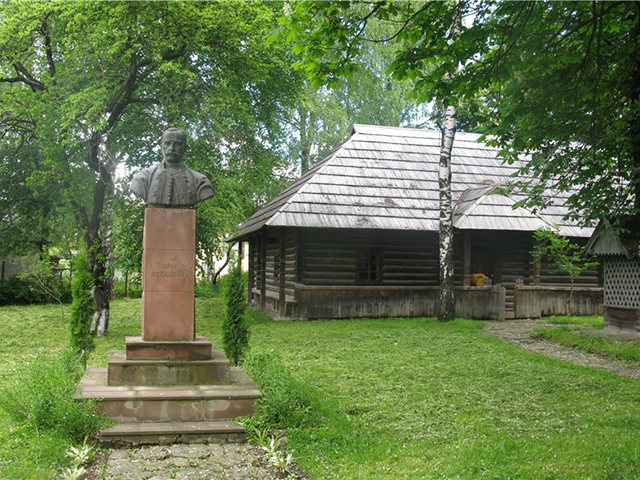 But, the native village has not forgotten its Viyt. In the very center of Putila — on Fedkovicha Street 15 there is a museum of Bukovina kobzar. More precisely, it is a house built on the place of the ancestral nest of de Fedkovich. Osip-Dominik was once born in this place, here he went to school in Chernivtsi, here he returned from the Austro-Italian war and lived, working as a viit.
The original 18th century house of the de Fedkoviches burned down, so in 1974 it was reconstructed using the surviving photographs and descriptions taken from the writer’s works. The museum became a typical wooden Hutsul hut. After all, in those times the «mansions» of impoverished noblemen and active viits were not much different from the huts of the majority of the population. The only difference between the replica house and its relatives was the absence of any outbuildings. But there was a well near the remake hut, the very one that fed the main Bukovynian romantic and mystic with key water and Carpathian energy.
The museum-mansion of the writer «consists of 3 spruce log cabins, represented by haylofts, living room and living room, which in those times was intended exclusively for receiving guests. The exposition consisted of the original editions of the works of the former Vijt and ethnographic collection collected on the basis of the material of the Putilivsky district. The tiled stove, chests filled with good things, a long table and carved wooden furniture are of particular interest to the guests, which testify to the fact that the hut was inhabited not by sheepherders, but by noblemen.
The sights of Putila the sights of Putila are not exhausted by the Fedkovich Museum alone. The Sandstone Bogachka rock, similar to those shown to tourists around Dresden, the confluence of the Putila River with the Cheremosh River and the slopes of the Pokutsko-Bukovyna Carpathians will diversify the time spent in this place. In addition to natural riches, your rest will be decorated with tastings of brynza, vurda and budza — cheeses made by shepherds according to traditional recipes from the milk of sheep and silver-chocolate cows, as well as participation in the main festivals of the local mountaineers — the spring send-off of sheepherders to the meadows and the autumn professional festival of Putila foresters.