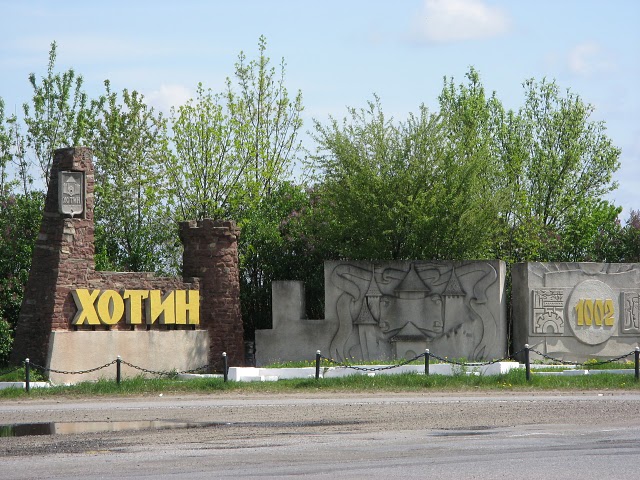
 Today Khotin is a small provincial town with a population of just over 10,000 people, and the peace and quiet that reigns here may give the impression that this has always been the case. However, this impression will be false. Khotyn is the most ancient Ukrainian city, in which during the thousand-year history the most important events took place, which left their mark not only in the fate of the city, but also in the fate of the whole country.
Khotyn is called an illustration of freedom-loving Ukrainians, the cradle of national heroes. Situated on an important trade route, the border town, which fatefully received the name meaning «desirable», was repeatedly tried to conquer and was repeatedly subjugated by foreigners, but every time the inhabitants of the town and surrounding villages joined the troops that stood up to defend it and fought for their freedom not for life, but for death.
It is not known exactly when the history of Khotin began. The rocky hill on the right bank of the Dniester River was favored by people as early as the Copper Age, in the II century AD the ancient Slavs settled here, but the progenitor of the modern city is considered to be a settlement that emerged in the VII century. Among the evidence of the pre-Cretaceous period of Khotyn’s development are found stoves and half-huts, where the first Khotyn residents lived.
Khotyn was first mentioned as a city in the X century, when Prince Vladimir the Great subordinated the lands from the Carpathians to the Dniester to the Kievan principality and began to create a system of border fortifications in the south and west of his state. The date of foundation of the city is September 22, 1002, so in 2002 Khotin celebrated its millennium! At the same time — at the beginning of the XI century the first Khotyn fortress made of wood was erected.
Founded on an important trade route at a convenient crossing of the Dniester, Khotyn quickly flourished, crafts and trade developed here. After Kiev city was a part of the Galicia and then Galicia-Volyn princedoms, and this time was the calmest in its history. As if sensing the coming trials, Prince Danila Galitsky in the middle of the XIII century built a castle and fortifications of stone on the place of the wooden fortress. It was also at this time that the city’s first church, the St. Nicholas or Red Church, was built, which has survived to this day within the perimeter of the fortress.
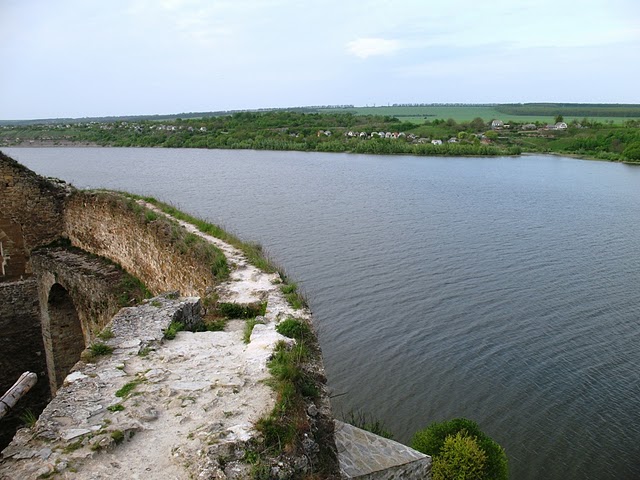 Since the XIV century Khotyn, which became a major trade and craft center, became an object of close attention of all border states, each of which seeks to capture it. From the middle of the XIV to the beginning of the XIX century, the city was several times a part of many kingdoms, principalities and empires: Hungary, Moldavia, Turkey, Poland, Russia. More than once it passed from one hand to another, several large-scale military clashes are connected with Khotin.
Thus, a turning point in the history of northern, southern and eastern Europe, which had long been under the oppression of Turkish conquerors, was the Battle of Khotyn in 1621, when the Ukrainian-Polish army defeated the 120,000-strong Turkish army, which outnumbered it several times over. Then the Turks’ plans for Khotyn as a support for further conquest of the country were destroyed, as well as hopes to impose the Turkish yoke in other European countries. On the site of the battle near the Khotyn fortress in 1991 was erected a monument to Hetman Peter Saidagachny — one of the most unusual sights of the city by sculptor V. Gamal.
The Battle of Khotyn is only one of many that took place under the walls of the fortress. The centuries-long period, when the city and its surroundings became the place of the last display of bravery for thousands of soldiers, ended only in 1812, when Khotyn became part of the Russian Empire.
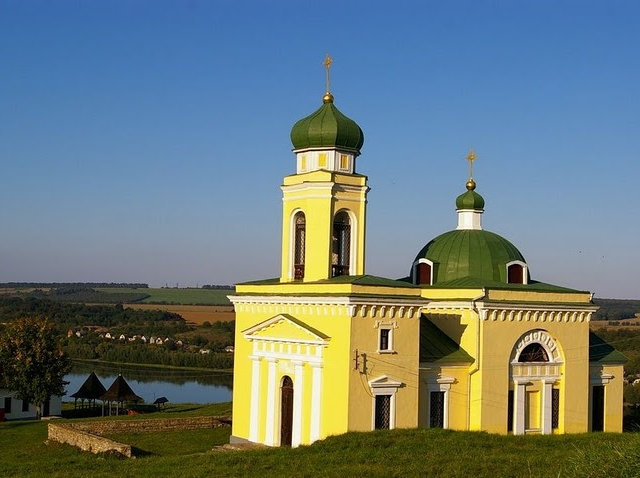 With the accession to Russia, the trade importance of the city increased, it became an important river port, and the fortress was abolished in 1856. The XIX century was the time of construction of the modern Khotin west of the Old Town. Although at the same time a new construction appeared in Old Khotyn — the Church of Alexander Nevsky in 1832 by architect Staubert. And today the one-domed stone church, the most beautiful example of the architectural style of Russian classicism, together with the Holy Protection Church erected in 1868 are the main religious sights of the city. The Old Believers’ Church and the stone building of the customs house of the XVII century also attract the attention of tourists.
Khotin can surprise its guests not only with its ancient fortress, where more than 50 movies were filmed, including «Taras Bulba» in 2009, «The Ballad of the Valiant Knight Ivanhoe», «The Three Musketeers». In the new Khotyn, which is a low-rise construction, many buildings of the XIX century have been preserved, the romantic past is reminded by real wells, which can be found everywhere, and numerous monuments about the events that took place here.
Undoubtedly, tourists are attracted to the city by the fame of such famous attractions of Ukraine as the historical and cultural reserve «Khotyn Fortress», but it is not only the ancient fortress that makes you come back here again and again, but also the amazing atmosphere of the city, its originality and beauty, which may be explained by the fact that its inhabitants have finally gained the long-awaited freedom.