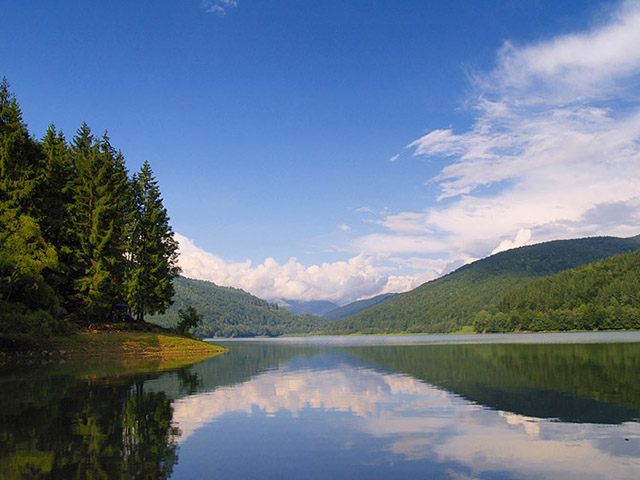
 Zakarpattya is a land of unique natural beauties, but, as surprising as it may sound, not all of them are created by nature. The brightest example of this is Tereble-Rikskoye Reservoir, which many people call the Transcarpathian Sea.
This reservoir is called in different ways: Tereble-Rikskoye — in honor of the two rivers that gave birth to it, Olshanskoye or Vilshanskoye — in honor of the village of Vilshany, in the area of which the riverbed of the Terebly River was blocked by a concrete dam. But no matter how it is called, the main thing remains the same — it is a favorite place of rest not only for the residents of Transcarpathian region and Western Ukraine, but also for many tourists coming here from abroad — after all, few things can compare with a rest surrounded by the stunning nature of the Carpathians! Boundless water surface surrounded by centuries-old forests and stunning mountain peaks encircling the water body from all sides — such natural pictures remain in your memory forever.
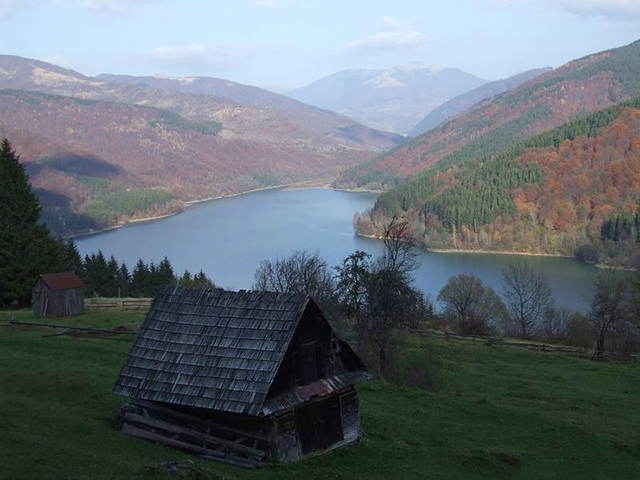 The Tereble-Rik Reservoir is located near the village of Kolochava, its size is impressive: 9km long and 1km wide — that’s probably why it is called the Zakarpattya Sea. Incredibly, the waters that form a huge mirror of water surface here came here from the most mysterious and legendary body of water in the Ukrainian Carpathians — Lake Synevir. It is there that the turbulent mountain river Tereblya originates, rushing down from the height of the foothills of the famous ridge Gorgany.
Back in the 19th century, the Verkhovina rivers interested the Prague government with their powerful energy potential, which gave birth to the hydroelectric power plant, which gave birth to the Olšanský reservoir. The dam and hydroelectric power plant project was designed by engineer Križka, who came up with the idea of combining the two rivers Terebla and rika running parallel to each other in the place where their beds are the shortest distance apart. The Soviet authorities managed to realize the Czech project, and in the summer of 1956, the first hydroelectric power plant started working in Transcarpathia, and near such famous villages as Mezhgorje and Kolochava there appeared an interesting tourist object — a water reservoir, which to this day remains the only one in the region.
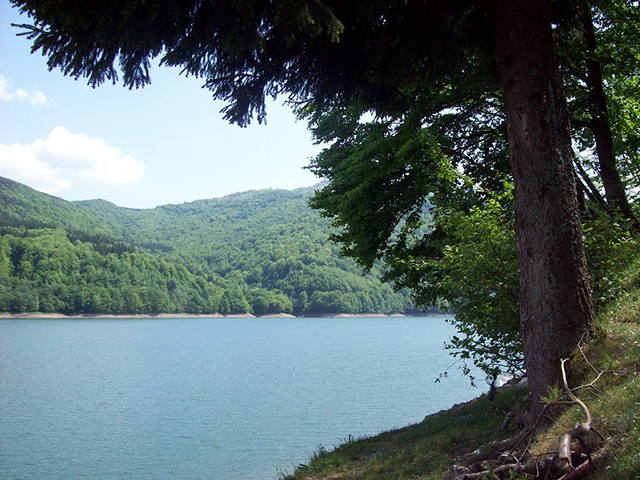 Although the crystal clear waters of Tereblya are unfortunately polluted by tourists who leave garbage, the reservoir is home to many species of fish, including salmon, sterlet, and omul. Because of this variety of fish, the Olshansky Reservoir is often visited by fishermen who come here from all over the country. Another popular leisure activity in the warm season is, of course, swimming, and in spring, during the floods, connoisseurs of the power and beauty of the elements come to the reservoir — the dam turns into a spectacular waterfall, the waters of which with a loud noise fall from a height of about 20 meters! Excursions to the hydroelectric power plant, which has been working properly for more than half a century and supplies energy not only to Transcarpathia, but also to Ivano-Frankivsk and Lviv regions, as well as some regions of Poland, Romania, Hungary and Slovakia, are popular in all seasons.
Planning holidays in Kolochava, Mezhgore or other settlements nearest to the reservoir, be sure to include it in your itinerary — what you see will leave a lot of vivid impressions! Not without reason the Olshanskoe Reservoir has earned the fame of the most interesting attractions of the Carpathians, which are so rich in these picturesque places. And sometimes tourists decide to spend their vacation in the Carpathians just to see the unique Transcarpathian Sea.