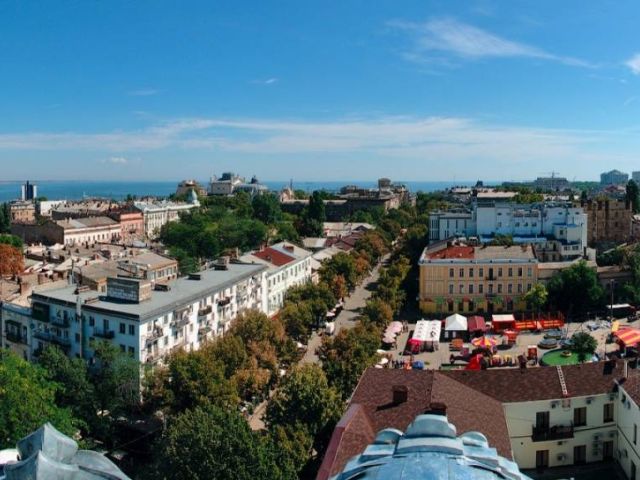
 «The weather is good on Deribasovskaya Street, or it’s raining again on Brighton Beach» — the name of this wonderful Odessa street is immortalized in the film directed by L. Gaidai and not only. Surely, many people have heard such songs as «On Deribasovskaya Street a beer house opened» and «As on Deribasovskaya Street, corner of Rishelievskaya Street».
Many streets of Odessa are famous for their unique charm and image, but it is Deribasovskaya that was destined to become the most famous of them, and if you visit it, it becomes clear why.
Deribasovskaya is a symbol of South Palmyra and if you want to see the most interesting and beautiful sights of Odessa, you should visit this street. 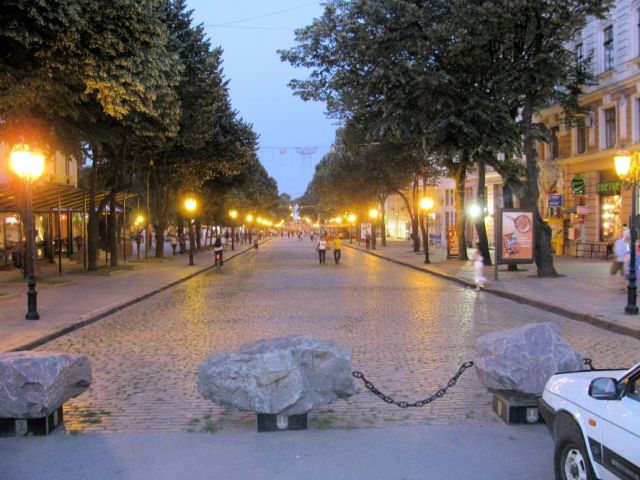 There are a lot of buildings, built in the XIX century, in many of them famous historical personalities, the brightest representatives of culture and science once visited, lived or just passed by.
The history of Deribasovskaya begins with the founding of the city. Initially it was called Gymnazskaya — after all, it was here in 1804 that Russia’s second gymnasium for noble children was founded after the Tsarskoye Selo Lyceum. Even the founder of the Periodic System of Elements, D.I. Mendeleev, taught at the Volsey Gymnasium. The bas-relief portrait of this outstanding scientist now adorns the facade of Rishelievsky Lyceum, as Volsey’s gymnasium was still called.
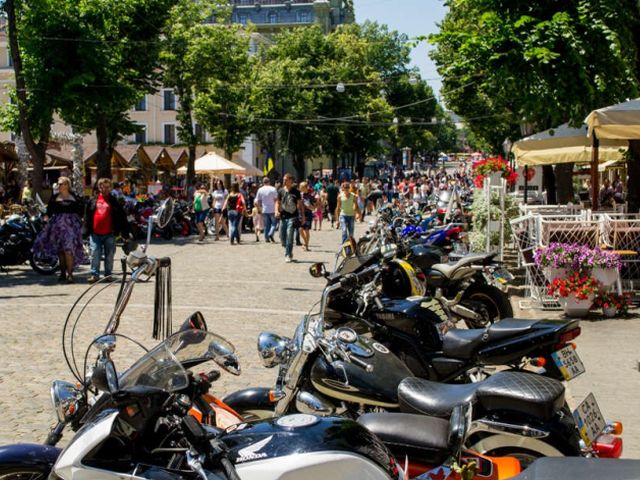 Deribasovskaya was the first street in the city, where a sidewalk was built from lava from the famous volcano Vesuvius and granite. Vesuvian lava stones for paving Deribasovskaya were brought from Naples — the birthplace of the first mayor of Odessa Don Jose de Ribas. It is still possible to walk on the Vesuvius lava sidewalk — the reliable stone has been preserved to this day.
As interesting as the history of the founding of the street itself is the history of its name. In 1811 it was decided to rename the street from Gymnazskaya to de Ribasovskaya, since 1814 it was called simply Ribasovskaya, and in 1920 it was renamed again — in honor of the German famous figure F. Lassal. 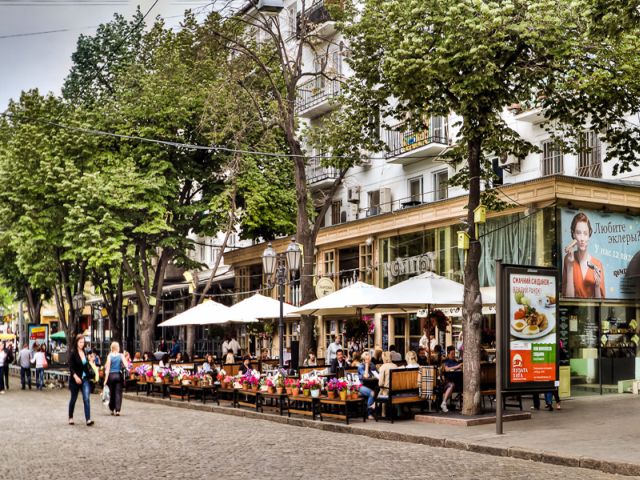 The street had this name for 18 years, until after the death of V.F. Chkalov it was again renamed in honor of the outstanding test pilot. The street regained its usual name in honor of the founder of Odessa de Ribas in 1941 and since then it has not changed again.
Historically, contrary to the generally accepted canons of urban planning, it was Deribasovskaya Street, which has no descent to the sea and is small in length and width, that was chosen by Odessa residents as the central street of the city for its beauty and atmosphere.
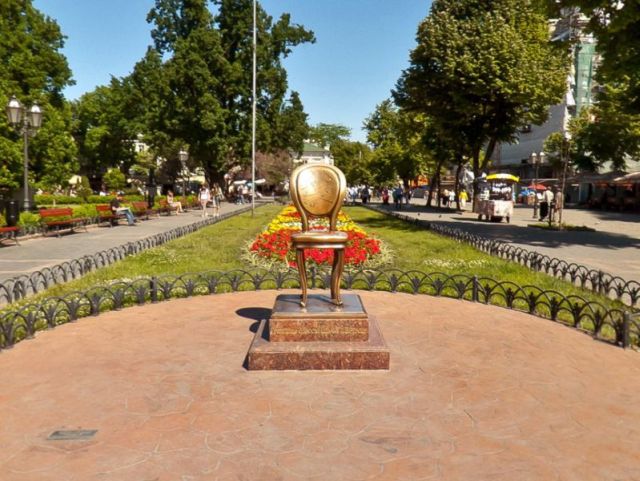 This street from the moment of its foundation was characterized by a certain special charm, not passing into high-pitched pathos, despite the fact that the high society always gathered here. Exquisite French wines were sold here, and Italian dishes were served in the restaurants, the noble beauties of the city were beautified in the salons. The air of the street was filled with the sweetest aromas of Zambrini’s pastry shop, and artists painting portraits added to the creative atmosphere.
And today Deribasovskaya Street has preserved all its unique qualities, but now it is filled with sweet aroma not by the smells from the confectionery, 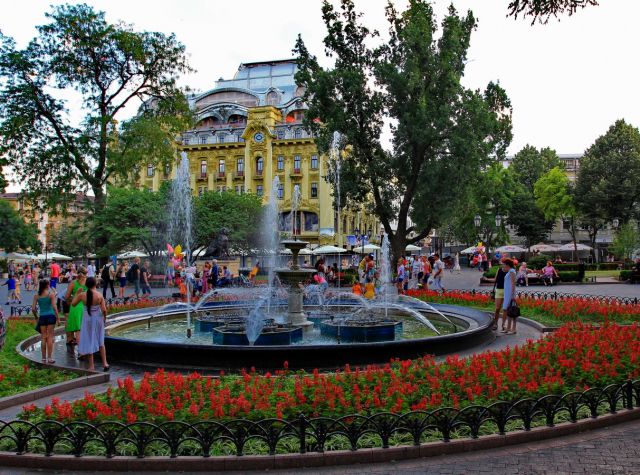 but by the aromas of linden trees planted along the street.
Going for a walk along Deribasovskaya Street, you can not only admire the beautiful architecture of the buildings built in the XIX century, but also find out who once visited here. Two years in the office of the Governor General (Deribasovskaya 24) worked A.S. Pushkin. One year in the house number 3 lived the legendary scout N.A. Geft, in the house opposite the building of the former lyceum Volsey many years lived world-famous artist V.V. Kandinsky. Kandinsky.
Deribasovskaya is associated with many interesting facts from the life of Odessa, it is the soul of the freedom-loving city and its always cheerful and optimistic residents.