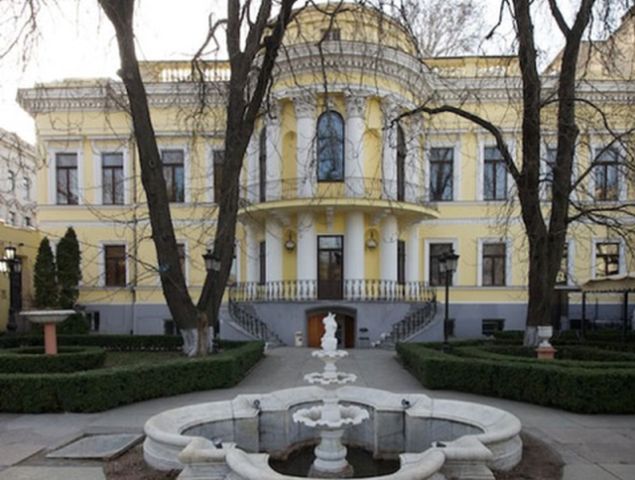
Until recently, the Tolstoy House in Odessa was better known as The House of Scientists. And only after the restoration of the palace, many people who are not familiar with the history of this place, passing by, wonder — «And what is it, so beautiful?».
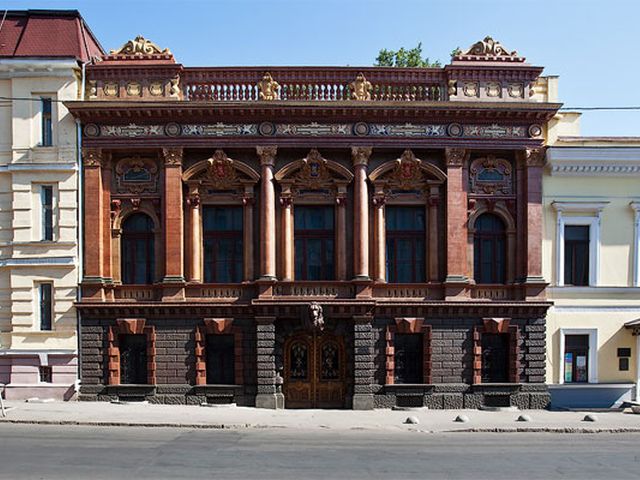
And the building of Odessa House of Scientists at Sabaneyev Bridge is interesting at least because it is the only noble mansion of the city, which has preserved most of the interior decoration in pristine condition. The architectural complex includes 2 buildings — the count’s mansion of Count M. Tolstoy, a 2-storey mansion with 12 rooms, and an art gallery created by the architects who gave Odessa a new building of the Opera House. The mansion in the style of Russian classicism, overlooking the Military Descent, was built in the 1830s by Italian architect Franz Boffo for Nikolai Horvat, a chamber-junker.
In the 60s of the 19th century, the manor passed into the possession of the Greek Consul General Tsitsinia.
In the 70s the mansion passed to Elena Smirnova. It was a gift of Count M.M.Tolstoy, a hereditary nobleman, who received permission to marry her from her father (Count M.D.Tolstoy).
Mikhail Mikhailovich Tolstoy, the son of one of the most influential people of Novorossiya, despite his position, did not abuse it at all, behaved with restraint and with his desire to help society was very distinguished from the secular society. For more than 10 years he was the first director of the Odessa Opera House.
By the way, when the first building of the theater burned down, it was he who allocated most of the funds for the construction of the new building of the theater from his personal funds. Count M.M. Tolstoy was also a trustee of many educational institutions.
E.G.Tolstaya takes an active part in charity, was an honorary member of the Society for the Protection of those serving a sentence and homeless, the society of rescue on the waters, assistant trustee of the Alexander orphanage, the committee of the society to help the poor. Already grown up son, Count M.M.Tolstoy (Junior) continued the charitable activities of the family. The young count financed the construction of the building of the new city library (now it bears the name of Maxim Gorky),
He bought the land under it and gave it to the library itself, gave the institution four thousand valuable books from his own collection, and after 1917 he brought from all his possessions and gave the library another 40 thousand volumes…The construction of the first ambulance station was realized in 1903 on the funds of gr. E.G. Tolstoy and Tolstoy Jr.
Count M.M. Tolstoy, a great collector of paintings, decided to build next to the mansion a special building for his art gallery, ordering the project to the famous Viennese architects F. Felner and G. Helmer. In 1896, gr.M.M.Tolstoy (senior) begins the construction of the building of his own art gallery, which is finished already M.M.Tolstoy (junior) in 1899, after the death of his father in 1898.
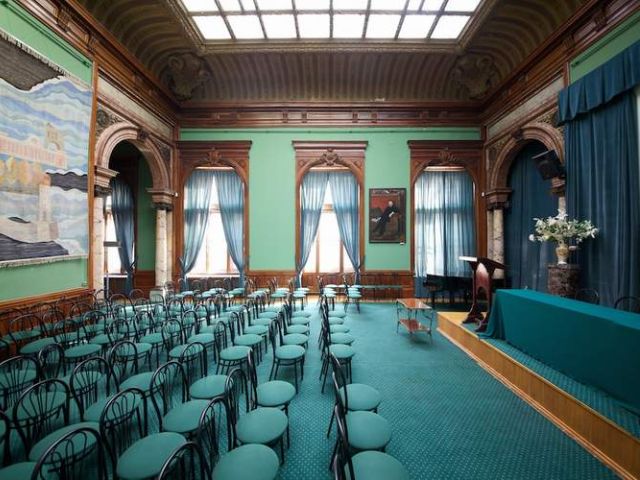
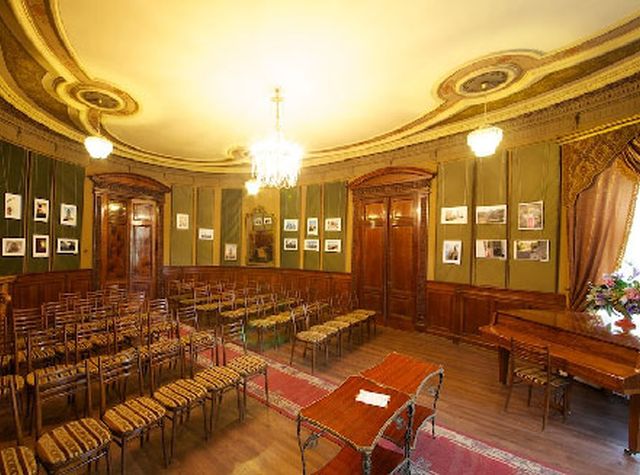
In the gallery he placed paintings by his favorite artists, Goya, Velázquez, Rembrandt, Van Eyck and others. The ceiling in the gallery was made glass and transparent and this improved the perception of the paintings. In terms of its content, the picture gallery of gr.Tolstoys was one of the richest in Russia. Now it is the Green Hall of the House of Scientists. Later, Count M.M.Tolstoy (the younger) gave most of the paintings for the use of the City.
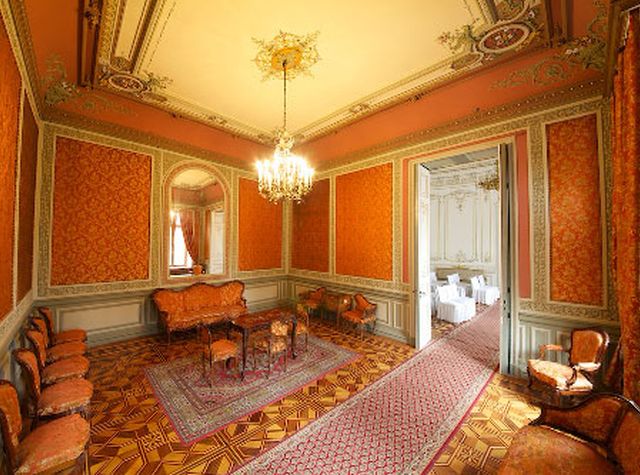
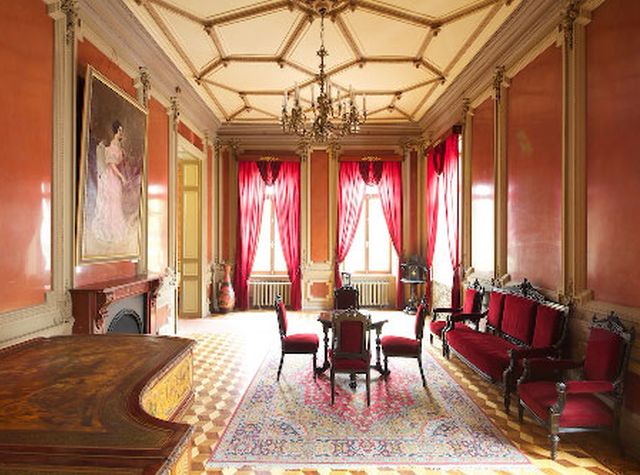
There is a Silk Room in the gallery, the interiors of which, according to legend, were created in the early twentieth century on the instructions of the owner of the house M. M. Tolstoy (the younger) in connection with his awarding the Order of Stanislav II degree for the creation of an ambulance station and patronage of arts. The silk cloth used for the decoration was modeled after the Order’s bandage.
The marble drawing room is lined with artificial marble, which was supposedly invented by an Odessa craftsman — with the financial support of the Count. In the living room is a restored Franz Liszt grand piano, left in the city after the great musician’s tour in 1847.
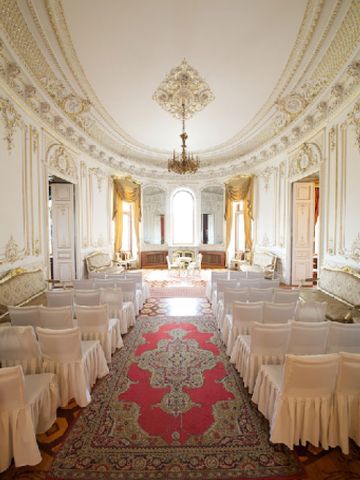
There is also the White Hall, a ballroom with oak parquet of 22 varieties of wood and Venetian mirrors left by the Tolstoys’ previous owners. It could accommodate 12 dancing couples at a time.
Also in the Tolstoys’ house there are the Oak Drawing Room, the Turkish Drawing Room and the Walnut Drawing Room. And in the office of the Count was the first telephone in Odessa, and it connected with the Opera House.
With the coming of Soviet power, the Tolstoys have to leave their mansion. The family emigrates to France, then Switzerland. Leaving in Count M.M.Tolstoy gave the city public library all his personal collection of books, which he collected for many years in Russia and abroad. In Geneva ended their days E.G. Tolstoy at the age of 78 in 1926 and M.M. Tolstoy 64 years old in 1927.
In 1934, the Odessa House of Scientists moved to the former Tolstoys’ mansion, where it operates continuously to this day.
The neighborhood of the Tolstoy House will be very interesting for tourists who can rent a good apartment just opposite the gallery.