 In 1824, the foundation of the Kirche was laid. The architect Franz Boffo was entrusted with the development of the project and the management of the construction work. The Lutheran church was the first major order for the architect, and unfortunately not successful. Already in June 1824, the half-completed bell tower and 10 columns of the facade collapsed.
Other architects were found, and in October 1827 the church of St. Paul was completed and consecrated. It looked quite simple at that time, in a strict classical style, with a small tower over the altar part.
In 1838 in Odessa there was a strong earthquake, which caused significant damage to the church building. And in 1839 the church council made a decision on capital reconstruction of the church. The German Lutheran community in Odessa at that time had grown quite large and amounted to about 10 thousand people.
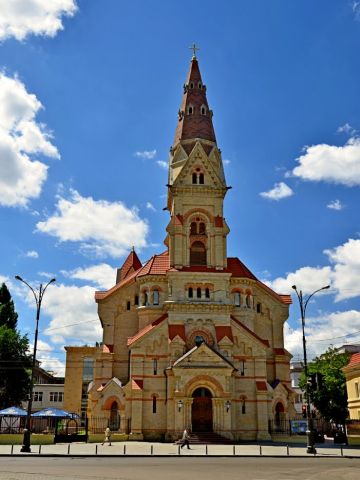
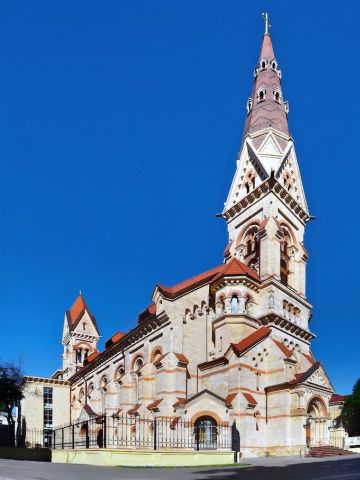 Four architects took part in the project of building a new Kirkha and German architect Hermann Scheurembrand won the competition. In 1897 the building of the new church was completed and consecrated. This restoration was a new stage in the history of St. Paul’s Church, as the architecture and interior decoration was very different from the previous church.
Scheurembrandt used features of Gothic and Romanesque styles in the new church. An example was the Neo-Romanesque churches in Germany, which embodied elements of the late Rhenish Romanesque style.
In terms of its height (almost 50 meters), the bell tower was at that time the highest tower in the city. Besides, the church itself is located on the highest point of the plateau of Odessa, so the tower of the church could be seen from a great distance. Ships sailing to Odessa could see it even when they were still at sea.