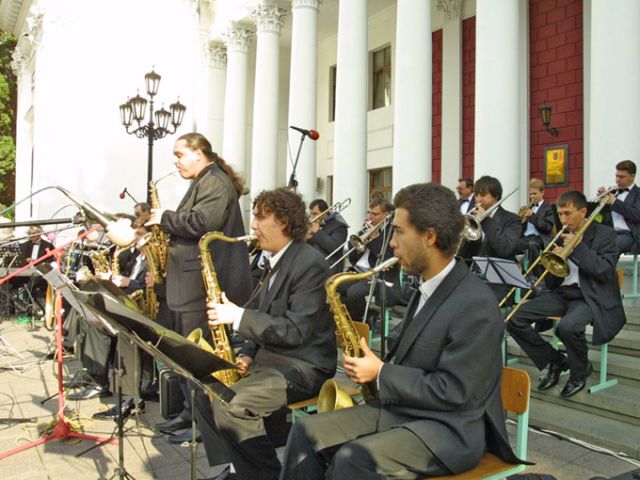
 The idea of holding a jazz festival in the city, which (according to one version) is considered to be the cradle of jazz and, of course, has always been one of the most jazz cities in the post-Soviet space, finally took clear shape and was able to be realized. Until 2011, the International Jazz Festival in Odessa was held under the name «Jazz Carnival in Odessa». After 10 years the concept of the festival has changed and since 2011 it is held as Odessa JazzFest<.
The first «Jazz Carnival in Odessa» was held in 2001. At the same time the «legend of the festival» was first voiced: «Jazz was born in Odessa! Let’s not let jazz die in our homeland!».
It looks like a poster from the Odessa Humorina, but nevertheless, it was the slogan that was both jokingly and seriously accepted by Odessians. Today it is impossible to imagine Odessa without a jazz festival. 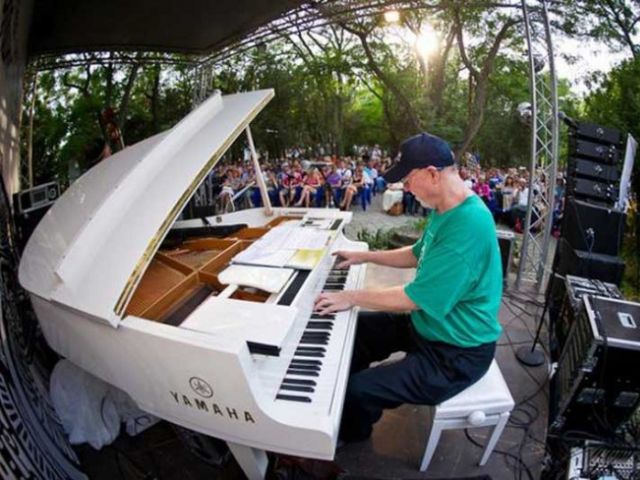 The pioneer of Soviet jazz, Odessian Leonid Utesov once said: «Odessa is the birthplace of jazz!». And in many ways he was right: this city with jazz is related to the atmosphere of humor, festivity and freedom. Thanks to Utesov and his famous «Thea Jazz», Odessa was considered the unspoken capital of jazz in the USSR. «Let’s not let jazz die in its homeland!» — voiced the «legend» of the Festival by its general producer, Mikhail Freidlin, and art director, Yuri Kuznetsov, and together they undertook to make Odessa the Mecca of jazz musicians.
In the very first year of «Jazz Carnival» many of its principles were formed: multicultural and free from rigid stylistic frameworks, the festival, which is not limited only to concerts in halls, but also goes to the streets, the festival, which presents jazz in all its manifestations and «borderline states» 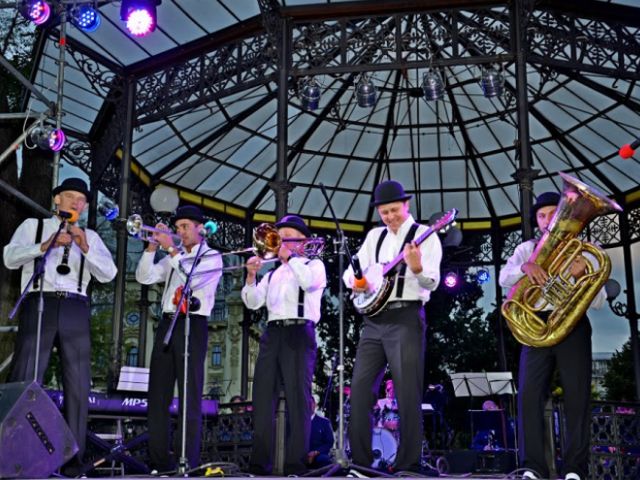 (this can include screenings of «jazz» films, film scoring by jazz musicians, dance projects with DJs and dance schools, etc.).
«Carnival» concept for the Odessa jazz festival was not chosen by chance: musicians from different countries playing completely different jazz were invited to perform in Odessa. «Carnival of discoveries — everyone will definitely find something for his soul here!» — was one of the slogans of Jazz Carnival. «Carnival» of the Festival allowed to make the program of the event in such a way that every year for three festival days as wide and bright as possible to present the palette of modern trends and currents in jazz music. Over the ten years of the Festival, program priorities have been formed: unchanging performances of fusion projects, ethno-jazz performers, representatives of the «third wave» (a combination of jazz and classical music), vocal jazz, jazz classics (big bands, Dixielands) and avant-garde.
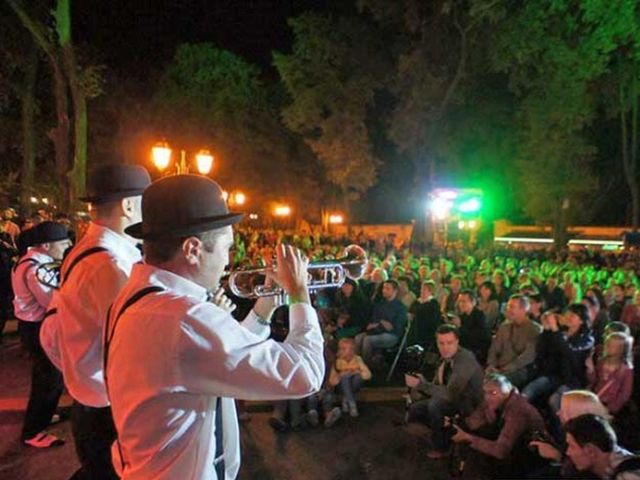 Every year «Jazz Carnival in Odessa» expanded the boundaries of its geographical discoveries. Every year to the list of participants of the Festival was invariably added a band or performer, adding to the list of countries-participants of the Festival.
Today it is difficult to count and name all the countries that delegated their musicians to the Jazz Carnival.
The purpose of holding a jazz festival in Odessa has never been purely commercial or entertainment: Yuri Kuznetsov and Mikhail Freidlin advocated for the return of the city of Odessa status of the jazz center of Ukraine. 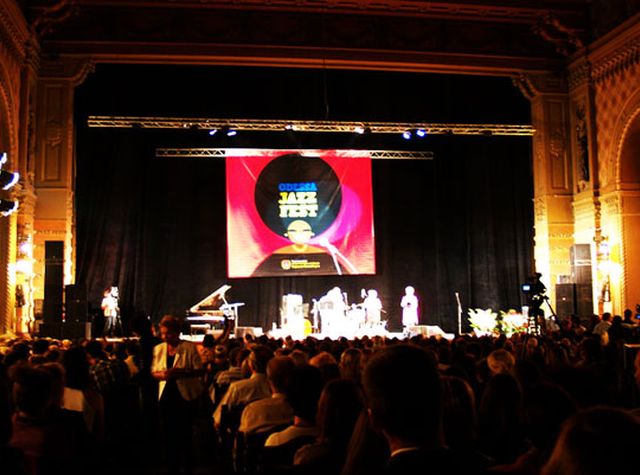 Through the Festival there is an opportunity to present to citizens and guests of the city the most relevant musical projects of Europe and thus carry educational and cultural mission.
In 2011, after 10 years of holding the festival «Jazz Carnival in Odessa» the organizing team decided to «rebrand» the festival in connection with the change of concept — leaving the street performances of musicians (carnival) in the direction of the classical festival format (large concert hall, three sections of the concert, three projects-participants). The emphasis was placed not so much on spectacle as on the musicality of the invited projects.