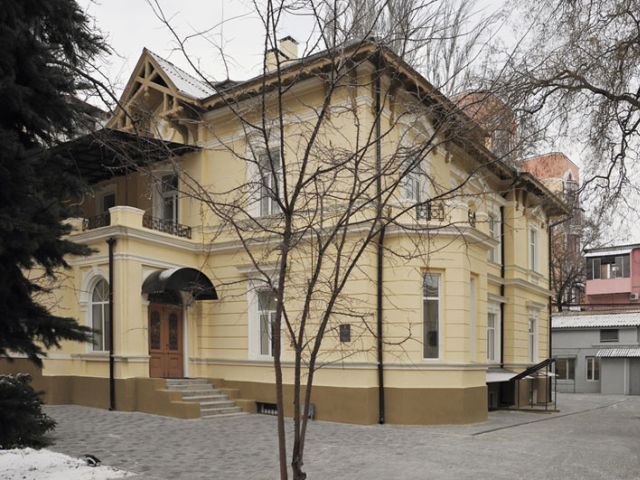
Whatever the name of the state, but the city located in it and called Odessa has always been different from the rest. It was different in its style, its inhabitants and, of course, its culture. Art was no exception.
The traditions of Odessa, its cultural myth, combining with intelligence and cosmopolitanism kindness, humor and tolerance, largely determined the features of Odessa painting, expanding the authors’ horizons, giving their works a southern charm, European gloss and chamber elegance.
At the end of the 80s of the twentieth century in Odessa arose a pleiad of young artists who were oriented to the transformed ideas of the Italian transavant-garde, brought from Kiev by the young Alexander Roitburd. Quoting great predecessors, synthesis of different stylistic traditions and ironically respectful attitude to classical painting logically triumphed in Odessa.
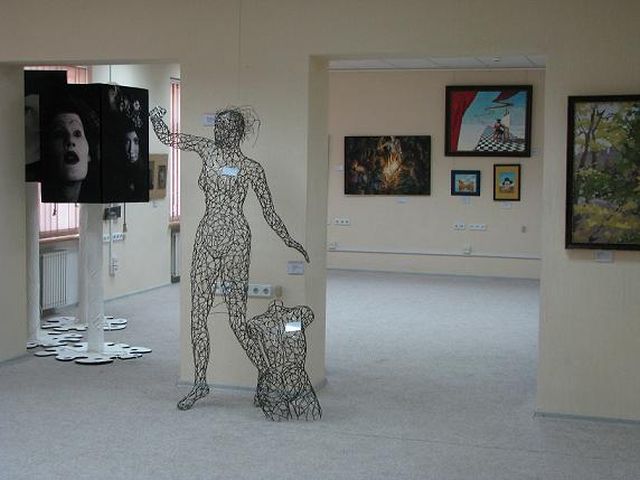
Unlike other postmodernist movements, the «Southern» transavant-garde settled in Odessa for a long time, became a hallmark of Odessa art of the 80s and 90s, had a significant influence on the stylistics of the works of the XXI century. This is evidenced by the contemporary works of many Odessa artists, including those exhibited in the Museum of Contemporary Art of Odessa.
MSIO was created on April 10, 2008 by a young businessman, intellectual and philanthropist V. Morokhovsky on the basis of a unique collection of works by masters of the «second wave of the Odessa avant-garde» famous collector M. Knobel. This collection has been significantly expanded and supplemented with works by other authors. Currently, the ISIO presents works by leading Odessa painters and sculptors of the turn of the twentieth and twenty-first centuries.
The Museum is proud of the halls dedicated to the non-conformist art of Odessa: a separate hall dedicated to the legendary «fence» exhibition of Valentin Khrushch and Stanislav Sychev, which in 1967 began the history of unauthorized exhibitions in the USSR, as well as the exposition reproducing the «apartment» exhibition of non-conformists of the 70s.
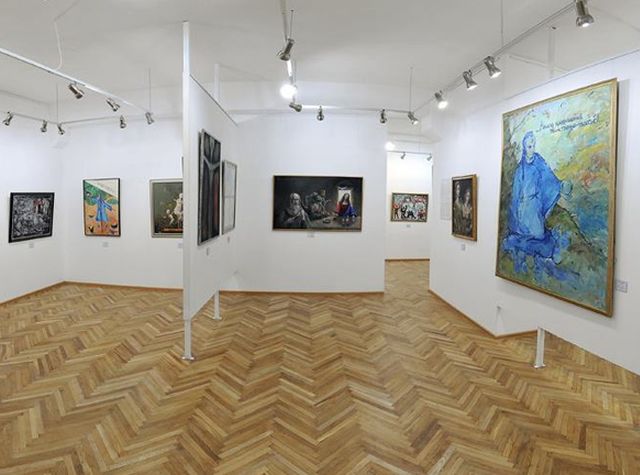
No less interesting are the halls reflecting the revolutionary events in the visual arts of Odessa in the 80-90s: the formation of the conceptualist group and the «South Russian» transavant-garde among the Odessa underground.
The halls dedicated to the first Soviet abstractionist of Odessa, artist and dissident Oleg Sokolov; to the birth of the Odessa School and its leader Yuri Egorov will undoubtedly give the audience deep aesthetic satisfaction.
The exposition of the art of the XXI century confirms the well-known truth that life goes on — new artists with new ideas and subjects capable of glorifying our City appear in Odessa.