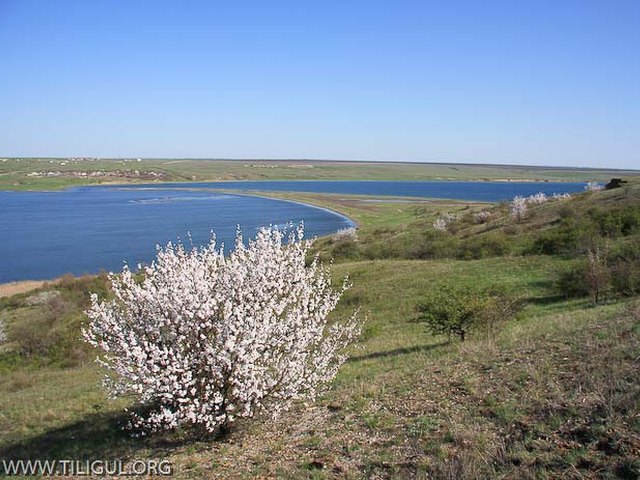
Regional Landscape Park «Tiligulsky» was created by the decision of the Nikolaev Regional Council in 1995.
The territory of the protected object includes the coast and adjacent water areas of the Tiligulsky estuary within Berezansky district of Nikolaev region with a total area of 8195.4 hectares. It also includes an ornithological reserve of local importance «Lower reaches of the Tiligulsky estuary».
The park provides preservation of valuable natural complexes and historical and cultural objects of Tiligul, conditions for organized tourism and recreation, scientific research, and promotion of ecological knowledge.
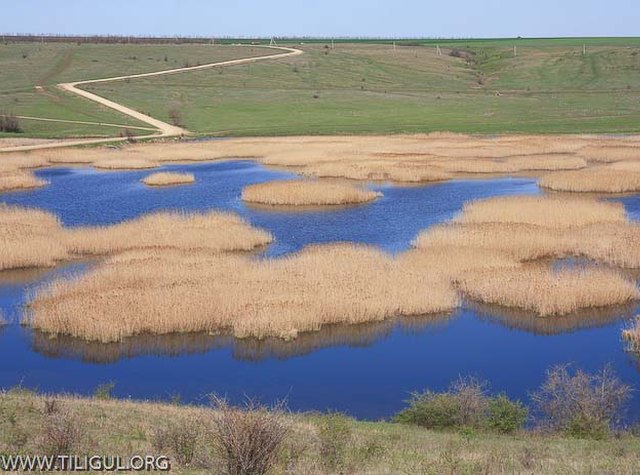
As a unique natural complex, the Tiligulsky estuary is included in the list of wetlands of international importance, mainly as a habitat for waterfowl.
Tiligulsky estuary is located on the border of Nikolaev and Odessa regions and is considered one of the cleanest estuaries of the North-West Black Sea coast.
Its length reaches 60 kilometers, width — up to 4.5 kilometers, maximum depth — 21 meters, water transparency — up to 7 meters. It is the deepest and most transparent estuary in our region, which is separated from the Black Sea by a wide sandy embayment. They are connected only by an artificially created channel.
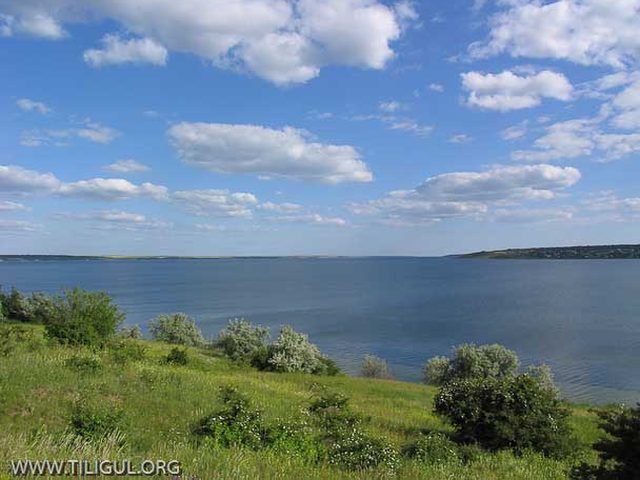
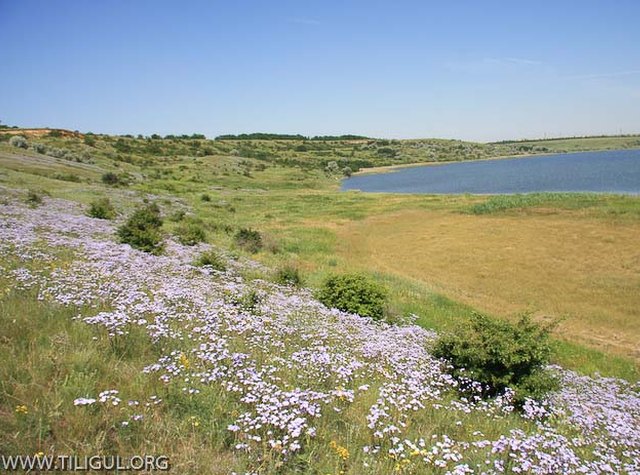
Natural vegetation is well preserved in the protected area, which is represented by aquatic communities, herbaceous marshes, saline meadows, solonchaks and solonets, true and stony steppes, tree and shrub thickets. One of the largest virgin steppe massifs in the south of Ukraine is located in the area of Tashinsky Bay and the mouth of the Tsarega River.
This has influenced the richness of the flora of the coast of the Tiligulsky estuary, which counts about 620 species of vascular plants.
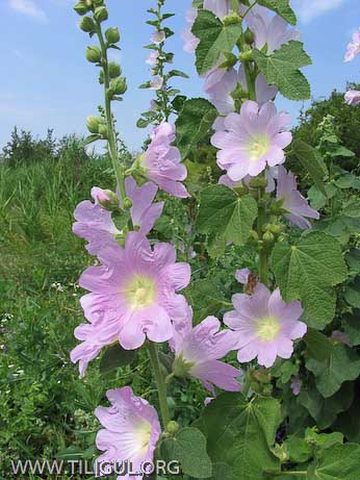
The floristic complexes of the park include a large number of rare and endangered species listed in the Red Book of Ukraine and the European Red List: Astragalus odessa, spring and Volga goricolor, Scythian Drok, Jatryshnik (Anacamptis).
marsh grass, hairy grass, Lessing’s grass, coastal carrot, Odesa ostanik, Elveza snowdrop, Ankara bezremennika, sagebrush, desert holly, meadow prostrel, Bug and Shrenka tulips.
Many Western and Black Sea endemic species grow on the territory of the park: astragalus pale and Bugsky, desert stiff, Biberstein’s flax, Moldavian isthodes, line-leaved flax, Popov’s hawthorn, Bug’s minuartia, Marshall’s cornflower. They represent a unique limestone subcomplex of the Odessa floristic area.
The Tiligulsky estuary is constantly pulsating and belongs to the «Caspian» reservoirs, which can suddenly expand after a sharp decrease in volume.
The presence of a wide range of changes in water salinity and level regime caused the formation of complex complexes of aquatic inhabitants — from freshwater to marine. At the end of the XVIII century, according to historical evidence, «red» fish, mackerel, mackerel and even tuna came here, i.e. the estuary had a permanent connection with the sea. Later it became isolated and the Mediterranean omnivores completely disappeared during this period. In high-water years, after spring floods, bream, taran, pikeperch, pikeperch, carp, crucian carp and other freshwater species were found here in large numbers. In total, 62 species of fish, including 8 omnivores, were registered in the estuary in different years of its existence. Today there are no more than 30 representatives of ichthyofauna living in the estuary. Among them, only Aterina, Hamsa, gobies and mullets are of industrial importance.
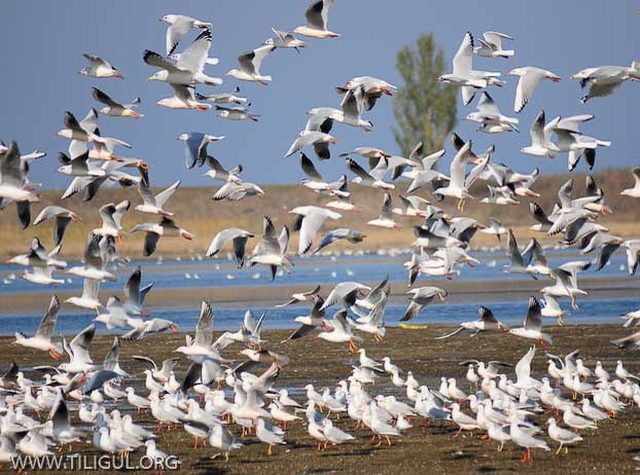
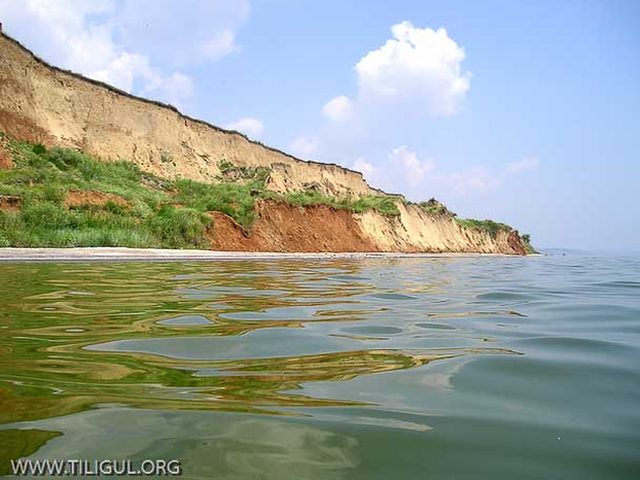
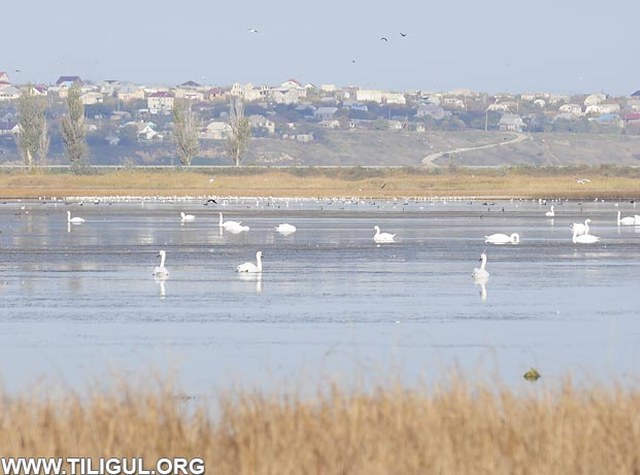
Tiligul is a place of mass nesting and concentration of birds during seasonal migrations, in the area of which about 270 species of birds can be found. On sandy islands and spits with low herbaceous vegetation there are often nesting river terns, mottled and lesser terns, herbivorous terns, pintail, stilt walker, sandpipers, sandpipers and lesser sandpipers, less often magpie sandpiper and meadow titmouse. Fox, mallard, gray goose, mute swan, various species of herons, spoonbill and grackle breed among reed thickets, mainly in the upper part of the estuary. Handsome pegan and exotic titmice make their nests in burrows and coastal cliffs.
The total number of birds staying in the estuary and its coastline during migration sometimes reaches 50,000 individuals. Seasonal aggregations are mainly formed by Common and Yellow-footed Martins,
coot, mallard, great cormorant, white-fronted goose, pegan, mute swan, white and gray herons and others. Some of the birds winter here.
Protected areas support the existence of many rare representatives of avifauna, listed in the Red Book of Ukraine and the European Red List: pink pelican, small cormorant, yellow heron, spoonbill, black stork, etc. In total there are more than 40 species.
Among other animals protected by the state, there live here steppe dybka, odorifer, scolia giant, melliturga mace, carpenter bee, reddish bumblebee, mahion, polyxena, yellow-bellied and sarmatian urchins, steppe mouse, gray hamster, ermine, steppe polecat and so on.
The territory of the protected area has an important cultural significance. A number of settlements of the Late Bronze Age, Antiquity, and Chernyakhov culture have been identified on the coast of the estuary. Tiligul was one of the areas of the earliest Ukrainian-Cossack colonization. It has long been used by people for fishing and navigation.
The climatic Koblevo resort with the corresponding infrastructure is located on the liman’s overflow, along the Black Sea coast.
An important resource for the development of this recreational complex are medicinal muds Tiligul. Their reserves exceed 14000000 tons and are the largest not only in Ukraine, but also in Eastern Europe. These muds can be widely used for the treatment of diseases of musculoskeletal apparatus, nervous system, skin diseases and the like.

All this provides ample opportunities for the development within the park of ecological tourism and various types of recreational activities, the activity of which is growing annually in the world.
Beach recreation, amateur fishing, boating and kiting, hiking, informative excursions, scientific expeditions, field practice and bird watching have already become traditional on the Tiligulsky Liman and its picturesque shores.