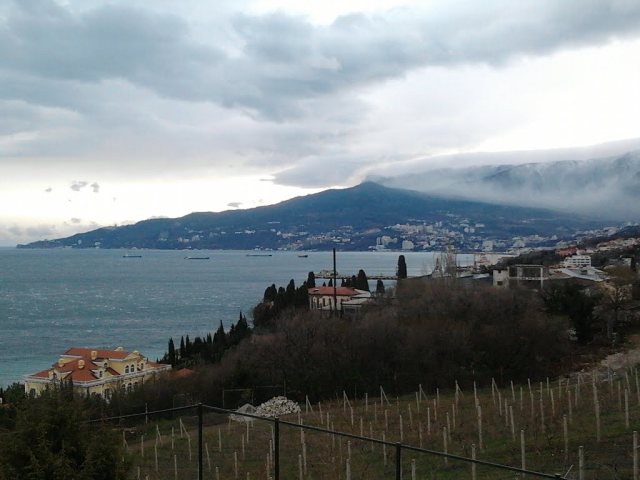
The Crimean land is famous for its wines. Especially good are the south coastal ones. They have absorbed the luxury of local nature, its brightness, gentle heat and fragrance.
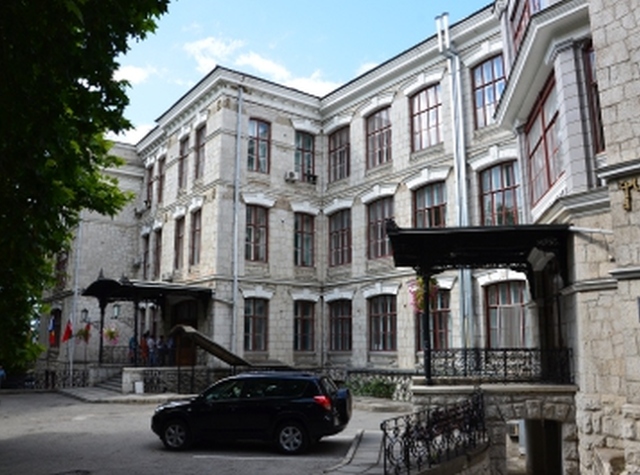
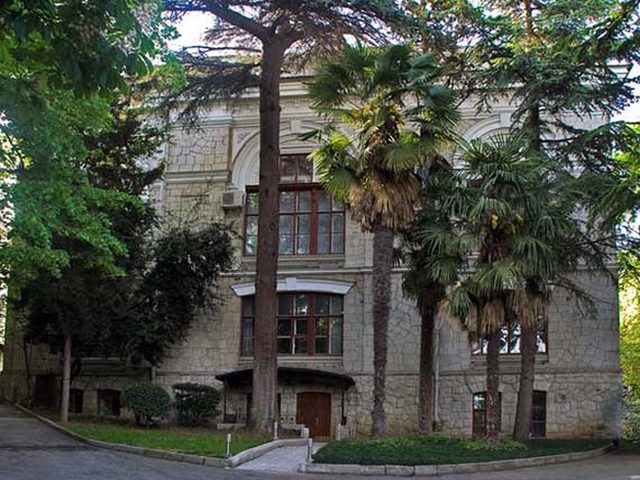
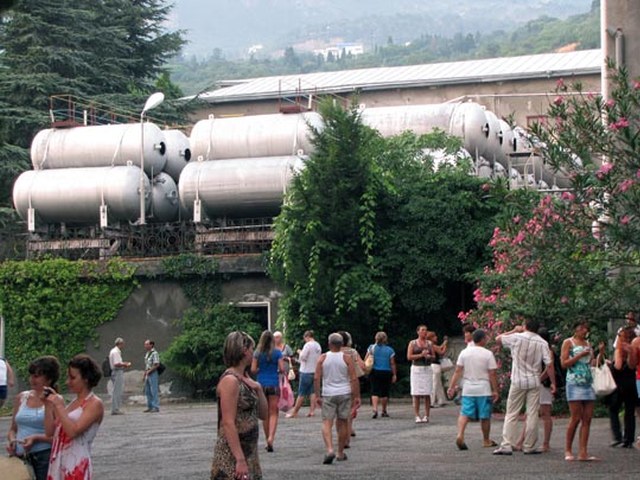
«Magarach». Here they have been trying to comprehend the mystery of wine for almost two centuries. This is the name of the institute, where the domestic science of grapes and wine was born. Witnesses to this are the old vaults of Magarach cellars and age-old, but still alive wines.
Prince M.S. Vorontsov, the Governor-General of the Novorossiysk region, was an admirer of winemaking, kept vineyards and winery in his own estate in Alupka. In 1828, he ordered to create at the Nikitsky Botanical Garden in the tract of Magarach (which means spring) state experimental institution for planting a large number of the best varieties of grapes and for experiments on wine making.
Here 4000 bushes of Burgundian Pinot Franc and Bordeaux varieties — Petit Verdot, Gros Verdot, Malbec and Merlot — were planted on 6 decimeters of land.
The first scientists-practitioners were a French specialist who transferred to the Magarach institution from Vorontsov, Franz Gasquet and his student Anastasius Serbulenko.
«Wine is a product of the terrain», — liked to repeat the «king of Russian wines» Prince Lev Golitsyn. Enthusiasts in «Magarach» in their drinks were to reveal to the world all the magical charm of the Crimea. Very soon they became convinced that the Southern coast of Crimea is ideal for the production of strong and dessert wines.
The most successful samples were left to study the results of long-term aging.
Governor-General M.S. Vorontsov signed an order N 1060 dated 26.10.1834, which stated: «Wines that are not capable of long-term storage, sell immediately, the rest keep for 3 years, in order to learn for several years, to what perfection they can reach and then already sell, leaving some of the best varieties, especially of nutmeg, in bottles». Thus the collection was born.
The wines were prepared extremely carefully, from each grape variety separately, and even separately from different areas, marking with chalk on the barrels: «Pedro from the hills», «Pedro from the lowlands». Muscat wines were especially good — very aromatic, full in flavor, harmonious. They were made only in particularly favorable years. In order for the berries to accumulate more sweetness, each brush on the vine was twisted with special scissors, just as the ancient Greeks did. The leaves around the bunch were plucked for better access to the sun and the berries were slightly shriveled.
«It took a lot of effort for Magarach to gain a place in the market. It was filled with foreign wines and the buyer was used to their taste.
Precious Magarach Muscats were diluted with water and sold as French Chateauichem, Sauternes. Falsified wines made from raisins were sold everywhere. They were made in Moscow and Odessa. In response to this, Magarach switched to selling wines only in bottles with a branded label and paid even more attention to quality.
International recognition also came. In 1873 at the World Exhibition in Vienna Magarache traminer, muscat, pinot gris received the highest awards. It was noted that «these wines in other countries have nothing like them neither in the tenderness of taste, nor in aroma, nor in bouquet». Magarach wines received awards at all competitions in which they participated.
The second and third generation of «Magarach» scientists worked a lot on wine technology, studied the processes occurring in the grape berry. Wines began to be prepared using alcoholization, which made it possible to depend less on weather conditions in the production of dessert wines. They have the honor of creating domestic brands of muscat, madera, sherry, port and other classic wine brands.
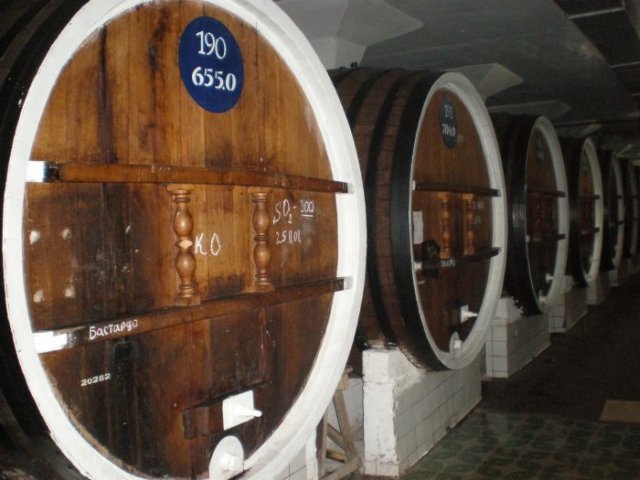
With the establishment of Soviet power in Crimea in 1923, «Magarach» already helped to establish wine production in the Union republics and continued to improve Crimean wines.
Almost all brands of wines produced in Crimea were created with the participation of «Magarach». In 1940, the main assortment of Massandra wines was approved, almost unchanged until now.
It cost a lot of labor to determine scientists together with specialists of farms, what kind of grapes and in what place in the Crimea will manifest itself in wine in the best way. The picturesque slopes of the South Coast are more than four thousand sites with different soils and light, and therefore the microclimate. The study of indigenous varieties of Crimea allowed us to recommend the production of 8 varieties of grapes, growing in the Sudak zone for more than two millennia. This is how the unique dessert wine «Archaderesse» (Sun Valley) was born.
During the Great Patriotic War and the first post-war years with the help of the Institute «Magarach» branches and experimental stations were founded in Uzbekistan, Kazakhstan, Georgia and Moldova. They became the base for creation of republican institutes of grapes and wine. The Institute «Magarach» was the leading research center in the USSR and trained national scientific personnel.
Many researches were conducted by «Magarach» scientists together with specialists from Bulgaria, Czechoslovakia, Hungary, Romania, France, Germany and other countries.
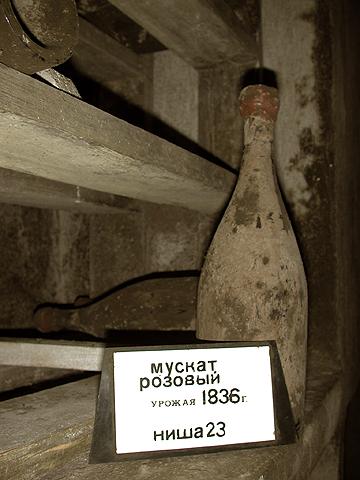
Ampelographic collection counts 3200 grape varieties; 21651 bottles of wine are stored in the enoteca, including a rarity — Muscat pink 1836, entered in the Guinness Book of Records as the oldest wine produced in the Russian Empire. The yeast collection has been maintained for over 100 years and consists of 1057 species of microorganisms.
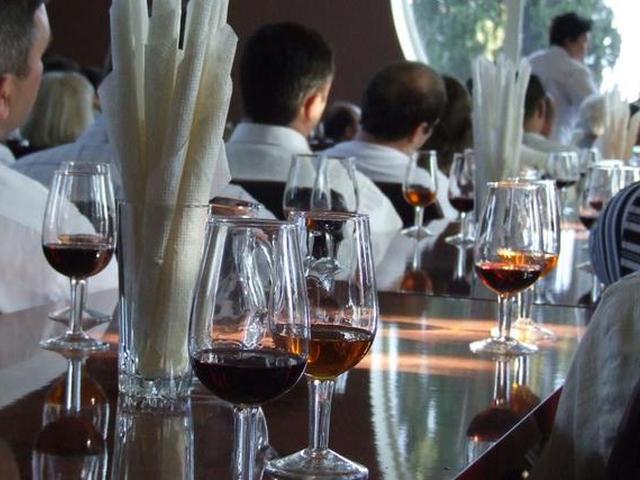
In 1990, the Institute of Grapes and Wine «Magarach» hosted grape growers and winemakers from all over the world. Here, in Yalta, the 70th General Assembly of the International Organization of Grapes and Wine was held. In 1995 on the initiative of «Magarach» the Union of Winegrowers of Crimea was established, which included specialists working in science and production. The Union of Winemakers of Crimea holds courses for tasters, wine competitions. All this helps to raise the quality of wines, not only Crimean wines. Winemakers from Russia, Ukraine, Belarus, Moldova, Turkmenistan, Uzbekistan, Georgia, Armenia, Baltic countries participate in the competitions. All this promotes human contacts and transfer of skills, traditions, without which it is impossible to develop the ancient profession of winegrower and winemaker.
Crimean astrophysicists assigned the name «Magarach» to a small planet discovered by them. In the book of reviews of visitors of the tasting room of the Institute there are many poetic lines written not at all by poets. No wonder: Magaracha wines work wonders. Try them… And you will be convinced that both deity and inspiration are still alive.