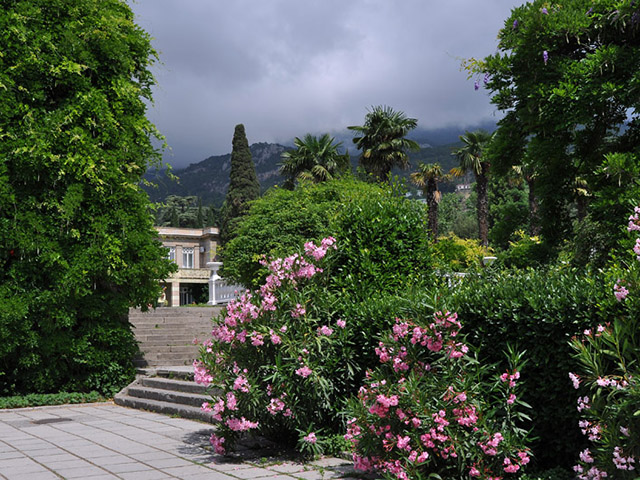
 The southern coast of Crimea is famous not only for its warm sea, wonderful beaches and beautiful palaces, but also for the stunning parks surrounding the architectural treasures of Big Yalta. Exotic and relict plants in such a variety are found in each of them that tourists are breathtaking from such splendor and riot of flora. All this might not have happened if once to the east of Yalta there was not Nikitsky Botanical Garden. It was here that many plants found in the Crimean parks were acclimatized and bred.
Nikitsky Botanical Garden is a huge botanical garden, which today has more than 1100 species of plants. It is known all over the world as a research institution engaged in botany and horticulture, as well as a very interesting attraction of Big Yalta, which is visited by about 300 thousand guests annually.
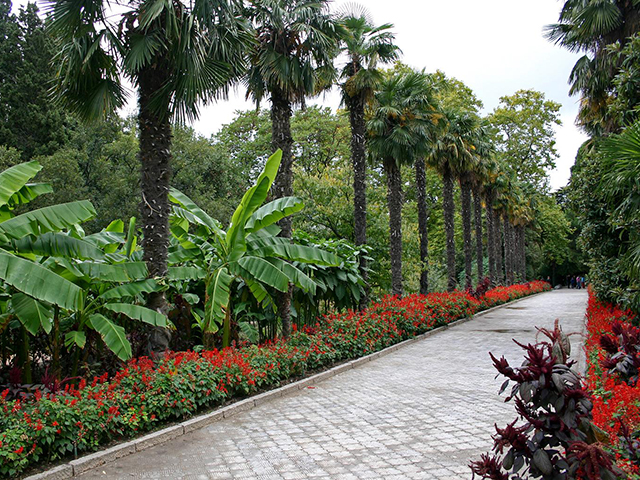 The garden is near the village of Nikita, located 9km east of Yalta, was established by decree of Emperor Alexander I, who decided in 1812 to create the Tavrichesky state economic garden near the village of Nikita. Its first head was Christian Christianovich Steven — an outstanding scientist-botanist, who in the same year came to Crimea and in September began work on the arrangement of the botanical garden — in the fall of 1812, 88150 seedlings of shrubs and trees, 103 kinds of plant seeds were planted, construction of terraces, dugouts, houses began. By 1818, 175 thousand different trees, including fruit trees, were planted, and in May of that year the garden was visited by Emperor Alexander I, who, satisfied, allowed the garden to be called «Imperial» and allocated funds for Stevens’ trip to Europe, during which he managed to collect the richest collection of seeds, plants and insects, which he brought here. In 1824, the garden’s collection already included 450 species of ornamental plants, shrubs and trees. This is the history of this amazing place, where today you can see more than a thousand species of plants, of which 238 — from North America, 336 — from the Mediterranean, 450 — from southeast Asia. You can also see plants from New Zealand, South Africa and the Americas.
 Besides a large fund of plants, Nikitsky Botanical Garden gave Crimea such new branches of national economy as viticulture and tobacco growing — it was here, when the National Scientific Center opened on the basis of the garden, the cultivation of grapes and tobacco began. Besides, southern ornamental horticulture, essential oil plant growing, subtropical and southern fruit growing began to develop from here. And this is not unimportant, because today these industries — the main in the Crimea. For two hundred years of existence of this institution has been done a tremendous work, the fruits of which today is proud of the whole country.
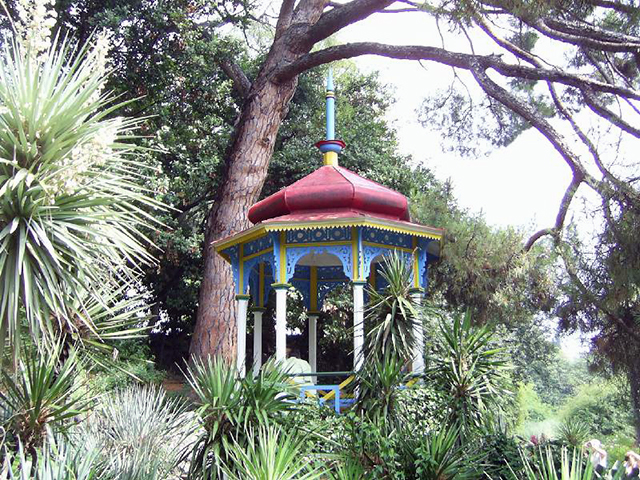
Every visitor to this place gives the brightest impressions, because the pictures that open up here — fantastic beauty. Today the garden consists of several parts (parks): the ancient Lower and Upper, Seaside and Cape Montodor parks, which are not connected with each other territorially. You can visit the Upper and Lower parks with excursions.
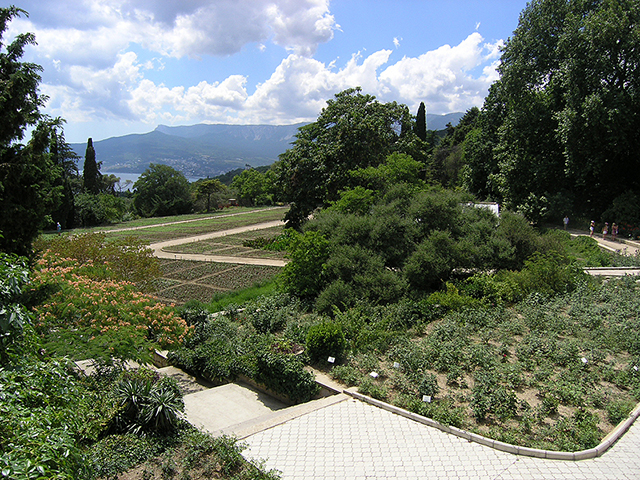 While walking through the ancient Lower Park, laid out by the first director of the garden H. Stevens. Stevenom, you can see not only ancient pines, cypresses and oaks, but also visit the olive grove, where there are also figs and the only evergreen deciduous plant of the Crimea — small-fruited strawberry. Guests also admire jasmine, huge Montezuma pine, named in honor of the Aztec leader, magnolia, oleander, Caspian lotus, nymphaea and other wonderful plants. You can walk here surrounded by centuries-old cypresses, cork oak grove, Mediterranean laurel. The architectural treasures of the Lower Park include a cascade of pools and a copy of the Bakhchisarai «Fountain of Tears».
In the Upper Park, which was laid in the early twentieth century, visitors are greeted by alleys of stone oak and pyramidal cypress, fan palm, bamboo thickets. You can also stroll through a century-old grove of Himalayan cedars. Among the attractions of this part of the park are a rose garden, a rock garden and a staircase covered with ivy and roses on the balcony of the administrative building of the garden.
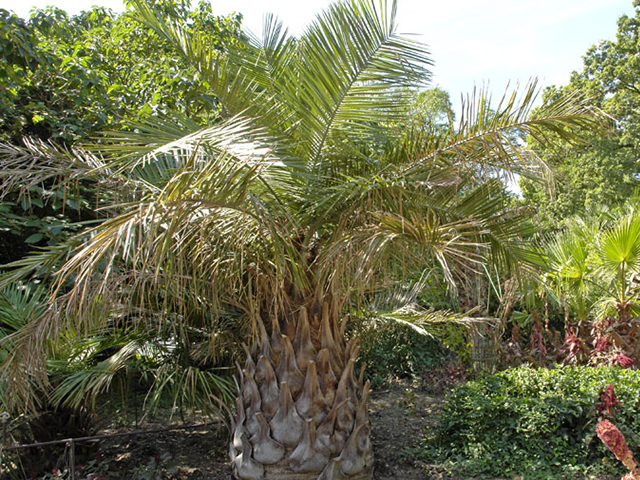 It is possible to tell about such sights for a long time, describing the beauty of each amazing plant and all the landscapes appearing before the eyes, but it is better to come and see this diversity, lushness and richness of nature with your own eyes. For tourists visiting the garden is a unique opportunity to see at once so many plants, including exotic, relict and ancient (some of them are more than a thousand years old), how much you can not see for a lifetime, traveling every year to different countries of the world.
If you want to spend your holiday in Ukraine, then be sure to visit Krym to get acquainted with such interesting sights as Nikitsky Botanical Garden, and with other non-man-made and architectural treasures, which are so rich in this fabulous land.