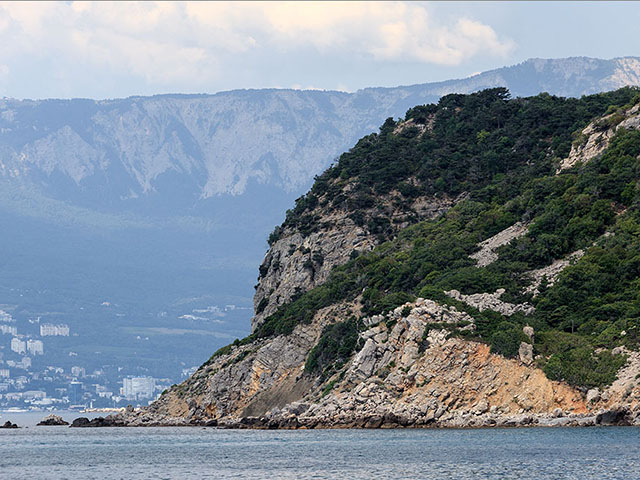
The nature of Crimea has been stirring the hearts of ordinary people and the minds of researchers for centuries, it is one of the most amazing places of our planet, where you can see a lot of interesting natural objects, to get acquainted with which thousands of tourists come here every year. It is not surprising that the peninsula has many protected areas protected by the state. The smallest of the reserves, not only in Crimea, but in the whole country, but also one of the most impressive and beautiful, is «Cape Martyan». Its territory stretches along the picturesque cape of the same name, opening up pictures of fabulous beauty.
Rising above the sea surface at 60-70m Cape Martyan, on which the reserve is located, is located to the east of another famous landmark of Big Yalta and the village of Nikita — Nikitsky Botanical Garden. Protected area of 240 hectares (of which 50% is occupied by the sea) was recognized in 1973. in order to preserve the unique natural landscapes, where the features of subtropical climate of the southern coast of Crimea. At Cape Martyan there is no such climatic season as winter, as there are no periods with stable temperatures below zero degrees. The territory of the reserve includes the tracts of Martyan and Ai-Danil, as well as the seaside area and the Black Sea water area of 120 hectares.
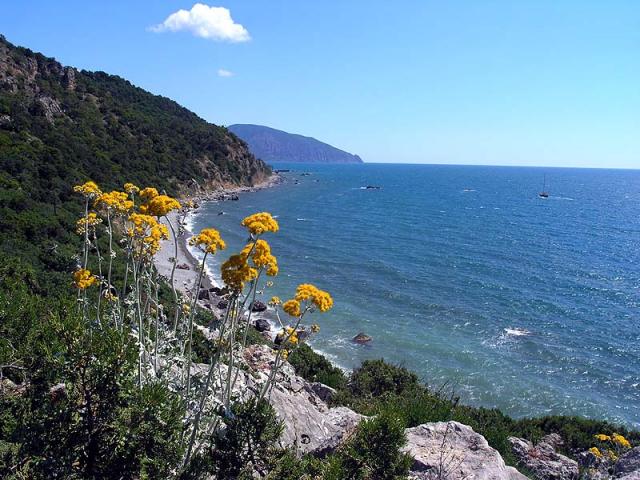
Juniper is one of the valuable plants that played a significant role in the fact that the air of the Crimea is considered to be health-enhancing. On the territory of the reserve juniper forest is better preserved than in other parts of the peninsula, and unofficially under the protection of her taken back in 1947, called «juniper reserve». Some trees are very old — up to 500 years old. In general, «Cape Martyan» is a unique corner of Mediterranean nature, where you can see more than 500 species of plants. In addition to the juniper tree there is a small-fruited strawberry — the rarest relic and the only evergreen tree in Eastern Europe, which is included in the International Red Book. Among the most valuable treasures of the local flora is also the blunt-pollinated pistachio.
The fauna of the reserve is rich and has 110 species of animals, among which the rarest are the Crimean gecko, leopard and yellow-bellied stripe, and yellow-bellied gecko — these are red-listed animals. In the reserve «Cape Martyan» is represented 52% of the avifauna of Crimea — 150 species of birds.
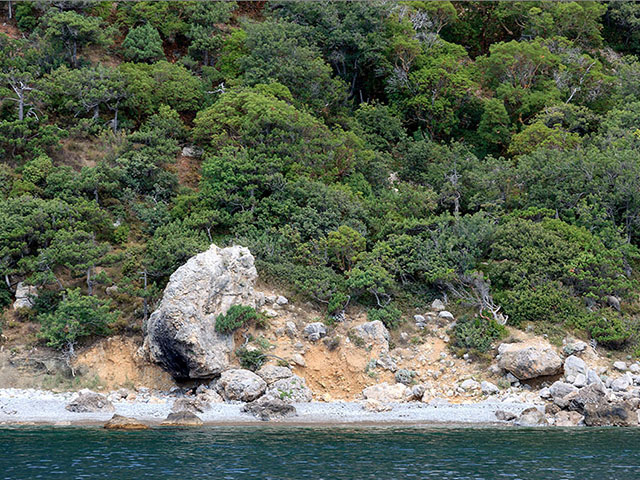
For each tourist a walk along the excursion route laid out in the reserve becomes a bright, unforgettable event, leaving a lot of positive emotions due to the beauty and variety of landscapes. Traveling along the scientific-ecological trail, the length of which was 6 km, tourists admire various pictures: the relief of the reserve abounds with beams, scour holes, ravines, gullies and abrasive terraces. There are steep and breathtaking rocky precipices, and stone chaos, and gentle slopes. There are also evidences of past epochs: remains of ancient buildings, artificial grottoes, defense ramparts. In 1969 the ruins of Ruskofil-Kale fortress, which preserved the masonry of XIII-XV centuries, were recognized as a monument of archeology. For the first time this object was described in 1837. P.I. Keppen, then A.L. Berthier-Delagard — a famous researcher of Crimean antiquities. Not far from the ruins of the ancient castle is another interesting object — a through cave in the southern cliff of Cape Martyan called Kale-Khoba.
Places like Cape Martian Nature Reserve are priceless treasures of our planet. To see the beauty of local nature and admire the incredible panoramas, many tourists who spend their holiday in Crimea, specially come to the village of Nikita, combining acquaintance with the reserve with a visit to the famous Nikitskij botanical garden.