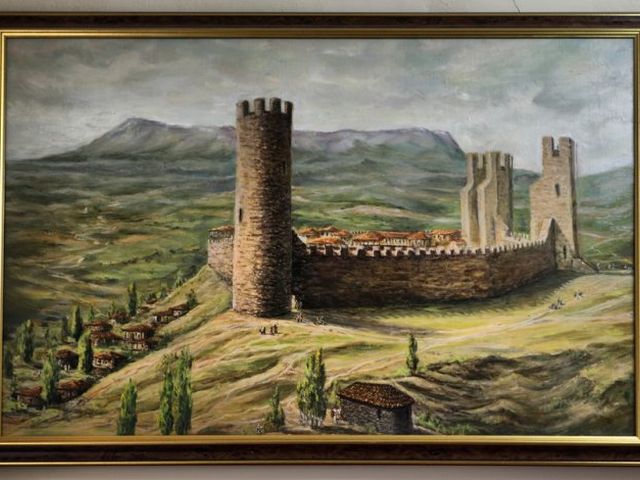
 Unfortunately, nowadays Aluston Fortress does not make a strong impression unlike other fortifications of ancient Crimea and is a ruin, which is still considered one of the main attractions of the city of Alushta.
From written sources we know that in the VI century Byzantine Emperor Justian ordered to build a fortress on this place, to strengthen Byzantium in Tauris. It is from this moment that Alushta dates back to this time.
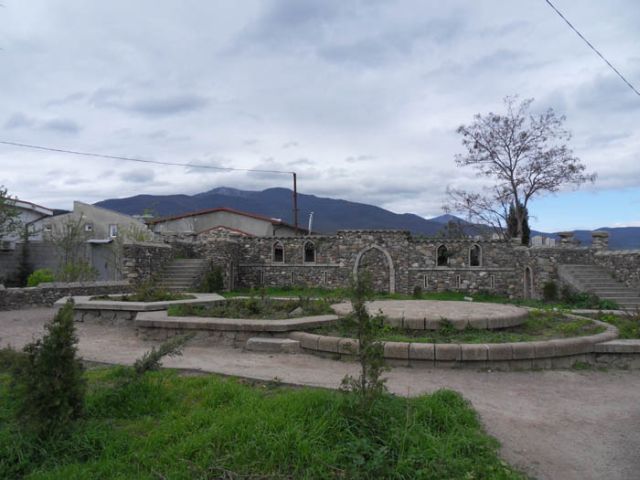
The fortress was destroyed and restored many times during its existence. Since the end of the XIV century Aluston was in the possession of the Genoese, at which she found the finished form of a defensive structure. Therefore, the fortress is often called Genoese, not Byzantine.
Located on a hilltop, not far from the sea, Aluston is a fortification consisting of two lines — the citadel and the outer defensive wall, at the joints of which rose three towers: the first, the upper, the Tatars called Chatal-Kule («Horned»), one half of it collapsed in 1830, and the other was dismantled in 1866; the second, quadrangular, was called Orta-Kule («Middle»); the third — round — Ashaga-Kule («Lower»). 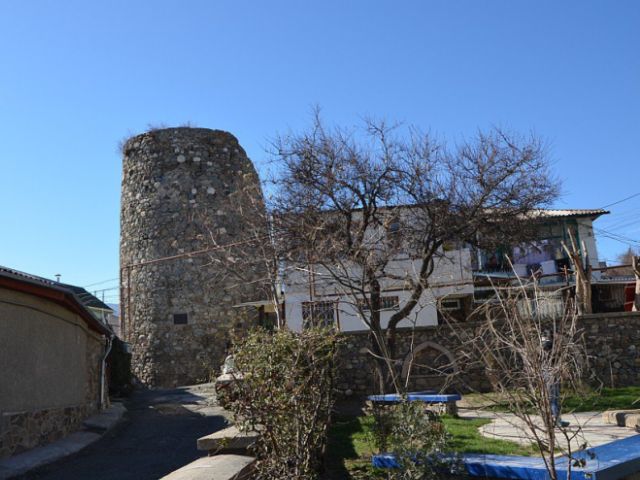 The walls of these towers were 2-3 meters thick and up to 10 meters high. Initially, the area of Aluston fortress was about 0.25 hectares. Although it was small, it was considered a very powerful Byzantine fortification. On its territory there were small houses where shoemakers, blacksmiths, carpenters, jewelers, potters and masons lived.
In 1475 many cities of Crimean Peninsula, including Alushta, were captured by Mongol-Tatars. The fortress was burned down and was never rebuilt again.
According to archaeological sources, the remains of a Christian temple of the VIII century were found on the territory of Aluston.