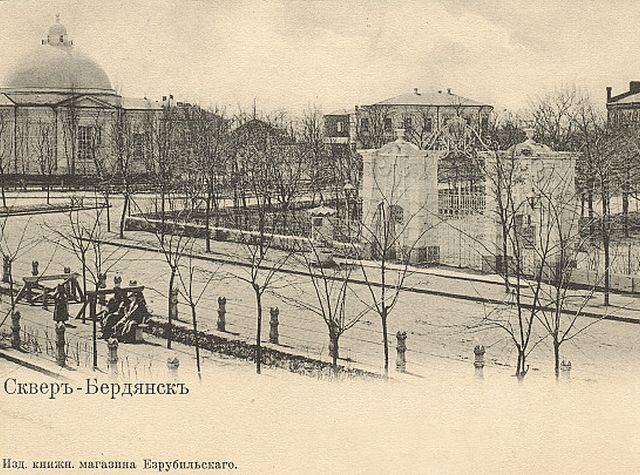
The place where Schmidt Park is located now, from the first half of the XIX century Berdians called the customs square, because of the customs post located nearby. Even after the customs office moved, this name was retained until the October Revolution.
By the fall of 1878, in place of the old Customs Square, «the stinking swamp, which did not dry up even in the middle of summer, was completely covered with ballast…». «In the city there is nothing like a garden, the inhabitants have no place for walking» wrote the chief of the port and the city Peter Petrovich Schmidt.
November 9, 1878 in an appeal to the City Council Peter Schmidt asked «to give him from the existing in the city garden nursery 300 young trees and shrubs and allocate 100 rubles for the laying of the public garden».
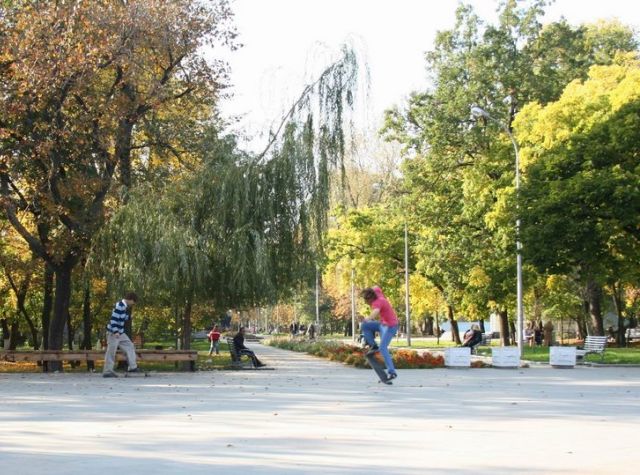
The City Council did not make a specific decision, so in March 1879, Peter Schmidt ordered that the trees be planted with his own funds. Interestingly, the public garden was planted without the knowledge and consent of the city council and contrary to the highest approved plan of the city. The mayor Ivan Demetriadis considered it «a direct violation of the articles of the city regulations».
In honor of the mayor Berdyans began to name the square Shmidtovsky. A beautiful metal fence and a monumental gate with the city coat of arms and two stone arches for entry and exit were installed around the area.
At the end of the square on a stone pedestal was installed a cannon from the warship «Boyan», raised from the bottom of the sea in 1863, it became the first Berdyansk monument — reminding of the Crimean War.
According to the urban legend, the famous Soviet writer, philosopher and paleontologist Ivan Efremov, being a gymnasium student, in 1916 together with his comrades fired a shot from this cannon.
At the beginning of the twentieth century, further works were carried out to improve the public garden: sculptures were installed, flower beds and grass lawns were laid, paths were laid along the alleys, new trees were planted, and a bandstand was built. A brass band played regularly in the city garden.
In the mid-20s of the last century the public garden was called «Proletarian», but this name did not stick and remained only in archival documents.
During the German occupation of the city in 1941-1943, the park was significantly damaged:
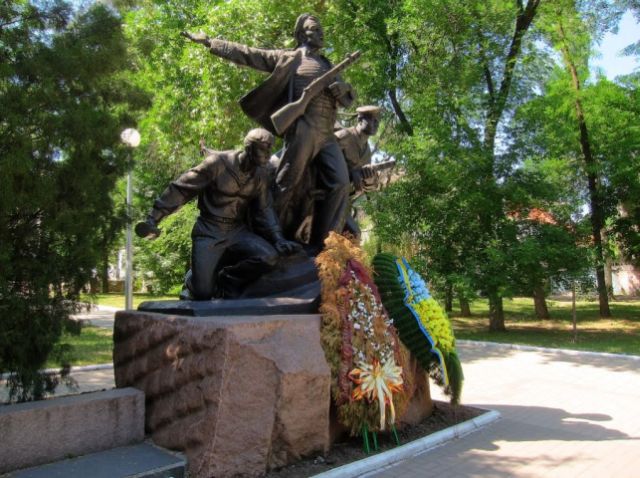
trees were cut down and monuments erected in it were destroyed. It is symbolic that in the place where there was a monument from the Crimean War, Berdyansk residents have erected a monument to the Azov Sea Flotilla paratroopers who died in 1943 during the liberation of Berdyansk. Next to the bronze monument is the grave of the liberators’ soldiers.
After the war, the park was renamed Pushkin Park. Berdyansk residents had to work hard to restore its former beauty: the arch of the main entrance was restored, new trees and shrubs were planted, a summer movie theater was built.
In the post-war years, when the city square and the yard of the former Catholic church were united, the territory of the park increased. The Lermontovskaya Street disappeared, the road was dismantled and only a storm water ditch was left from it, which now interrupts Schmidt Park.
Over time, the Ulyanov Street roadway in the northern part of the park also disappeared.
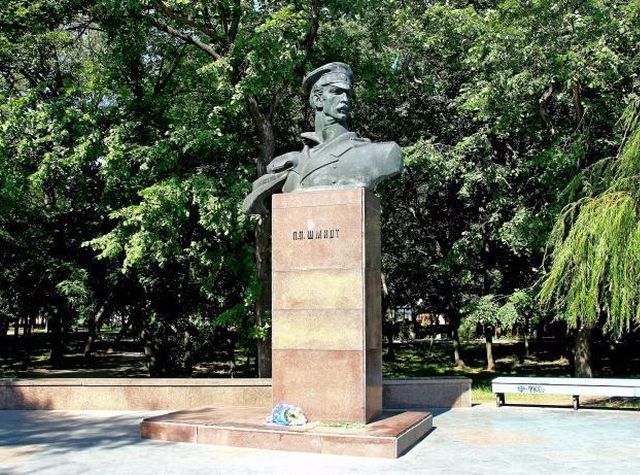
In 1973 the city park was named after P.P. Schmidt, then the old entrance arch was dismantled and a bronze bust of the legendary Lieutenant Schmidt was installed in front of the main entrance.
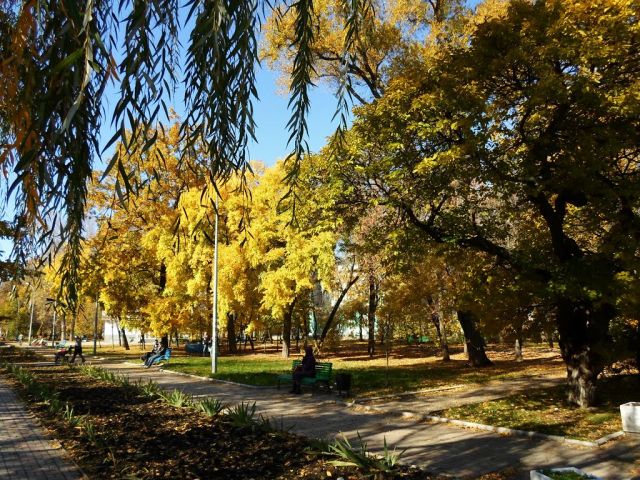
Today the park with the area of 3.5 hectares is protected as a monument of garden and park art of local importance. Until recently there were about 70 species of ornamental trees and shrubs in the park. The basis of plantings are: white acacia, elms, willows, cherry and red oak, catalpa, carcass (which is called «ironwood»), maples, aspen, Japanese sophora, black and white poplar, bird cherry, ash trees. Among shrubs — common turmeric, Tatar honeysuckle, chubushnik, narrow-leaved olive.
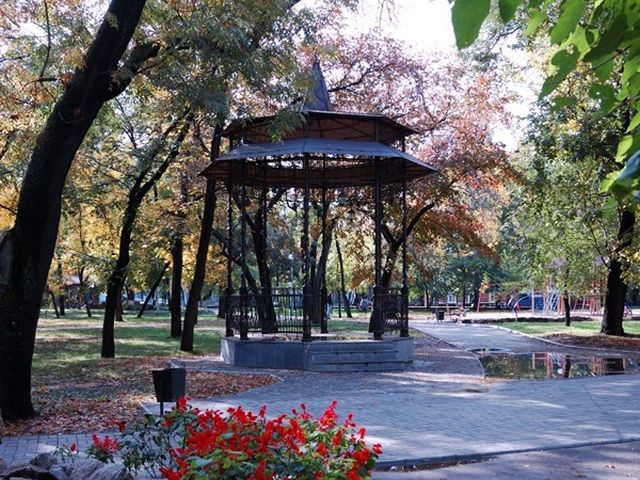
The park has become home to many species of birds: starlings, orioles, wild pigeons, tits, finches, and grackles,
Ash, ailanthus, white acacia, sophora and other species release a large amount of phytoncides into the atmosphere, which purify the atmosphere from pathogenic bacteria.
Maples, ash trees create a good barrier against noise, which is very important for a city with a lot of traffic and entertainment facilities.
Silver poplar, elm, skeleton are excellent bio-vacuum cleaners that purify the air from dust. The vegetation of the park evokes positive emotions and walking in it is a wonderful estetotherapy.