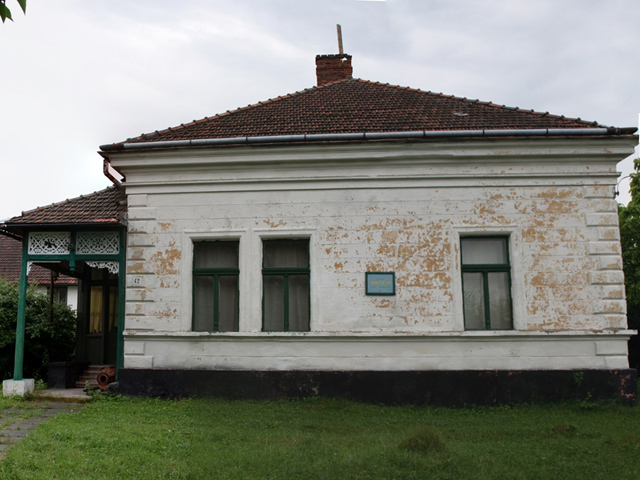
 Salt mining made the small Transcarpathian village of Solotvyno famous back in the Middle Ages. However, the history of salt mining in these parts goes back to a deeper antiquity. You can learn about all the interesting aspects of such an unusual craft as salt mining, get acquainted with the stages of its development in Transcarpathia in one of the most popular museums of the village — Museum of the History of Salt Mines (Museum of Salt Mining).
Salt mining in the area of Solotvyno began in the times when these regions were part of the Roman Empire — from the I-II centuries BC. When the Hungarian kingdom took possession of Transcarpathia, the salt mines became a significant source of income for its rulers — salt from the local mines was supplied to many European countries. Today, salt mining in Solotvino continues, but on a much more modest scale, although its reserves are still large.
Initially salt was extracted by primitive methods: stepped pits up to 20 meters deep were dug. Then salt began to be extracted through the so-called devil’s pits: these were cone-shaped pits up to 140-150 meters deep, into which workers supported by stepladders descended and lifted salt to the surface in twine nets or buffalo skin bags. Perhaps, it is with the second stage of salt mining development that a local legend is connected.
According to the legend, a man who had nothing — neither home nor family — came to the village one day. He slept in the mines, dreaming of earning a lot of money and buying a house. Once, when he was in the mine, a demon came out of the thickness of the salt rock to him, but the frightened worker was not confused and asked for help to extract as much salt as possible. In the morning, when the worker opened his eyes, he saw in front of him a huge mountain of chopped salt. He received a fortune for it — 5 kreutzer and 320 silver pieces. He went down into the mine again to divide the money with the demon, and when it was necessary to divide the 5 kreutzer in half, the worker gave the last one to the demon, saying that the demon had done all the work. Then the demon told the worker that the fact that he himself decided to give him the last kreutzer, he saved his life, and returned all the money to the worker — he bought a house and started a family, and the split rock, from which the demon came to the worker, can be seen somewhere in the depths of the salt mines today.
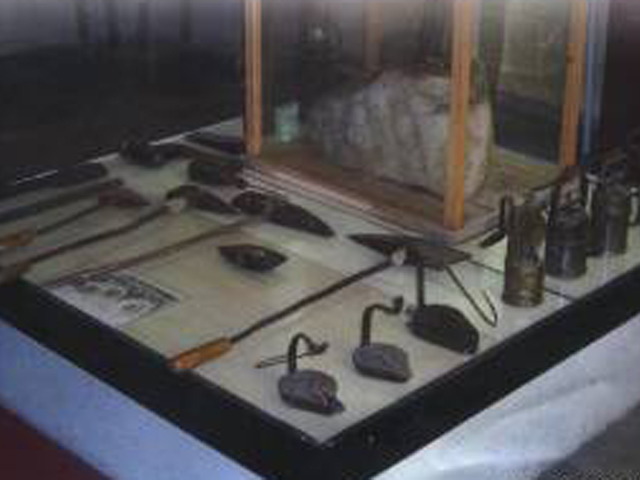 Systematic salt mining in the Solotva mines began only in the middle of the 18th century, when the village was part of Austria-Hungary. At that time there were 8 salt mines. From those and even more ancient times there are a lot of salt miners’ tools and devices for cutting salt, which can be seen in the Salt Mining Museum.
The exposition of the museum presents various documents, photos, maps, intricate ancient engineering constructions, lamps and lanterns, personal belongings, clothes and labor tools of the salt miners: hammers, chasers, wedges and many others. The exhibits vividly tell about the life of sollekopovs, illustrate the stages of development of salt mining in the settlement.
To get acquainted with the exposition will be interesting for any guest who came to holiday in Solotvino, especially for those who prefer informative tourism in Ukraine, interested in bygone professions, ancient way of life and unique atmosphere of Transcarpathian villages.
Near the Museum of the History of Salt Mines you can see unusual funnels going deep into the ground — these are the same «devil’s pits», preserved from ancient times to the present day. A visit to the Museum of Salt Mining makes a great impression on all visitors to Solotvino, as if they are transported back hundreds of years and see scenes of the ancient way of life of the salt miners.