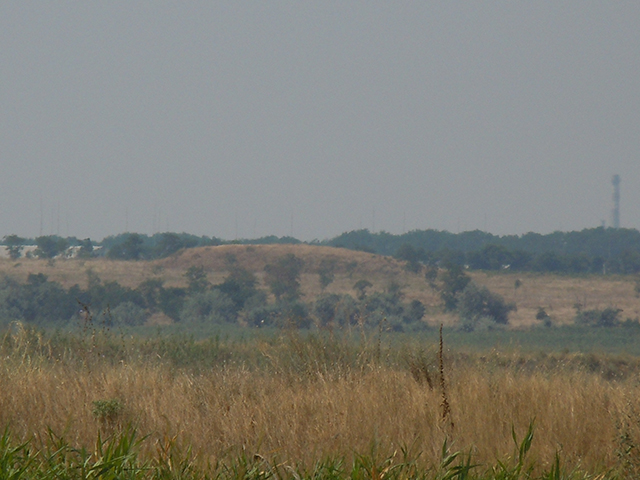
Mounds can be seen on all continents of our planet except Australia and Antarctica. They are one of the types of funerary structures that ancient people created for their leaders. On the territory of modern Ukraine such monuments were called «royal graves». History lovers are well known to Melitopol, Hermes and Olexandrovsky barrow, Kamianskoe ancient settlement, Chortomlyk and Tolstaya Mogila, where many weapons and jewelry were found, made and used long before the advent of our era.
One of the most interesting structures of this type is Akkembet barrow, found in the XIX century in the northwestern Black Sea region. And to be more precise — on the territory of the vineyards of the village of Belenkoye, which is under the jurisdiction of Belgorod-Dnistrovsky district of Odessa region. In terms of geography, the Akkembet barrow is built on a plateau forming the northern bank of the Budatsky estuary.
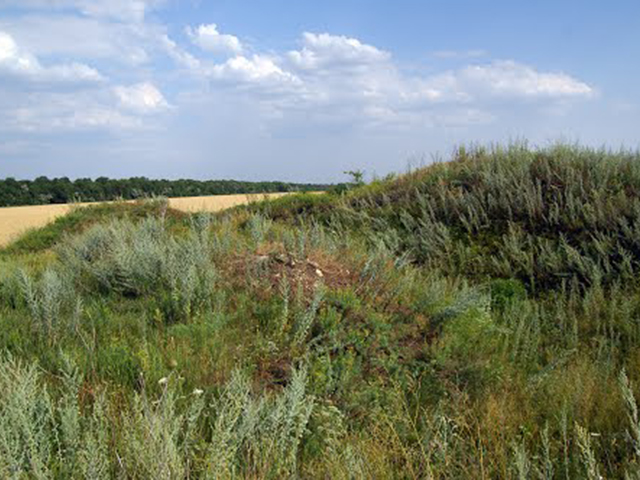
This funerary structure belongs to the Tripolye culture, namely to its latest Usatov subtype, which developed on the territory of Northern Transnistria, Moldova and the Western Black Sea coast. The Akkembet barrow is the only surviving monument from the community that lived on the shores of the Budatskiy Liman. The rest of the burial mounds were destroyed — ruthlessly plowed, during the economic development of these lands in the fifties of the last century. By the way, the «cap» of Akkembetsky barrow was also leveled by the agricultural activity of the inhabitants of Belenkoye. Therefore, today’s height of the burial mound is only 7 meters with a diameter of 60.
Despite the external barbarity, 7 stratigraphic layers have been preserved in the body of the barrow. Among them are the remains of 27 ancient cultures, but since the main burials belonged to the Usatov period, the entire Akkembet barrow is attributed in the annals to this subtype and the Tripolye culture.
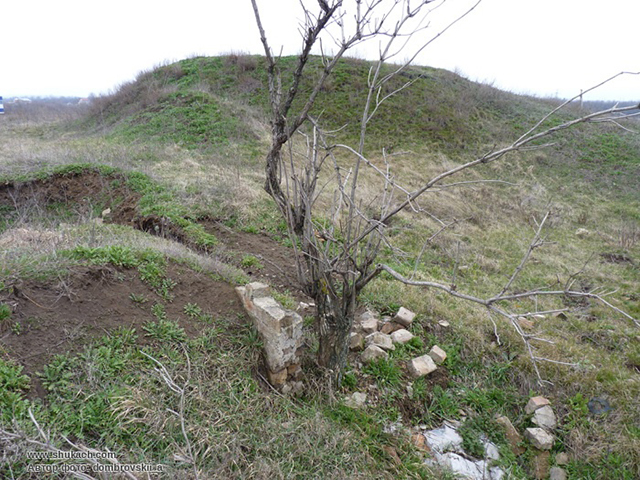
The historian Chernyakov, who conducted a study of the burial ground in 1997, found 6 burials in rectangular chambers lined with limestone slabs. One of them is the main one. In it was found the skeleton of a man, a patriarch, one of the Scythian kings. Next to them lay the skeleton of a dog, a pair of horses, burnt sheep bones — evidence of a trizna.
Other deceased from this barrow «took» with them to the netherworld tableware, some copper and bone jewelry. Except for the chief, the rest of the deceased lay in a crouched position, oriented with their heads to the east, with their heads painted with ochre. This suggests that they were forcibly put to death to accompany their king to the afterlife. Isotope analysis showed that the age of the main burials of Akkembet barrow is 2759 BC.
Coming on vacation in the Black Sea region, the tourist has the opportunity not only to examine the unique, though copper-clay, treasure trove of Tripoli culture, but also to get quality rest and recovery. There are many resorts in the neighborhood of Belenky: the sights of Sergeevka include climate, waters and mud Budatskij liman. Kurortnoe and Zatoka are famous for their climate and sandy beaches, while Belgorod-Dnestrovsky has excellent fishing and many historical monuments.