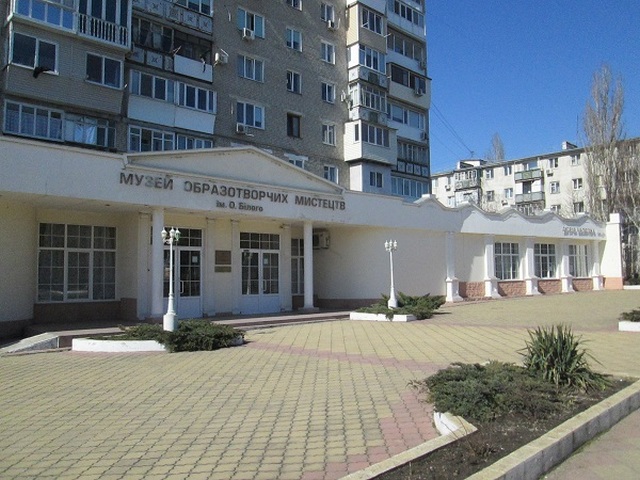
 An unusual museum has been working in Ilyichevsk for more than 38 years. There is a huge collection of porcelain from different historical periods — from the era of Empress Elizabeth to the Soviet times. There are no analogues of this museum in Odessa, but it was thanks to the Odessa. The unique museum appeared in Ilyichevsk thanks to the Odessa collector Alexander Belom, who gave the city his entire collection of porcelain (420 items). Besides, it was Alexander Moiseevich who became the first director of the museum.
The earliest items of porcelain, which are in the collection of the Ilyichevsk museum, date back to 1744. This is the time of the reign of Empress Elizabeth Petrovna, who, as is known, was very fond of balls and entertainment. 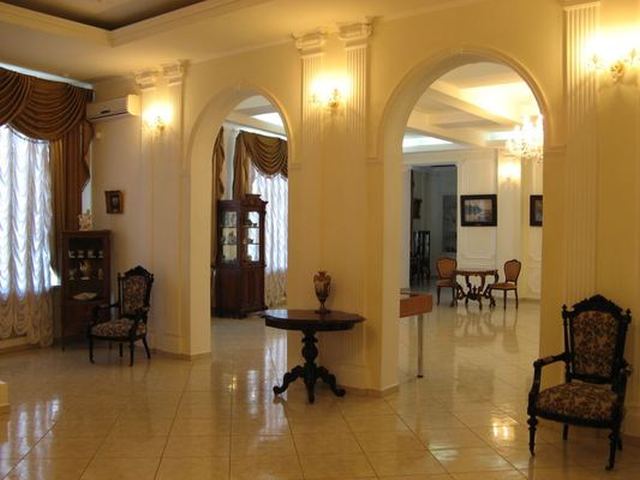 A mandatory part of entertainment was a fancy table, which was supposed to surprise everyone. It was set in a two-tiered room: on the first floor a dinner party was held, and on the balcony of the second floor the nobility gathered, who were specially invited to watch the meal. They watched who ate what and how much, who socialized with whom….. It was local news. The food was brought out on large platters that were covered with lids. But not so that the food would stay hot longer, but so that later, when the servants opened the lids at the same time, the audience would gasp with delight.
Mandatory items on the imperial table — saucepans. After all, the cooks did not salt the dishes back then, and the taste of the food largely depended on what sauce was prepared. The guests could also salt the food themselves. For this purpose, each of them had an individual saucepan.
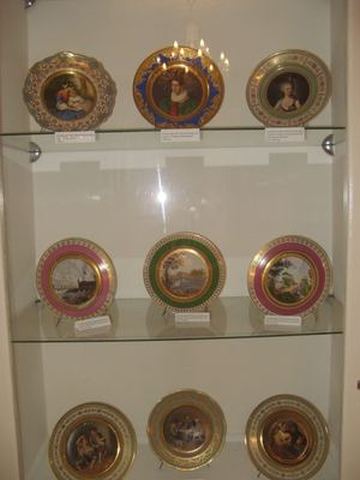
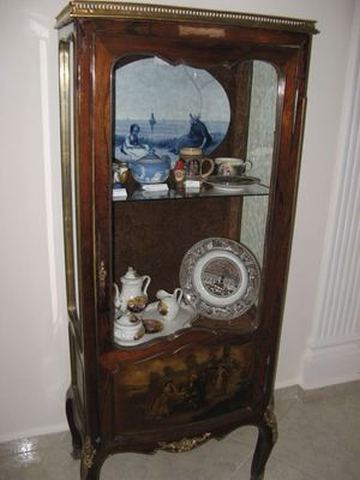 It is believed that each porcelain product reflects the period when it was created. For example, porcelain from the era of Catherine II amazes with its richness. There are pieces in the museum’s collection that are covered with real gold of 24 carats. In their design one can also feel the influence of Etruscan culture, ancient Greek motifs are used.
There are also sets that were created exclusively for the imperial family. They depict various awards — orders of Alexander Nevsky, St. Vladimir, etc. Only the Gardner factory had the right to put such paintings on dishes, and these order sets could only stand on the imperial table.
 After the war with the French in 1812, the Imperial Porcelain Factory produced a series of 14 cups depicting the heroes of the war. Among them — the outstanding generals Kutuzov and Bagration, as well as Emperor Alexander I. One of the cups with the Emperor’s image is kept in Ilyichevsk.
Ilyichevsk Museum of Fine Arts named after A.Belogo has its own secrets. For example, once the museum staff was given an interesting mantel clock made in France in the XVIII century. On top of this clock was a composition — the artist draws a portrait of a woman. However, the sculpture was damaged and now it needs to be restored. When the research was carried out, it turned out that the composition was made of modern material, although it had been made of cast iron before. It turns out that one of the previous owners made a new sculpture for the clock and passed it off as antique. 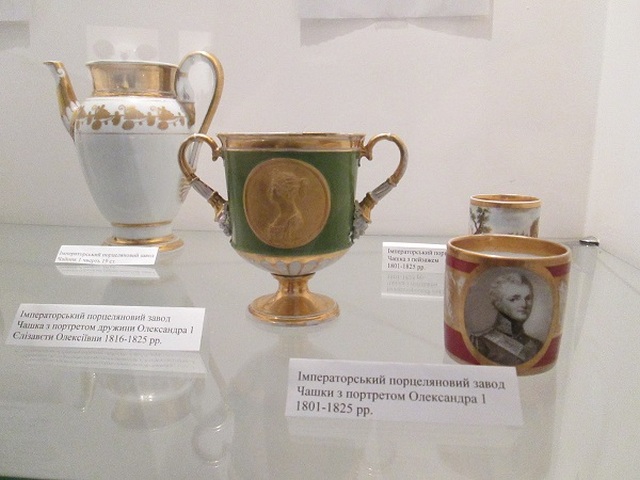 But the mechanism of the clock is really antique, as evidenced by the branding of the factory. The staff of the museum once tried to start the clock, but it did not go. And suddenly last year during a small rearrangement of the clock moved to another place they suddenly went and even began to beat every half hour! It is quite possible that after a complete restoration the clock will work properly again.
There is another mystery. In the collection of the museum was a porcelain object, which one of the singers of the Odessa Opera Theater once received by inheritance and kept at home as a vase. From the point of view of aesthetics it is a unique work. But in fact it is an urn for ashes. And a child’s.
In total, the collection of the museum today has more than 2900 porcelain exhibits. However, not all of them are exhibited at the same time, so the expositions sometimes change. Visitors are offered not only overview, but also various thematic excursions. 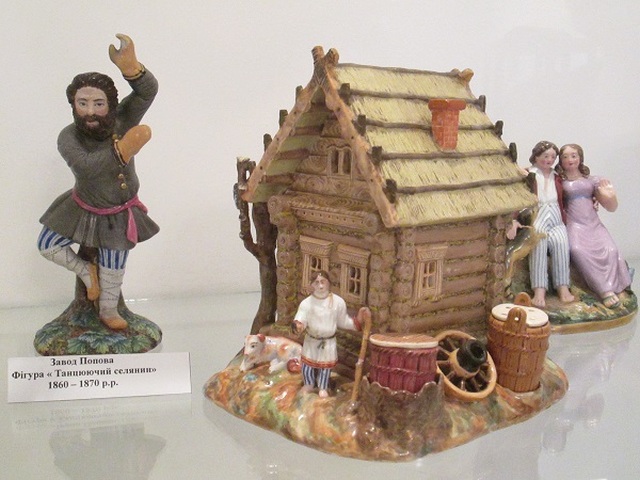 Thus, you can be told separately about some periods in history, directions and styles in art, about some specific factories on the example of our collection of porcelain and furniture.
The museum’s funds continue to be replenished thanks to enthusiasts, benefactors and collectors. It happens that people bring something «special» to the museum and then tell the most incredible stories about it. However, the museum is obliged to check the origin of each of its exhibits. Therefore, the brought object is accepted for temporary storage and then it is studied by scientific staff. They establish the time and factory belonging by a number of signs. Sometimes this procedure is very quick and easy, but sometimes it takes decades. Perhaps the secrets of some porcelain masterpieces will never be revealed.
Everyone on a tour!
The museum is open all days except Monday, from 11.30 to 17.30.