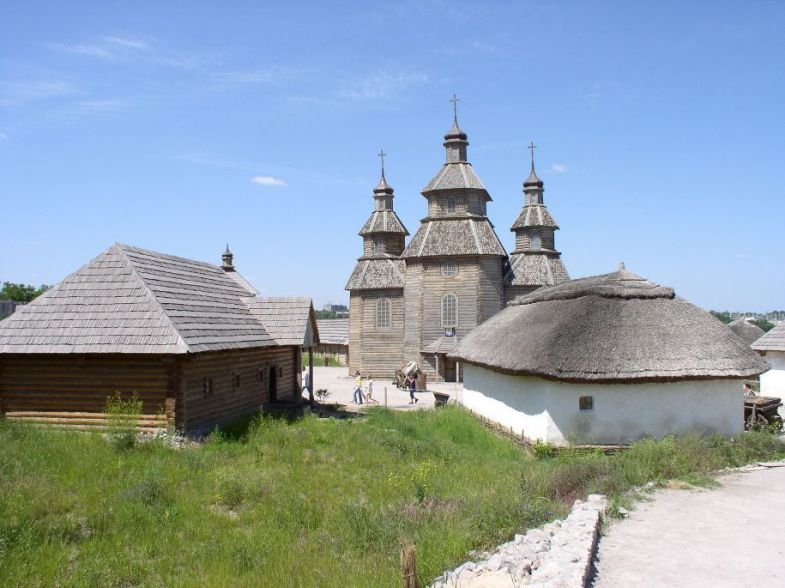
 The main attraction of Zaporozhye is Khortytsa National Reserve located on the island of the same name. This island was chosen as one of the Seven Wonders of Ukraine at the Seven Wonders of Ukraine contest in 2007. It is located within the city of Zaporizhzhya, its length is 12.5km and width is 2.5km. This unique historical and archaeological complex received the status of the State Historical and Cultural Reserve in September 1965. The main task of this scientific and research institution is to preserve and popularize the memorable places associated with the history of the Zaporozhian Cossacks. In April 1993, the State Historical and Cultural Reserve was granted the status of the National Reserve, thus confirming its national and historical significance. Nowadays the reserve includes Khortytsya Island and adjacent islands and rocks, its total area is 2359 hectares. This unique reserve is included in the State Register of Immovable Sights of Ukraine. It includes 63 sights of archeology and history.
Khortytsya is a part of the Ukrainian crystalline shield. It is based on Precambrian rocks over 2.6 billion years old. The island has almost all landscape zones of Ukraine. 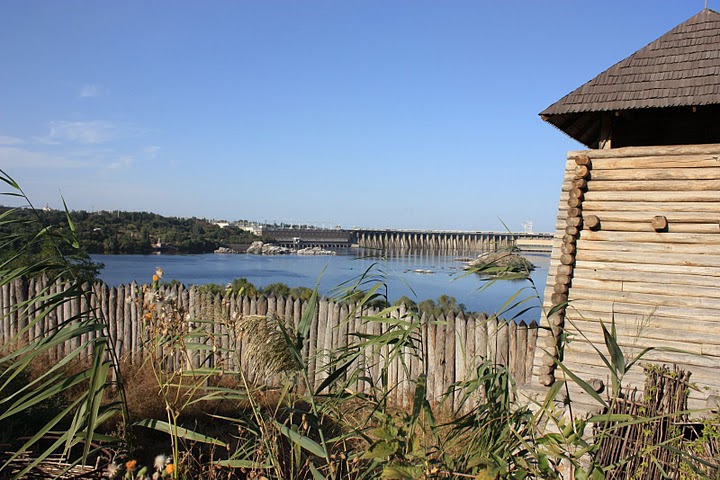 The mountainous terrain is represented by grottos, caves, rocks, the names of some of them are connected with the history of the Zaporozhian Cossacks, for example, Vysshaya Glava, Dumnaya Skala. Sovutina and others. Steppe areas are preserved along the Dnieper coast. The names of beams and tracts of this area are also connected with the Zaporozhian Cossacks: Two Brothers, Stolby, Zaporozhian bowl, Naumova, Kostina. The southern part of the island is the plavni, the youngest type of the Khortytsky landscape. The fauna and flora of the island are rich. The forests and plavnyas are inhabited by roe deer, wild boars, foxes, hares and other animals, over 30 species in total. Among birds of prey the most numerous are waterfowl, such as wigeons, teal, many gulls and herons; pheasants can be found in the deep thickets of forests. In total, there are 120 species of birds on the island.
In the pits, tracts, swamps of Khortytsya grow over 1000 species of plants, of which 657 are wild aborigines, 41 species are relict plants that inhabited the island millions of years before the appearance of man. Botanists have found twenty endemes (plants with a limited area of distribution) on Khortytsya — these are Dnieper crosswort, Savransky onion, sleep-grass, irises and others. Centuries-old trees grow on the island, several dozens of century-old oaks, there is also a century-old pear tree. The forests are dominated by Tatar maple, oak, elm, black and silver poplar.
The main historical attraction of Khortytsya is the Zaporizhian Sich — the cradle of the Zaporizhian Cossacks.
The first fortified town (prototype of the Sich) behind the Dnieper rapids on the island of Malaya Khortytsya was founded by Volyn prince Dmitry Vishnevetsky (Baida) in 1553. 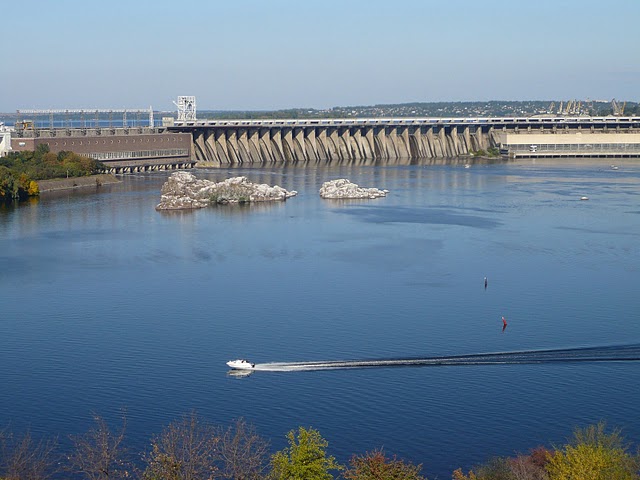 The first Zaporizhian Sich was built by Cossacks led by the koshev ataman. P. Konashevich — Sagaidachny in 1617. The Sich also included the surrounding small islands and part of the land on both sides of the Dnieper. From here, under the leadership of their atamans and hetmans, the Zaporozhian Cossacks embarked on campaigns against the Turks and Crimean Tatars.
In 1983, the Museum of Zaporozhye History was opened on the territory of the State Reserve, which was later repurposed into Museum of the History of Zaporozhye Cossacks. The museum has thematic exhibitions, exhibits items from Cossack kurens found during archaeological excavations, a unique collection of Cossack weapons, clothing and everyday items of the Cossacks.
Interesting excursions to the historical places of Khortytsya Island await visitors.
A visit to the National Reserve will leave you with unforgettable impressions and will help you to learn more about the glorious history of the Zaporizhian Cossacks.