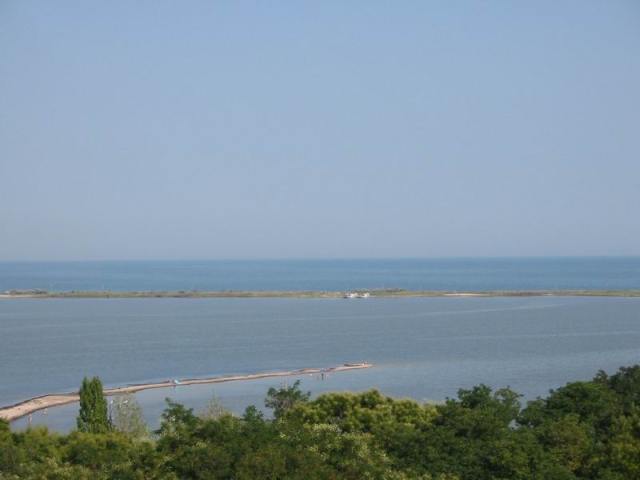
The system of estuaries «decorates» almost the entire southern coast of Ukraine, washed by the Black and Azov Seas. Next to the largest one, the Dniester estuary, there is a small Shabolatsky estuary, whose balneological resources are of great interest for the public who recuperate their health in this area.
The area of the mirror of the Shabolatsky Liman is 3200 hectares. Unlike the «perpendicular» Dniester estuary, it is stretched along the coast of the Black Sea. Its length is 17 km and its width is only 1500 meters. Like all limans, it is separated from the sea by a sandy spit. In this case, it is an embankment, which varies in width between 80 and 200 meters.
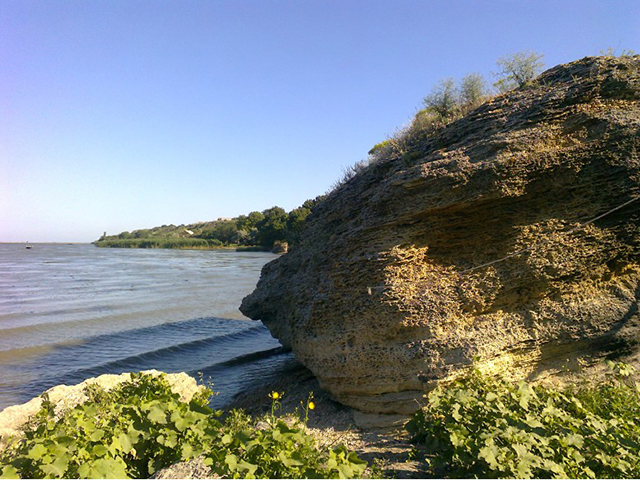
The Shabolatsky estuary is part of the unified ecosystem «Danube-Dniester». This means that there is a constant exchange of water, minerals, vegetation and animals within all lagoonal lakes and estuaries located in the Danube-Dniester interfluve. The Shabolat estuary has a particularly close relationship with the nearby Dniester estuary. It is believed to have formed as a result of the branching of the Dniester estuary. Therefore, the two water bodies do not have a clear boundary, but are connected by marshy swamps. These wetlands have become a nesting ground for migratory ducks, swans, geese and a reliable habitat for hundreds of thousands of gulls, cormorants and resident ducks.
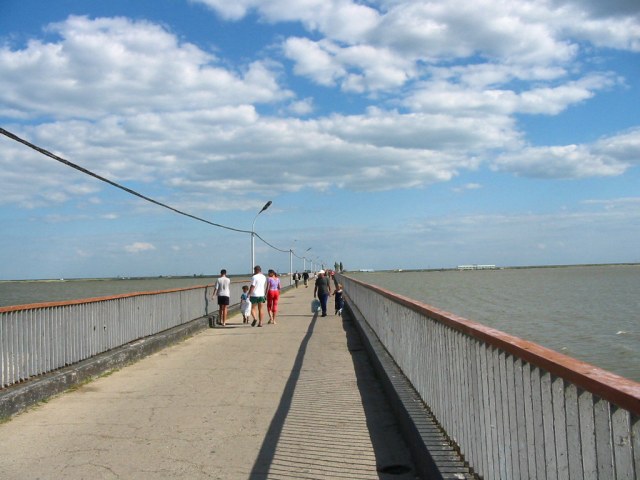
Due to the peculiarities of its formation and hydrological regime, the average depth of the Shabolatsky estuary is 105 cm. Therefore, its waters are perfectly warmed — from 28°C to 33°C.
 .
.
The shallow depth of the reservoir and the high temperature of the liquid in it became the main factor in the formation of its balneological resources — mineralized water and therapeutic muds.
The waters of Shabolatsky liman have mineralization up to 32 ‰ and chloride-sodium-magnesium composition, so they are used for preparation of therapeutic baths. In addition, under the liman formed layers of underground water, which are similar to the waters of Mirgorod and Kuyalnik. Basically, the liquid extracted through wells has chloride-hydro-carbonate-sodium composition, so it is an indispensable assistant to doctors in the treatment of chronic diseases of the digestive and respiratory system.
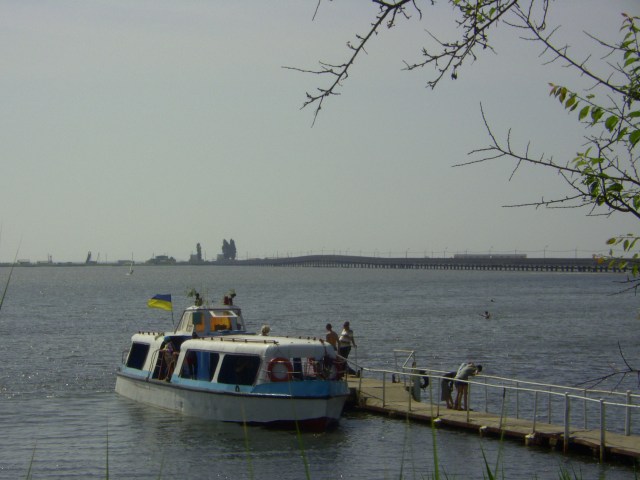
And the most important resource of the Shabolatskiy liman is mud. Only not simple, but mud. They have a characteristic anthracite color, sharp smell of hydrogen sulfide and ammonia, high heat capacity, plasticity and low thermal conductivity. The composition of silt muds includes many trace elements, colloidal complex. They have an alkaline reaction and pH equal to 8.2. The unique composition and therapeutic properties of the Shabolat muds were the reason why in 1895 the first mud cure center was built here, on the territory of Sergeevka. Its main profile at that time was the treatment of tuberculosis, especially bone tuberculosis.
Today, the waters and muds of the Shabolatsky estuary are considered the main attractions of Sergeyevka. For their sake, as well as the local balmy climate and the special patriarchal atmosphere of holidays in the Black Sea region, many travelers deliberately bypass Odessa, Zatoka and Kurortnoe and come here — to Sergeyevka, for quality relaxation and recovery.